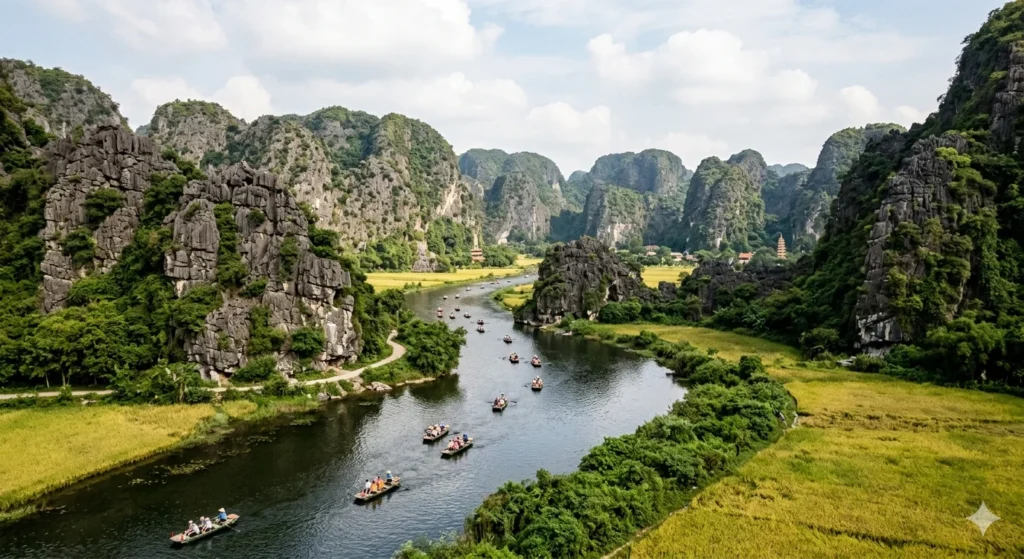
Picture a fleet of small wooden sampans gliding silently through emerald water, weaving between limestone towers that rise four hundred metres straight out of the rice paddies. The boats are rowed not by hand but by women using their feet — a centuries-old technique evolved for these particular rivers. Every few minutes a dripping cave swallows the boat whole; ten seconds later you emerge into another flooded valley, more dramatic than the last. Somewhere on the karst above, an 11th-century temple marks the place where Vietnam first became Vietnam.
That is Ninh Binh. And in 2026, it has become the destination European travel agents are quietly building entire itineraries around. According to Virtuoso’s 2026 Luxury Travel Report, search interest for Ninh Binh nearly tripled year-on-year — a clear signal that this Ninh Binh travel guide arrives at exactly the right moment. The good news is that the experience itself remains uncrowded compared to Halong Bay, more authentic than Hanoi, and unlike anything else in Southeast Asia.
Here’s what every travel agent selling Vietnam should know about Ninh Binh in 2026 — the gem, the geography, the history, and the very practical question of how to fit it into your client’s trip.
This Ninh Binh travel guide gives every travel agent the context, the attractions, and the practical knowledge to sell one of Vietnam’s most rapidly rising destinations with complete confidence.

Why the Ninh Binh Travel Guide Starts Here: 3 Reasons It Wins
Ninh Binh is one of those rare places that wins on three completely separate counts at the same time — natural beauty, deep history, and easy access. Most destinations are strong on one of those. Ninh Binh is strong on all three.
A UNESCO landscape unlike anywhere else
The Ninh Binh UNESCO landscape at the heart of the province is the Trang An Landscape Complex, designated a UNESCO World Heritage Site in 2014. It is the first and only mixed cultural-and-natural World Heritage Site in Southeast Asia — meaning UNESCO recognised it for its natural beauty and its cultural significance simultaneously. That’s a rare designation globally, and it’s a quietly powerful selling line when you’re pitching the destination to clients who care about authenticity and conservation.
The landscape itself is what specialists call “humid tropical tower karst in the final stages of geomorphic evolution” — limestone peaks shaped over thirty million years into a labyrinth of cones, towers, and valleys connected by an intricate network of subterranean waterways. The result is genuinely cinematic. Hollywood took notice: parts of Kong: Skull Island were filmed here, and the location is still used as a reference point on most Western traveller maps.
Vietnam’s first imperial capital
In the heart of the Trang An complex lies Hoa Lu — the first capital of Vietnam. In 968 AD, after more than a thousand years of Chinese domination, a buffalo herder named Dinh Bo Linh united twelve rival warlords, declared the independent kingdom of Dai Co Viet, and chose this defensible karst-and-river valley as his capital. The Dinh dynasty and the Early Le dynasty ruled from Hoa Lu until 1010, when King Ly Thai To moved the capital north to Thang Long — modern Hanoi.
That makes Ninh Binh, very literally, the birthplace of the modern Vietnamese state. The 17th-century temples to King Dinh Tien Hoang and King Le Dai Hanh still stand on the original palace grounds, modelled on their 11th-century originals. For European clients who arrive with a clear mental map of Vietnam’s 20th-century history but no sense of its much deeper roots, Hoa Lu is a revelation. It reframes the whole country.
| “Ninh Binh is the birthplace of the modern Vietnamese state — a fact most European clients arrive without knowing, and leave repeating to anyone who’ll listen.” |
Easier access than any other major destination in Vietnam
Ninh Binh sits just 90 to 100 km south of Hanoi. By private car the journey takes under two hours via the new expressway. By train it’s around 2.5 hours through pleasant countryside. This makes it the easiest meaningful add-on to any Hanoi-based programme — far simpler logistically than Halong Bay, and a fraction of the effort of Sapa or Ha Giang.
Ninh Binh Travel Guide: Which Client Profile Goes Here
Not every client lights up at the same thing in Vietnam. Knowing which traveller profiles respond best to Ninh Binh helps you position it with confidence.
Slow travellers and the anti-tourism crowd
This is the breakout audience for 2026. CNBC’s analysis of more than twenty-five global tourism reports identified “anti-tourism” — escaping crowded hotspots in favour of authentic, quieter destinations — as the defining trend of the year. Ninh Binh fits this brief perfectly. Compared to Halong Bay, it feels uncrowded. Compared to Hanoi, it feels rural. And the UNESCO designation gives it the credentials that thoughtful travellers want.
Photographers and visual travellers
Ninh Binh might be the single most photogenic destination in mainland Vietnam. The karst-and-rice-paddy compositions are extraordinary, the light at dawn and dusk is exquisite, and the 500-step climb up Mua Cave delivers a panorama that has become one of the most-shared Vietnam images on Instagram. For European clients who care about returning home with a strong visual story, this is the place.

History and culture buffs
Clients who would visit Hue for the imperial citadel, or Hoi An for the merchant houses, will love Hoa Lu for what it represents: the actual moment Vietnam declared its independence. The temples are atmospheric, the legends are vivid, and the connection between the limestone fortress and the rise of the nation is satisfying to walk through.
Couples, honeymooners, and older travellers
Ninh Binh is gentle. The boat trips are calm, the walking is mostly flat (Mua Cave aside), and the homestays around Tam Coc are some of the most romantic and atmospheric accommodation in northern Vietnam. For honeymoon programmes, it’s a beautiful counterpoint to a Halong Bay cruise. Our Vietnam Honeymoon guide goes into more depth on how to layer Ninh Binh into romantic itineraries.
Families with curious kids
The boat rides, the cave swims, the 500-step climb, the temples, the goats grazing on limestone slopes — children adore all of it. Cuc Phuong National Park, the country’s oldest, also runs a primate rescue centre on its grounds that fascinates older children.
| AGENT INSIGHT When briefing European clients who hesitate between Ninh Binh and a second day in Halong Bay, the deciding question is: “Do you want emerald water or emerald rice paddies?” Halong Bay is sea karst; Ninh Binh is land karst. Most clients, once they see the contrast, ask for both. |
Ninh Binh from Hanoi: Getting There (4 Options)
Hanoi is the gateway. From there your clients have four practical options, and the right choice depends on the rest of their itinerary. Getting from Ninh Binh from Hanoi is one of the easiest major-destination transfers in Vietnam.
- Private car (recommended for most clients): 90–120 minutes door-to-door via the Phap Van–Cau Gie expressway. The most comfortable option and the one that lets you control timing precisely. For VietOne-arranged programmes this is the default.
- Train from Hanoi Railway Station: around 2.5 hours, scenic, comfortable, and a pleasant cultural experience in itself. Drops at Ninh Binh station in the city centre, requiring a short onward transfer to Tam Coc or Trang An.
- Limousine bus: 9- to 16-seat luxury minivans that run frequently from Hanoi to Tam Coc, around 2 hours and very affordable. Good budget option for FITs.
- Day tour transfer: the simplest option if Ninh Binh is being visited as a single-day trip rather than an overnight stop. Includes guide, transport, lunch, and all entrance fees.
From Halong Bay (175 km away), the most efficient route is a private transfer of around 3.5 hours. Many of VietOne’s northern Vietnam programmes route Hanoi → Halong Bay → Ninh Binh → Hanoi, which avoids backtracking and gives clients a beautifully varied four to five days. Browse the VietOne packages portfolio for the Hanoi – Ninh Binh – Halong 5-day tour and other northern routes.
Ninh Binh UNESCO Attractions: What Your Clients Will Actually See
Ninh Binh packs a lot of distinct experiences into a small area. Here’s the agent-friendly breakdown.

Trang An sampan boat tour
The Trang An boat tour is the signature Ninh Binh experience and the heart of the UNESCO complex. A 2.5- to 3.5-hour journey on a small wooden sampan, threading through a connected network of nine caves and several mountain-side temples. The boats are rowed by local women using their feet — a uniquely Ninh Binh adaptation that frees up their hands for umbrellas, fans, and conversation. Some of the caves are long and dark; others are barely two metres high. Three routes exist, each visiting different combinations of caves and temples — VietOne guides will choose the right one for your client’s interests.

Tam Coc boat tour
Tam Coc Vietnam is the more famous alternative — Tam Coc means “three caves” and is the original Halong Bay on land comparison that made Ninh Binh famous. The route runs through wide rice fields rather than narrow karst valleys, which makes it the better choice in late May and early June when the rice ripens golden. Shorter than Trang An at around 2 hours, and ideal for clients on tight schedules.
Hoa Lu Ancient Capital
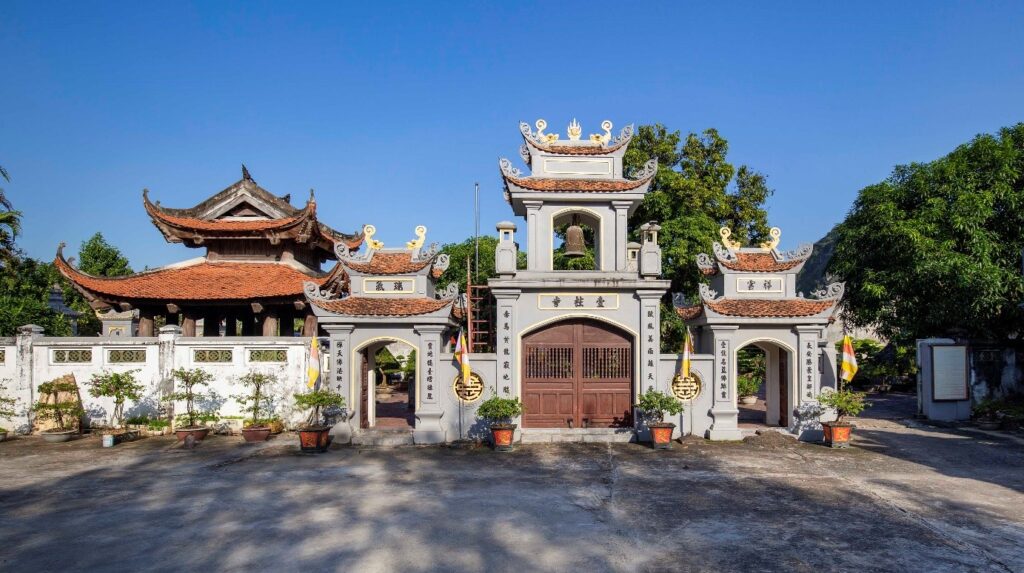
The cultural anchor. The original 10th-century citadel walls are gone, but the two ceremonial temples — to King Dinh Tien Hoang and King Le Dai Hanh — remain, surrounded by the same karst peaks that made Hoa Lu unconquerable a thousand years ago. A short climb up Ma Yen Mountain leads to King Dinh’s tomb and a panoramic view of the valley. Modest entrance fee, deep significance, easy to combine with Trang An on the same day.

Mua Cave viewpoint
The active highlight. A demanding 500-step stone staircase up the side of a limestone peak, rewarded at the summit by a stone dragon sculpture and a 360-degree panorama over the rice fields, river bends, and karsts of Tam Coc. The most-photographed view in Ninh Binh, and worth every step. Best at sunrise or sunset for the light. Suitable for most fit clients, but worth mentioning to anyone with mobility concerns. The Mua Cave Ninh Binh summit view is consistently the most-shared Vietnam image from this region.”

Bai Dinh Pagoda
Vietnam’s largest Buddhist complex, including hundreds of Arhat statues lining a 3-km corridor of covered walkways. Visited on electric shuttle carts. Spiritual interest is the main draw; for clients who want a deep cultural-religious half-day, this fits well, especially combined with Hoa Lu.

Van Long Nature Reserve
The largest wetland in the Red River Delta and a quieter alternative to Trang An. Small bamboo boats glide through still water dotted with karst peaks, and the reserve is home to the critically endangered Delacour’s langur, one of the world’s rarest primates. Excellent for wildlife-curious travellers.

Cuc Phuong National Park
Vietnam’s first national park (designated 1962), about an hour from the main Ninh Binh attractions. Home to thousand-year-old trees, accessible hiking trails, and the Endangered Primate Rescue Center. A standalone half-day or full-day add-on for naturalist clients and families.
| “Three completely different experiences — a UNESCO boat tour, an ancient capital, and a 500-step viewpoint — within twenty minutes of each other. Ninh Binh is built for the perfect day.” |
Ninh Binh attractions at a glance
Quick reference for matching the right attractions to each client profile.
| Attraction | What it is | Best for |
|---|---|---|
| Trang An boat tour | UNESCO sampan route through karsts, caves, and temples (2.5–3.5 hrs) | First-timers; cinematic scenery; couples |
| Tam Coc boat tour | “Halong Bay on land”, classic rice-field-and-river route | Photography; clients short on time |
| Hoa Lu Ancient Capital | Vietnam’s first capital (968–1010); temples of Kings Dinh and Le | History lovers; cultural depth |
| Mua Cave viewpoint | 500-step climb to a panoramic ridge above Tam Coc | Active travellers; sunrise/sunset shots |
| Bai Dinh Pagoda | Vietnam’s largest Buddhist complex | Spiritual interest; large groups |
| Van Long Nature Reserve | Largest wetland in the Red River Delta; rare Delacour’s langur | Birders, wildlife enthusiasts, slow travellers |
| Cuc Phuong National Park | Vietnam’s first national park; primate rescue centre | Families with curious kids; nature programmes |
Best Time to Visit Ninh Binh: Season-by-Season Agent Guide
Ninh Binh has a humid subtropical climate with four loosely defined seasons. The destination is open year-round, but the experience varies significantly depending on when your client arrives.
| Season | Months | Landscape | Agent verdict |
|---|---|---|---|
| Late spring | Late April – May | Lush green rice paddies | Prime time; lotus season in late May |
| Early summer | Late May – early June | Golden ripening rice fields | Iconic Tam Coc photography moment |
| Autumn | Sept – early Nov | Cool, clear, dry | Excellent weather, fewer crowds |
| Winter | Dec – Feb | Cool and dry, occasional mist | Comfortable for trekking; atmospheric |
| Summer rains | Late June – August | Hot, humid, frequent showers | Avoid for outdoor-heavy itineraries |
If a client asks for one window, the answer is simple: The best time to visit Ninh Binh is simple: late April to early June. That’s when the rice paddies hit either their lush green peak or their golden ripening peak — the imagery that has driven Ninh Binh’s global surge in search interest. September and October are nearly as good and significantly less crowded, making them the agent’s quiet favourite for European groups.

Hoa Lu Ancient Capital: Why Ninh Binh Is the Birthplace of Vietnam
To understand Ninh Binh culturally, you have to understand what happened here in 968 AD. After more than a thousand years of Chinese rule, the Red River Delta fragmented into a patchwork of warring local strongmen — twelve in total. A man named Dinh Bo Linh, born locally and raised among buffalo herders, defeated all twelve warlords, unified the country, and declared himself emperor. He named the new kingdom Dai Co Viet — the Great Viet — and chose his ancestral home in the Hoa Lu karst as the capital. It was naturally defended by mountains on three sides and a river on the fourth.
Dinh ruled only twelve years before being assassinated, but the precedent was set. His top general, Le Hoan, took over and founded the Early Le dynasty (980–1009), defending the young nation against a major Chinese invasion in 981 and expanding the kingdom’s territory southward. In 1010, King Ly Thai To moved the capital north to Thang Long, where it has remained as Hanoi for over a thousand years. But Hoa Lu was never forgotten — it stayed in the Vietnamese imagination as the place where the country first declared itself.
Today the temples that mark the original palace grounds are still active sites of pilgrimage, particularly during the Truong Yen Festival on the 10th day of the third lunar month, when locals stage processions, traditional games, and ceremonies in honour of Kings Dinh and Le. For clients visiting in spring, timing a Ninh Binh visit to coincide with this festival turns a sightseeing day into a once-in-a-lifetime cultural immersion.
A note on the food: local specialities worth ordering
Ninh Binh’s cuisine reflects its limestone-mountain terrain. A few dishes are worth recommending to clients:
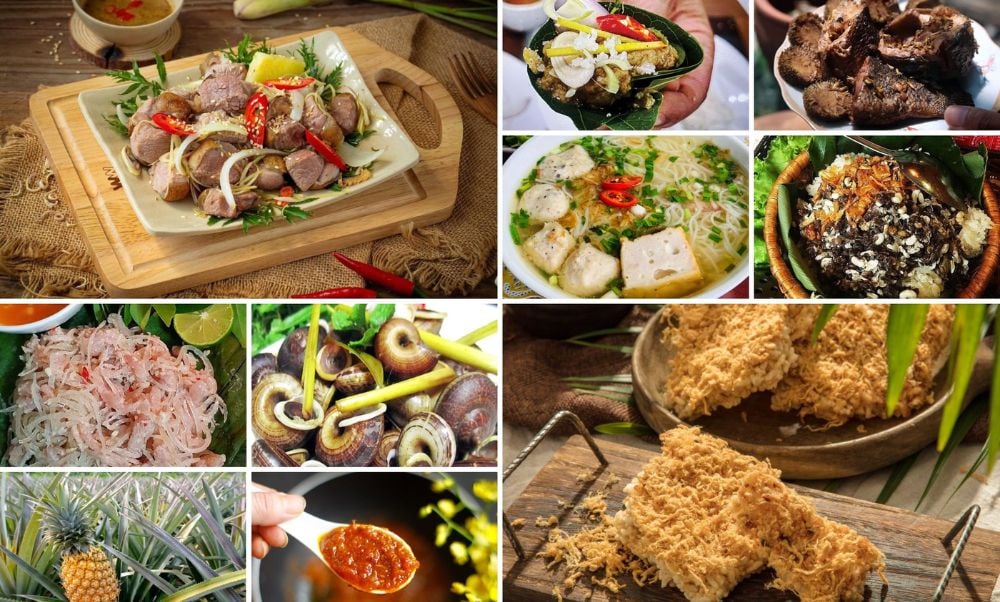
- Mountain goat (Dê núi) — the local signature. The goats graze on limestone slopes, and the meat has a distinctive flavour. Grilled, steamed with lime, in spring rolls, or in hotpot.
- Crispy rice (Com chay) — deep-fried rice crust served with a savoury dipping sauce. Also sold as a popular souvenir.
- Mountain snails (Ốc núi) — chewy, sweet, and stir-fried with lemongrass and chilli, or steamed with ginger.
How to Add Ninh Binh to a Northern Vietnam Itinerary
Ninh Binh sits beautifully in the middle of a northern Vietnam programme. The two most common structures are:
- Day trip from Hanoi: early start, hit Hoa Lu in the morning, lunch at a local restaurant, Trang An or Tam Coc boat in the afternoon, optional Mua Cave climb at golden hour, return to Hanoi by evening. Long day but very rewarding for clients on tight schedules.
- Two-night stay: by far the better option. Day one for Hoa Lu and Trang An; day two for Tam Coc, Mua Cave, and a more relaxed afternoon. Stay in a homestay or boutique property among the rice fields. This is the pacing most thoughtful European clients prefer.
For multi-week programmes, the natural route flow is:
- Days 1–3: Hanoi — anchor in the capital, build context. Pair with a Hanoi Full Day City Tour or Hanoi Half Day City Tour.
- Days 4–5: Ninh Binh — two nights, full programme.
- Days 6–7: Halong Bay — overnight cruise.
- Days 8+: Hue, Hoi An, central Vietnam beaches, Saigon, Mekong Delta — as the schedule allows.
VietOne’s Vietnam Insider Journey (15 Days) includes Ninh Binh as part of its twelve-destination northern-to-southern arc and remains the strongest single foundation for clients wanting the full country in one go. For group programmes starting in the south, our Vietnam Group Tour: 7 Powerful Reasons to Start in Ho Chi Minh City breakdown explains the alternative south-to-north routing.
Ninh Binh Travel Guide: 6 Practical Tips for Travel Agents in 2026
- Sell the UNESCO mixed-heritage credential. Trang An is the only mixed cultural-and-natural World Heritage Site in Southeast Asia. That distinction matters to thoughtful clients and is rarely communicated.
- Position it as the Halong Bay alternative, not the substitute. Most clients should do both. Halong is sea karst; Ninh Binh is land karst. They complement each other beautifully.
- Recommend two nights, not a day trip. The atmosphere — sunrise mist, evening light on the karsts, the rural pace — is the value-add. Day-tripping skips that entirely.
- Time the rice colour intentionally. Green in late spring, golden in late May / early June. Either is spectacular; brown stubble (mid-June onward) is less so.
- Brief on the Mua Cave climb. 500 steps is significant. Worth flagging in advance so clients pack appropriate footwear and pace themselves.
- Add the Hoa Lu story to the brief. Without context, the temples are just temples. With the 968 AD story, they become the foundation moment of Vietnamese national identity.
| PROGRAMMING TIP If your client is doing Ninh Binh + Halong Bay back-to-back, schedule Ninh Binh first. The Hoa Lu story gives them the historical foundation, and the karst landscape primes their eye for what they’ll then see on a much grander scale on the bay. Reversed, Halong Bay’s drama makes Ninh Binh feel like a smaller version. Done in the right order, Ninh Binh feels like discovery and Halong Bay feels like climax. |
Why 2026 is the moment to push Ninh Binh
Three trends are converging in 2026, and Ninh Binh sits at the intersection of all of them.
First, the anti-tourism trend. Agoda data cited in CNBC’s global tourism analysis shows search interest for secondary destinations across Asia growing 15% faster than for the established hotspots. Clients are actively looking for the next quieter, more authentic alternative — and the Halong-Bay-on-land framing makes Ninh Binh an easy first answer.
Second, the sustainability and conservation lens. UNESCO’s mixed designation, the restricted motorised-boat policy, and the carefully managed visitor zones make Ninh Binh a model of how to balance tourism with preservation. Clients drawn to that kind of responsible travel have a clear story to tell.
Third, the surge in European demand. Russian arrivals to Vietnam grew over 212% year-on-year in early 2026, and European arrivals overall climbed nearly 70%. Many of these travellers are doing their first or second Vietnam trip and want destinations that feel “discovered” rather than processed. Ninh Binh delivers exactly that, while being logistically simple to add.
For agents who got ahead of Halong Bay ten years ago and Hoi An five years ago, Ninh Binh is the destination of 2026. The next twelve months are the best window to position it as a signature recommendation before the wider market catches up.
| Add Ninh Binh to your next Vietnam itinerary Ninh Binh is the answer when your clients want UNESCO landscapes without the Halong Bay crowds — and 2026 is its breakout year. The VietOne team in Saigon will build it into your programme with the right boats, the right guides, and the right pacing for European and Russian travellers. Talk to us and we’ll handle the rest. |