A travel agent’s guide to selling Vietnam as a walking destination — and why 2026 is the year to start.
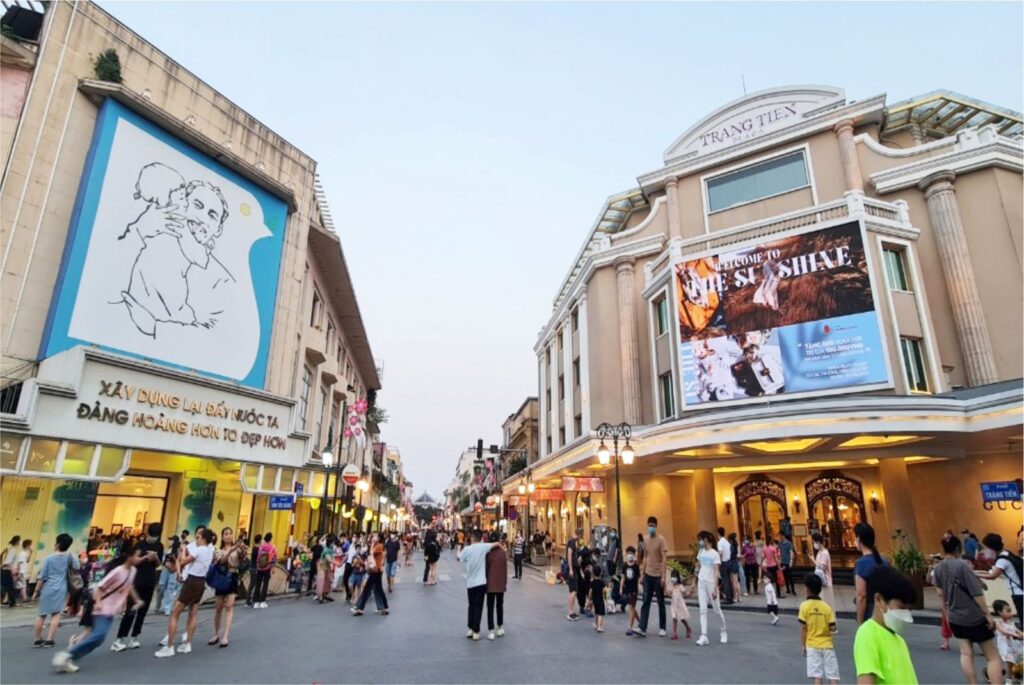
Here’s something worth slipping into your next conversation with a client: in 2026, three Vietnamese cities — Hanoi, Hoi An, and Ho Chi Minh City — earned spots on GuruWalk’s global ranking of the top 100 most walkable cities in the world. That’s the same list dominated by Rome, Madrid, Prague, Tokyo, and Kyoto. Making Vietnam walking tours one of the most powerful new selling points for travel agents in 2026.
For European and Russian agents in particular, this opens a fresh angle. Slow travel, walkable cities, and immersive on-foot exploration are among the fastest-growing travel trends of 2026 — and Vietnam now has the international credentials to compete with Europe’s classic walking capitals at a fraction of the price.
What the GuruWalk Vietnam 2026 Ranking Means for Travel Agents
GuruWalk evaluated cities globally on four pillars: walkability, density of attractions, accessibility, and the overall on-foot visitor experience. The result is a list that rewards compact city centres, vibrant street life, and clusters of landmarks that can be reached without a single taxi.
Three Vietnamese destinations made the cut:
- Hanoi — recognised for the Old Quarter’s dense web of historic streets, lakes, and traditional craft districts.
- Hoi An — the UNESCO-listed riverside ancient town built for foot traffic and lantern-lit evenings.
- Ho Chi Minh City — where French-era boulevards, vibrant markets, and a riverfront promenade form one of Southeast Asia’s most walkable urban cores.
The GuruWalk Vietnam ranking takeaway for travel agents: Vietnam is now a credible walking cities alternative to Rome, Prague and Madrid. It’s now a credible alternative for clients drawn to walking-based city travel — the same clients who book Prague in spring and Rome in autumn.
| “Vietnam is no longer just a tropical highlights destination. It’s now a credible alternative for clients drawn to walking-based city travel.” |
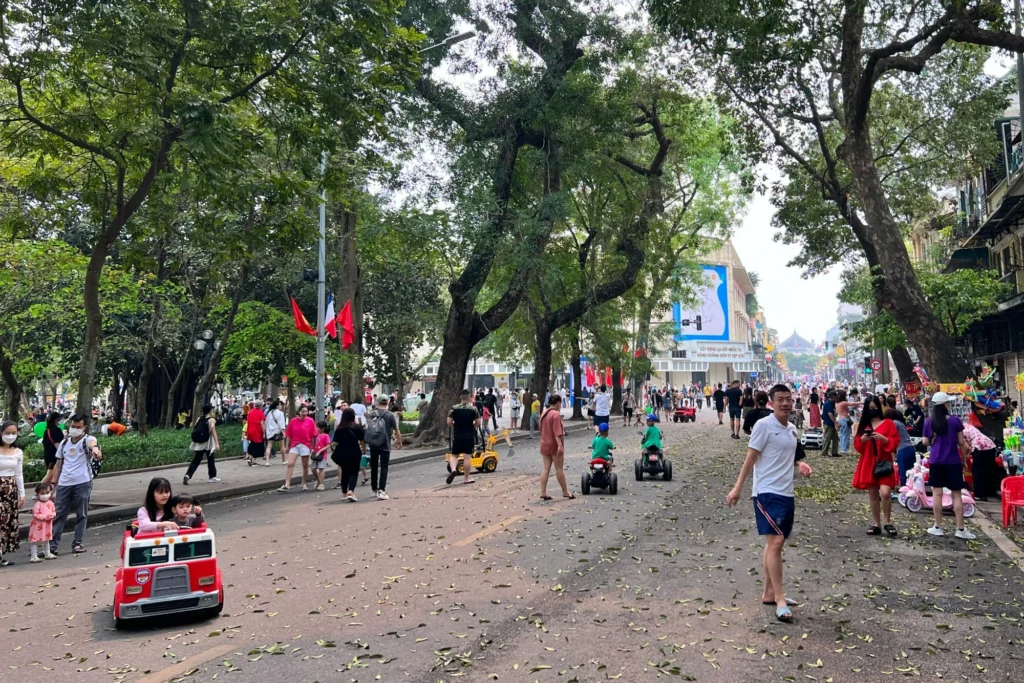
Hanoi Walking Tour Guide: 1,000 Years of Streets Worth Exploring
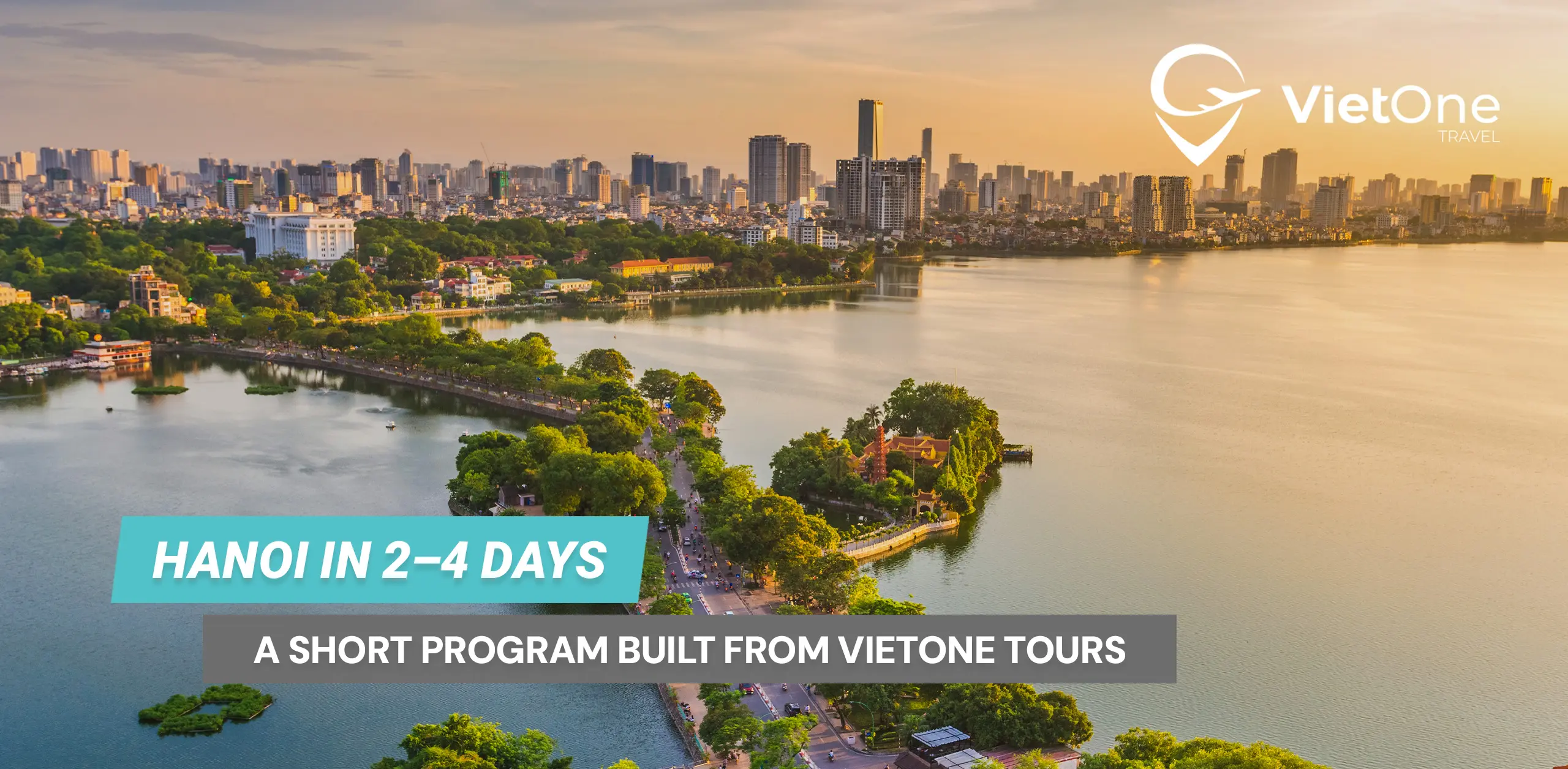
The Hanoi walking tour experience starts with atmosphere: a 36-street Old Quarter where every road was once named after the guild that worked it. — Silk Street, Silver Street, Paper Street. Today many of those streets still trade in their original goods, alongside coffee shops, boutique hotels, and food stalls that haven’t changed hands in three generations.
Hanoi’s walkability stems from three layered city zones, all tightly packed and stitched together by tree-lined sidewalks:
- The Hanoi Old Quarter walking circuit — the most photographed slice of the city, with narrow lanes packed with shophouses.
- The French Quarter — wide colonial avenues, ochre villas, and elegant landmarks like the Opera House and St Joseph’s Cathedral.
- The lakeside districts — Hoan Kiem Lake with its iconic red Huc Bridge, and West Lake, both natural anchors for half-day strolls.
What this means for your itinerary: a full day in Hanoi rarely needs more than a short hotel transfer. Once your clients are on the ground, almost everything sells itself on foot. VietOne’s Hanoi Full Day City Tour covers the city’s signature landmarks with a local guide and a Water Puppet finale, while the Hanoi Half Day City Tour works beautifully as a shorter introduction for clients on tighter schedules.
| “Hanoi rewards travellers who slow down. Some of its best moments — a bowl of pho on a plastic stool, a craftsman bending bamboo in a doorway — only reveal themselves to people walking, not driving.” |
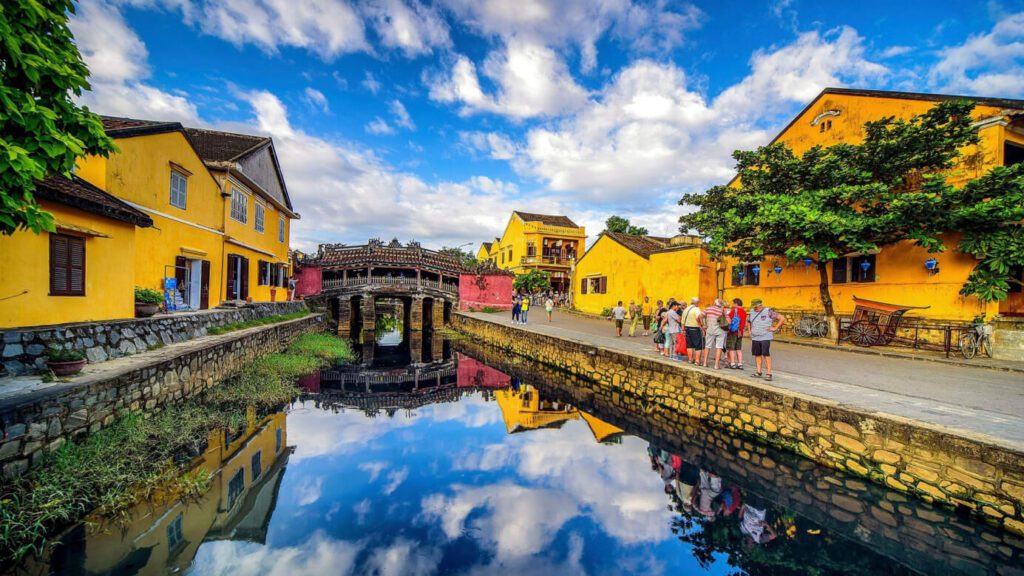
Hoi An Walking Tour: The Ancient Town Built for Slow Travel
If Hanoi is dense, the Hoi An walking tour experience is intimate. The Hoi An ancient town walking circuit is one of the most pedestrian-friendly in Southeast Asia, with motorbike-free zones during peak visitor hours, lantern-lit evenings, and a riverside core that can be crossed in twenty unhurried minutes.
For European clients in particular, Hoi An is the easy “yes” of a Vietnam itinerary. The walking experience here includes:
- The Japanese Bridge and Phung Hung old house — emblems of the town’s Chinese, Japanese, and European trading heritage.
- Tan Ky and Quan Thang ancestral homes — still lived in by descendants of the original merchant families.
- Riverside lantern markets that come alive after dusk and turn the whole town into something out of a watercolour.
- Foot-and-bicycle excursions into Tra Que herb village and Cam Thanh’s coconut palm waterways, easily added as half-day extensions.
This kind of compact, character-rich destination is exactly what agents need when clients ask for “somewhere we can wander, not rush.” Built into a 12- to 15-day Vietnam programme, Hoi An tends to become the emotional centrepiece of the whole trip — the place clients post about most, and the place they remember in detail years later.
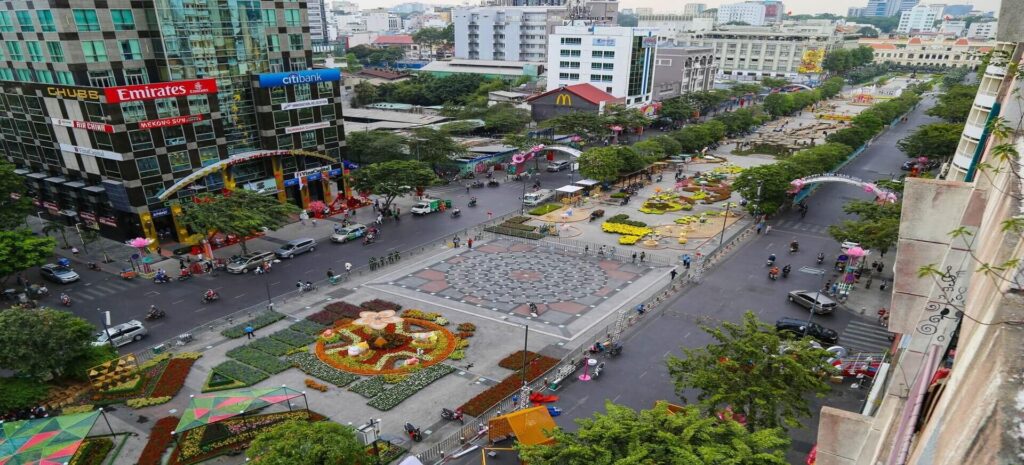
Ho Chi Minh City: The walking city your clients didn’t see coming
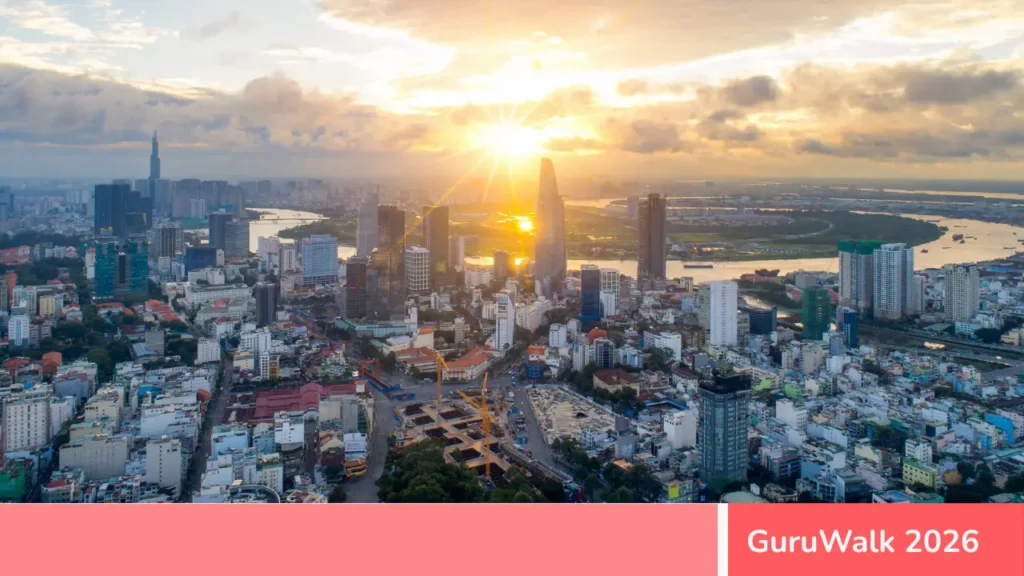
Here’s the surprise on the 2026 walkable cities Asia list: the Saigon walking tour circuit is one of the most concentrated in urban Southeast Asia. The trick is knowing where to start.
District 1, the historic core, packs an extraordinary amount into a small footprint:
- Notre Dame Cathedral and the Central Post Office — both designed in the French colonial era, and a five-minute stroll apart.
- Reunification Palace and its open gardens — a short walk from the cathedral, with shaded lawns and clear lines of sight for photography.
- Ben Thanh Market — Saigon’s most famous trading hub, surrounded by walking streets and rooftop bars that fill up at sunset.
- Nguyen Hue pedestrian boulevard — the city’s main walking promenade, bookended by City Hall and the Saigon River.
- The Saigon River waterfront — with new pedestrian zones expanded across recent years and excellent sundowner options.
Around this core, the city’s character spills out: street-food alleys in District 3, the colonial elegance of Dong Khoi, and the lantern-strung Chinese temples of Cholon. Walking is the only way to connect them properly — every taxi journey skips the small, vivid moments that turn a city tour into a memory.
For a structured introduction, VietOne’s Saigon city tours and Mekong day trips are detailed across the packages portfolio, and our team can pair them with walking-focused free time to give clients the full picture.
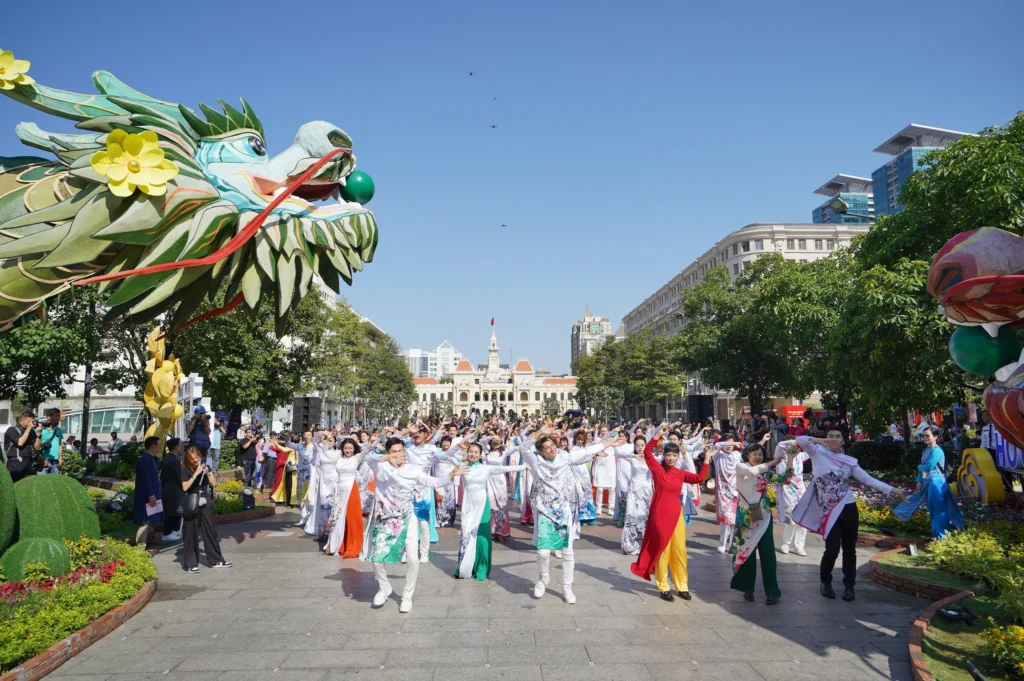
Vietnam Walking Tours at a Glance: Hanoi vs Hoi An vs Saigon
Use this comparison to position each city to clients with different priorities — the trio works best when you let them complement, not compete with, each other.
| City | Best for | Walking core | Pace |
|---|---|---|---|
| Hanoi | Heritage immersion, street food, craft culture | Old Quarter + Hoan Kiem Lake | Dense, layered, sensory |
| Hoi An | Romance, photography, lantern-lit evenings | Ancient Town (UNESCO) | Intimate, slow, postcard-perfect |
| Ho Chi Minh City | Colonial architecture, modern energy, culinary depth | District 1 + waterfront | Vibrant, fast-yet-walkable |
Why this trend matters for European and Russian agents in 2026
Vietnam slow travel isn’t a niche anymore — it’s mainstream for European and Russian clients in 2026. European travellers, particularly from Germany, Switzerland, and Poland, are increasingly choosing destinations where the city itself is the experience, not just a transit point between attractions. Russian travellers, a fast-growing segment for Vietnam in 2026, share this preference: meaningful days, walkable neighbourhoods, real cultural contact.
The implications for agents are clear:
- Pitch Vietnam against European city breaks, not just tropical holidays.
- Build itineraries with at least one full day on foot in each major city.
- Use walking experiences as the bridge between cultural visits and authentic local meals.
- Lean on the GuruWalk Vietnam credential when clients hesitate — it’s a recognised global benchmark for walking cities, not a marketing line.
Building a Vietnam Walking Tours Itinerary: Practical Structure
A vietnam walking tours itinerary typically looks like this — structured for vietnam slow travel pacing across three cities:
- Days 1–3: Hanoi — guided morning tour, free-time afternoons in the Old Quarter.
- Days 4–6: Ha Long Bay cruise — a deliberate water-based contrast in pace.
- Days 7–9: Hoi An — walking-led, lantern evenings, a day to slow right down.
- Days 10–12: Saigon and the Mekong Delta — colonial walks plus a river escape.
VietOne’s Vietnam Insider Journey (15 Days) is a strong foundation for this pacing, covering twelve key destinations from Hanoi and Mai Chau through Hue, Hoi An, and Saigon. For agents building bespoke itineraries, our team can layer in dedicated walking experiences, multilingual local guides, and well-placed rest stops in each city — so the slow pace your clients are paying for actually feels slow.

How VietOne helps you sell Vietnam walking tours
We’re a Saigon-based DMC with 33 years of ground-level expertise in Vietnam, working closely with European and Russian travel agents on customised itineraries. When you’re positioning Vietnam as a walking destination, here’s what we bring to the table:
- Expert English-, German-, and Russian-language guides for hanoi walking tours, hoi an walking tours and saigon walking tours — people who know the streets, not just the landmarks.
- Walking-focused tour packages across Hanoi, Hoi An, and Saigon — both half-day and full-day formats.
- Tailor-made itineraries that build genuine slow-travel pacing into multi-city programmes.
- Reliable ground handling from hotel pickups to private transfers between walking destinations, so your clients never lose momentum.
For walking-led group programmes, our Vietnam Group Tour: 7 Powerful Reasons to Start in Ho Chi Minh City breakdown explains why southern Saigon is the most agent-friendly starting point — and for corporate or incentive groups looking for walkable downtime between meetings, our MICE Vietnam guide is the companion read.
| Build a Vietnam walking itinerary your clients will rave about Vietnam earned its place on the world’s walking-cities map. Now it’s your turn to translate that into bookings. Contact the VietOne Travel team in Saigon and we’ll help you build a programme that lets your clients experience Hanoi, Hoi An, and Ho Chi Minh City on foot — the way they were meant to be discovered. |