The first thing most clients notice is the colour of the water. Not the photos they’ve seen — plenty of tropical islands promise turquoise — but the specific shade in the Gulf of Thailand off Phu Quoc’s west coast at three in the afternoon, with the sun low and the sea utterly flat. It is an almost unreal blue-green, the kind that makes people stop talking mid-sentence and reach for their phones without quite knowing why.
Then they find out about the pepper. And the fish sauce. And the prison. And the fact that one of the most powerful emperors in Vietnamese history once hid here, hunted and outnumbered, rebuilding his forces on this island before going on to found a dynasty.
Phu Quoc has always been more than a beach. The problem is that most agents have only ever sold it as one. That changes in 2026, because the numbers are impossible to ignore: international arrivals grew 72% year-on-year, with more than 983,000 tourists arriving in January alone. Expedia named it one of the most searched destinations of 2026. Russian arrivals — VietOne’s core European market — surged. And the island’s airport has just been expanded to handle 20 million passengers a year.
This Phu Quoc island guide gives travel agents everything they need to sell Vietnam’s fastest-growing beach destination with complete confidence — history, beaches, attractions, logistics, and the numbers behind the 2026 boom.

Phu Quoc Island Guide: What This Pearl Island Vietnam Actually Is
Phu Quoc is Vietnam’s largest island, sitting in the Gulf of Thailand off the Cambodian coast — technically closer to Kampot, Cambodia than to Ho Chi Minh City. It’s part of an archipelago of 22 islands, but the main island is the draw: roughly 50km long, teardrop-shaped, about the same size as Singapore. More than half of it is protected as Phu Quoc National Park — dense tropical forest that blankets the interior spine of mountains and spills right down to the shoreline in the less-developed north and east.
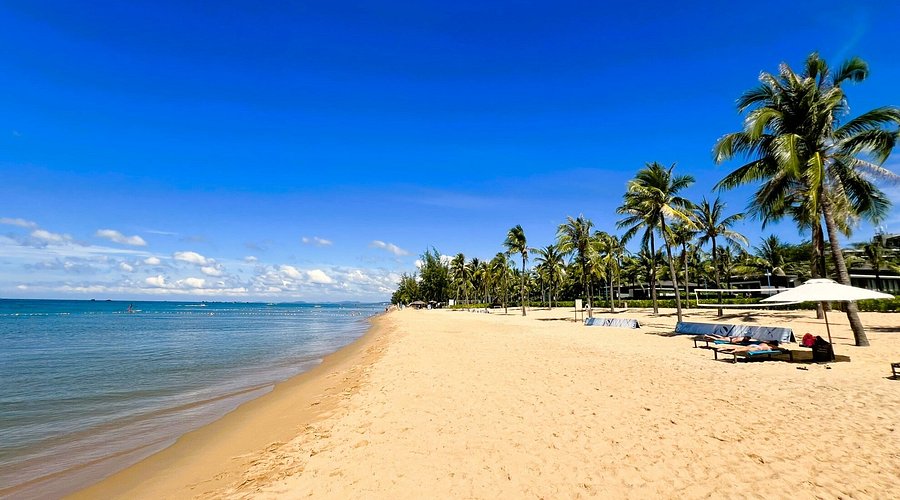
The coastline runs for 150km, which sounds like a lot until you’re standing on Sao Beach Phu Quoc on the southeast coast, looking at white sand so fine it squeaks, and realising you’ve barely scratched the surface of what the best beaches Phu Quoc offers actually look like. The west coast catches the sunset year-round. The south has the most accessible Phu Quoc snorkelling. The north is still largely raw. Every compass direction has a different character, and that’s before you get to what’s inland.
One more thing travel agents should always mention: Phu Quoc is the only place in Vietnam that offers 30-day visa-free access to nationals of any country, provided you fly directly in and out without connecting to the Vietnamese mainland. For European and Russian clients who find Vietnam’s visa process fiddly, this is a significant and very practical selling point.
| “Phu Quoc is the only place in Vietnam that offers 30-day visa-free access to any nationality — a practical selling point that should be in every agent’s pitch.” |

Phu Quoc Vietnam: A History Deeper Than Its Beaches
Phu Quoc Vietnam’s past is layered, unlikely, and genuinely fascinating — the kind of story that transforms a beach stop into a place clients actually understand.
Koh Tral: the Khmer centuries
For most of recorded history, the island was known as Koh Tral and fell within the sphere of Khmer civilisation — the empire that built Angkor Wat. Small fishing communities populated the coast, and the island was more valuable as a maritime waypoint than as a settlement. Its waters were rich in anchovies and its forests yielded timber, sea cucumber (a prized trading commodity exported as far as China), and the particular soil conditions that would later make its pepper extraordinary.
Vietnamese settlers and the Emperor in hiding
Vietnamese settlers began arriving in the 1600s, and by the 18th century Phu Quoc had acquired a pivotal role in mainland Vietnamese politics. Between 1782 and 1786, a young royal named Nguyen Anh was hunted across southern Vietnam by the Tay Son rebels, who had overthrown the Nguyen lords and were systematically eliminating the family. Nguyen Anh repeatedly sought refuge on Phu Quoc, using the island as a base to regroup, find allies, and plan his counterattack. He eventually succeeded: by 1802, he had recaptured the entire country and declared himself Emperor Gia Long — the founder of the Nguyen Dynasty, the last imperial family of Vietnam.
Phu Quoc was not an incidental detail of this story. It was the hiding place that made the dynasty possible. A small French missionary named Pigneau de Behaine sheltered Nguyen Anh on the island during this period and later helped him negotiate European military support — a connection that planted the seeds of France’s much later colonial interest in Vietnam.
French rule, Phu Quoc fish sauce, and Coconut Prison
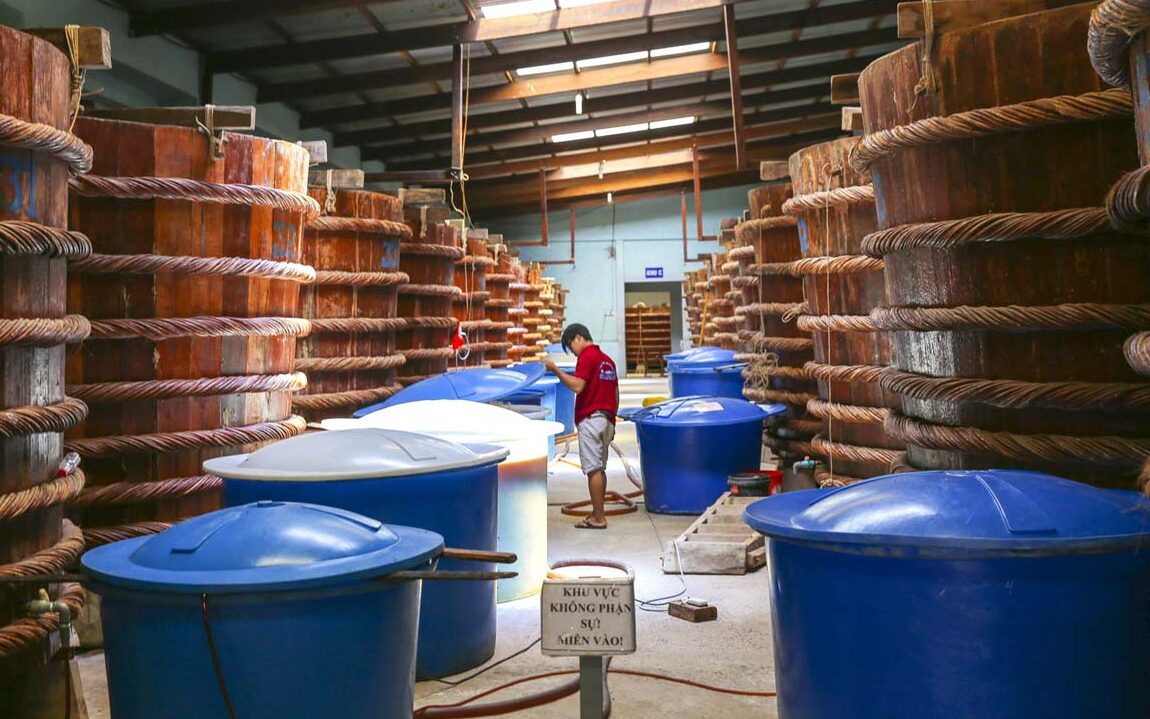
France placed Phu Quoc under Cochinchina administration in 1867, formally recognising the island as part of Vietnam in 1874. The French developed rubber and coconut plantations, but the population remained sparse — fewer than 5,000 people even as late as the 1940s. What the French did not develop, the island’s fishing communities had already perfected: the fermentation of anchovies into nước mắm — fish sauce — using the distinctive method of layering fish and salt in wooden barrels for twelve months or more. Phu Quoc fish sauce became, and remains, the most prized in the world.
In 1946, the French colonial government built a prison in the south of the island, in a village of coconut trees. It became known as the Coconut Prison. During the American War, the United States and South Vietnamese government expanded it massively, renaming it the Phu Quoc Communist Prisoner Camp. At its peak in the early 1970s it held over 40,000 prisoners. The conditions documented in this facility were brutal — the reconstructed tiger cages and barbed-wire compounds that visitors see today are among the most sobering sites in southern Vietnam.
The prison was declared a national historical monument in 1993. Today it functions as an open-air museum, visited by tens of thousands of tourists annually — and for European clients with a serious interest in 20th-century history, it offers a completely different dimension to the island.
Modern transformation
After 1975, Phu Quoc endured a brief invasion by the Cambodian Khmer Rouge in May of that year, before Vietnam retook the island and the subsequent Cambodia-Vietnam War reshaped the region’s geopolitics entirely. Development was slow for decades. The international airport opened in 2012. The undersea electricity cable connecting the island to the national grid was completed in 2014. Phu Quoc National Park was established in 2001 and the wider Kien Giang Biosphere Reserve — of which the island is part — received UNESCO recognition in 2006.
What has happened since 2012 has been one of the most dramatic tourism transformations in Southeast Asia. An island that had fewer than 1,000 inhabitants approaching the 20th century now hosts 8.5 million visitors annually. It is, in the most literal sense, a place in mid-leap — which means agents who understand both its depth and its direction are well placed to sell it with genuine authority.
Phu Quoc Travel Guide: Which Client Profile Goes Here
Beach and resort clients — the obvious core
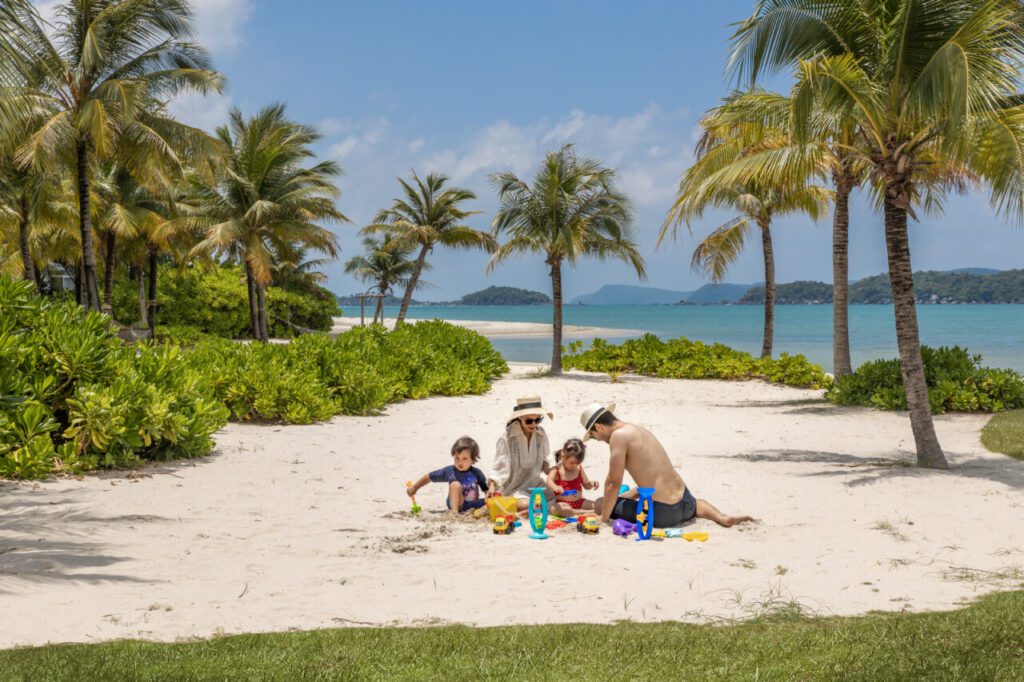
The main draw remains exactly what it looks like: 150km of coastline with some of the most beautiful beaches in Southeast Asia, a water temperature that stays between 28–30°C from November to April, and a resort infrastructure that now ranges from budget bungalows to genuine five-star properties. Sofitel, JW Marriott, InterContinental, and Regent all have a presence on the island. For European clients who want the beach credentials of Bali or Phuket but with lower prices and less tourist saturation, Phu Quoc is the correct answer.
Russian clients — the fastest-growing segment
Russia has been Vietnam’s fastest-growing source market in 2026, with arrivals up 212% year-on-year. Phu Quoc is particularly popular with Russian clients, who tend to prefer extended stays, self-contained island resorts, excellent seafood, and a warm climate throughout the winter months. The island’s combination of direct connectivity from Moscow (via connecting flights through the region), generous visa-free access, and genuine luxury at competitive prices makes it the strongest single proposition for this market.
Honeymooners
Phu Quoc has everything honeymooners want: extraordinary sunsets (the west coast faces the Gulf of Thailand, giving unobstructed evening colour every single night), secluded beaches, private villa resorts, night markets for atmosphere, and enough to do that couples who want activity don’t spend the week inert. It works as a standalone honeymoon destination, and it works as the beach finale of a country-crossing itinerary. See the VietOne Vietnam Honeymoon guide for romantic itinerary structures that include Phu Quoc.
Families
The combination of calm Gulf of Thailand waters, shallow-entry beaches, the Hon Thom cable car, the VinWonders theme park, Vinpearl Safari (Vietnam’s largest wildlife conservation park), and easy access from Ho Chi Minh City makes Phu Quoc a very strong family destination. The island also remains warm and sunny when northern Vietnam and the central coast can be cool and grey in December and January — making it the natural southern addition to a family’s temple circuit. The VietOne Family Travel guide covers how to build these programmes.
Culturally curious clients
The Coconut Prison, Dinh Cau Temple, Ham Ninh Fishing Village, the fish sauce factories, the pepper farms, and the Coi Nguon Museum together make a surprisingly rich cultural day for clients who want more than sand. Phu Quoc is not merely a beach — it has a story, and travel agents who tell that story first tend to close bookings faster.
| AGENT INSIGHT — SELLING PHUKET vs PHU QUOCWhen European clients ask whether Phu Quoc is ‘like Phuket,’ the honest answer is: it’s what Phuket was twenty years ago. Quieter beaches, fewer crowds, better value for money, with world-class resorts already in place. The difference is that Phu Quoc is in Vietnam — which means the food, the culture, the history, and the people are in a completely different league. For travel agents, this is the most effective single reframe for the Phu Quoc pitch. It lands every time. |

How to Get to Phu Quoc Vietnam: 4 Practical Options
Phu Quoc International Airport now handles direct connections from across Asia. From within Vietnam, the options are:
- Direct flight from Ho Chi Minh City (Tan Son Nhat): approximately 45 to 55 minutes, with at least 20 daily flights operated by Vietnam Airlines, VietJet, and Bamboo Airways. This is the default route for programmes based in the south.
- Direct flight from Hanoi: approximately 2 hours, multiple daily connections. For north-to-south itineraries, this is the clean finale option — fly into Hanoi, travel south through the country, then fly to Phu Quoc for the island finale.
- Speed ferry from Ha Tien: approximately 1.5 hours from the mainland border town, used occasionally for FITs routing overland.
- Ferry from Rach Gia: 2.5 hours, a more scenic but slower option, rarely used for European group programmes.
For programmes originating from Saigon, the standard build is a Saigon city programme followed by a short flight to Phu Quoc for the beach finale. For groups doing a full Vietnam sweep, Phu Quoc works as the reward at the end — fly into Hanoi, experience the country from north to south, then finish on the island. Browse the VietOne packages portfolio for existing itinerary structures, or contact the team to build a bespoke route.
Phu Quoc Island Guide: Best Beaches, Parks & Attractions

The beaches
There is no single beach that represents Phu Quoc — the island’s coastline is divided into distinct characters by geography and development level.
- Long Beach Phu Quoc (Bai Truong): the main 20km west-coast beach, stretching from Duong Dong town south through the resort corridor. Calm water, excellent sunsets, easy access to restaurants and nightlife, lined with properties at every price point. The workhorse beach for most programmes.
- Sao Beach Phu Quoc (Bai Sao): the postcard beach and one of the best beaches Phu Quoc offers. On the southeast coast, reached by a short drive through national park. Powder-white sand, turquoise shallow water, low development. Best during dry season when the water is clearest.
- Ong Lang: northwest coast, deliberately undeveloped, with a handful of boutique eco-resorts tucked behind the treeline. The choice for clients who want Phu Quoc without the resort strip.
- Ganh Dau and Bai Thom: far north, dirt roads, almost entirely undeveloped. For adventurous FITs who want to feel like they found something. Require a motorbike or off-road vehicle.
Hon Thom Cable Car
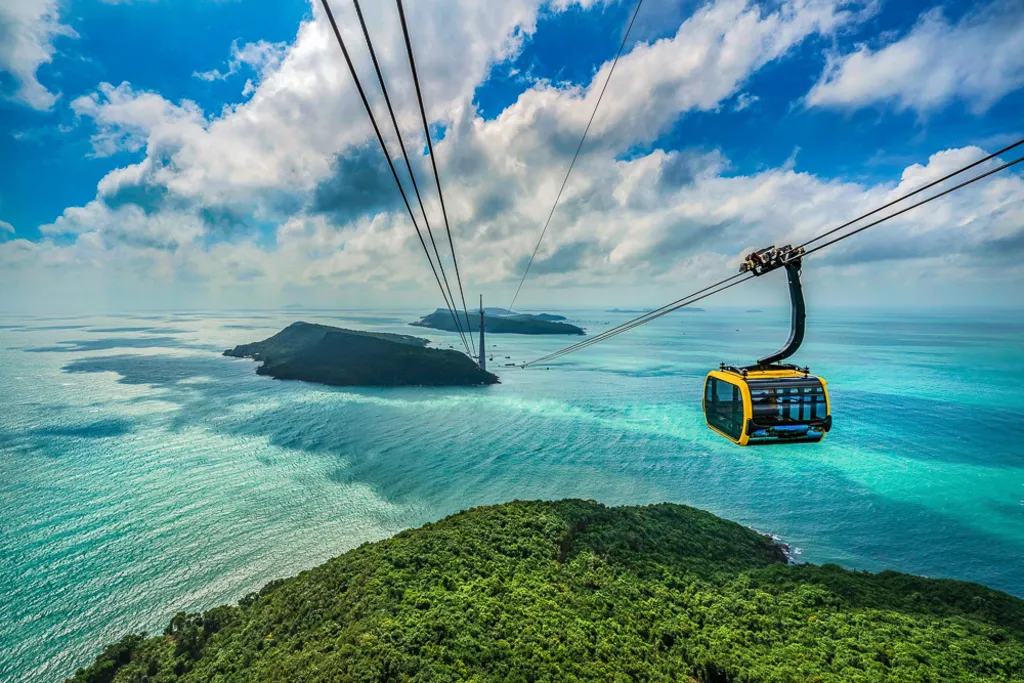
The world’s longest sea-crossing cable car, at 7,899.9 metres, connects Phu Quoc’s southern coast to Hon Thom Island (Pineapple Island). The crossing takes about 15 minutes and delivers panoramic views over the archipelago — on a clear day you can see across to Cambodia. At the other end: Aquatopia Water Park, a beach club, restaurants, and the romantic Kiss Bridge suspension footbridge over the sea. Excellent for families and genuinely impressive for any client.
An Thoi Archipelago — Phu Quoc Snorkelling & Island-Hopping
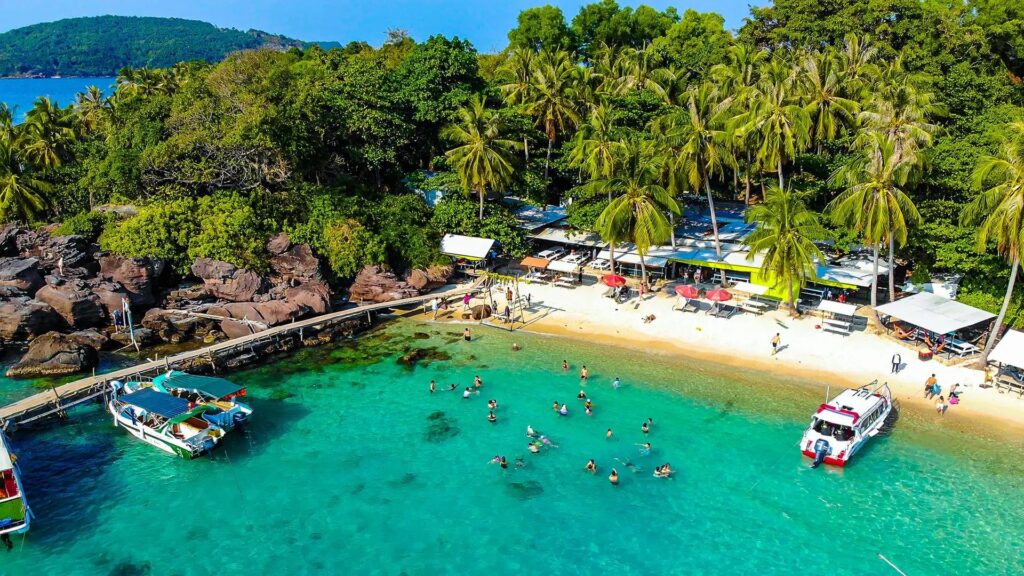
The 15-island group off Phu Quoc’s southern tip is where the diving and Phu Quoc snorkelling happens. Full-day boat tours visit two to three islands, with coral reef snorkelling, swimming, fishing with handheld lines, and a raucous group lunch on board. The coral here is alive and colourful — genuinely impressive by Southeast Asian standards. For serious divers, the visibility around the An Thoi islands reaches 15 metres on good days in the Phu Quoc dry season.
Phu Quoc National Park
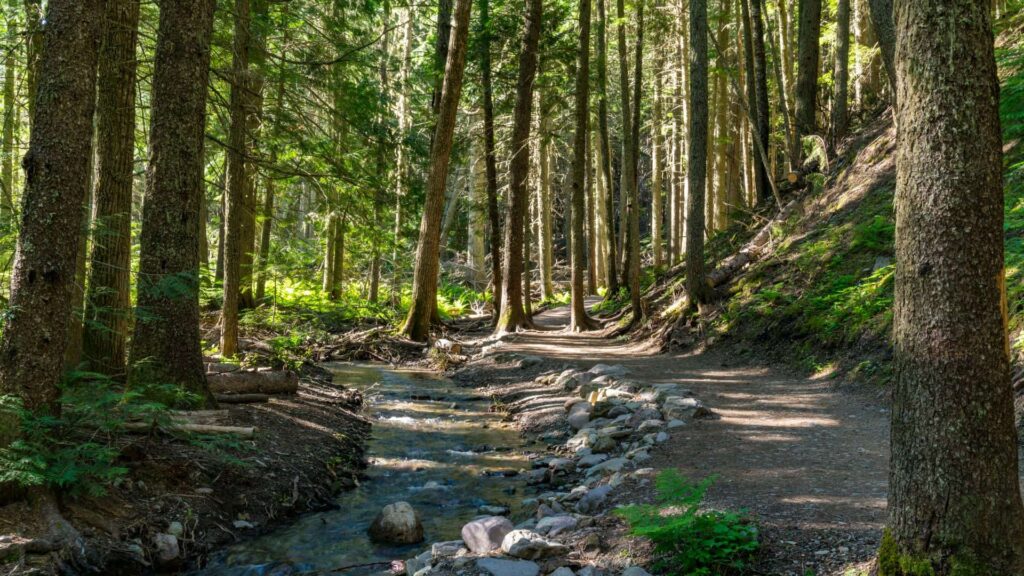
More than half the island is protected as Phu Quoc National Park — 50,000 hectares of dense tropical forest with endemic bird species, primates, and a trail network that rewards those willing to leave the beach. Suoi Tranh waterfall is a pleasant 30-minute walk from the main road and offers a natural pool for swimming. For clients on longer stays who want a break from the beach, a morning in the park followed by lunch and a late afternoon on the sand is a highly satisfying structure.

Coconut Prison (Phu Quoc Prison Museum)
Located in the south of the island near An Thoi town, this former prisoner-of-war camp now operates as an open-air historical museum with reconstructed tiger cages, dormitory barracks, and an exhibition building documenting the conditions inside between 1946 and 1975. It is sobering and important — not a comfortable visit, but one that meaningfully reframes the island for clients who might otherwise see it only as a beach resort. Best combined with a Sao Beach Phu Quoc afternoon to balance the day.
Fish sauce factory tours
Phu Quoc fish sauce production exceeds 40 million litres annually, using a method unchanged for centuries: local anchovies are layered with salt in enormous wooden barrels and left to ferment for 12 months or more. The result is widely considered the world’s finest nước mắm — a deeper, more complex, less pungent product than mass-market fish sauces from elsewhere. Factory tours last 30 to 45 minutes and include tasting. For European clients who already cook with fish sauce, this is a fascinating production story. For those who don’t, it’s a gateway into understanding the flavour foundation of Vietnamese cuisine.

Pepper farm visits
Phu Quoc’s black pepper is globally prized, grown on the island’s mineral-rich volcanic soil and processed without the industrial treatments common elsewhere. Farm visits let clients walk the growing lines, learn the harvest cycle, and buy whole peppercorns directly — one of the better quality souvenirs available on the Pearl Island Vietnam. The pepper here is notably aromatic and notably expensive by comparison to supermarket varieties, which is itself a story clients enjoy telling.
Dinh Cau Temple and Duong Dong Night Market
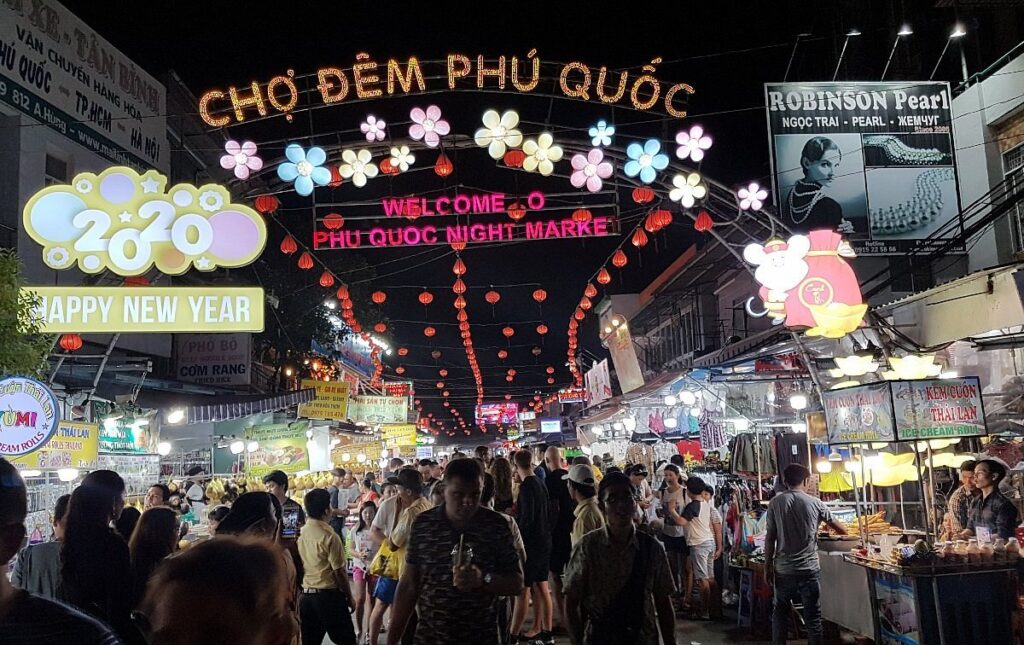
Dinh Cau is a small but striking Buddhist and animist temple built in 1937 on a rocky promontory at the mouth of the Duong Dong River. Active as both a religious site and, historically, as a lighthouse, it’s the most photographed landmark in Duong Dong town and a genuinely atmospheric stop at sunset. Immediately adjacent, the Dinh Cau Night Market opens after dark with grilled seafood, tropical fruits, local snacks, and craft stalls. The combination of temple at sunset and market dinner makes a perfect easy evening in town.
| “The Phu Quoc fish sauce factory, the pepper farm, the prison, the fishing village — the clients who spend half a day with these come back with a story. The ones who only lie on the beach come back with a tan.” |
Phu Quoc attractions at a glance
Quick-reference grid for matching attractions to client profiles.
| Attraction | What it is | Best for |
|---|---|---|
| Long Beach Phu Quoc (Bai Truong) | 20km west-coast beach; calm water, sunset views, lined with hotels and restaurants | First-timers; families; sunset lovers |
| Sao Beach Phu Quoc (Bai Sao) | Southeast coast; powdery white sand and turquoise water; quieter, postcard-perfect | Couples; photography; peak season swimming |
| Ong Lang Beach | Undeveloped northwest cove with natural shade and boutique eco-resorts nearby | Slow travellers; eco-conscious clients |
| Hon Thom Cable Car | World’s longest sea-crossing cable car (7,899m) to Hon Thom Island and Aquatopia Water Park | Families; thrill-seekers; panorama photography |
| An Thoi Archipelago — Phu Quoc snorkelling | 15-island group at Phu Quoc’s south tip; full-day island-hopping and coral reef snorkelling | Divers; active travellers; water sports |
| Phu Quoc National Park | Over 50% of the island; dense tropical forest, trails, endemic wildlife | Hikers; naturalists; adventure clients |
| Coconut Prison Museum | Sobering WWII/Vietnam War POW site; reconstructed tiger cages and outdoor exhibitions | History-conscious travellers; cultural depth |
| Phu Quoc fish sauce factory tour | Traditional wooden-barrel fermentation of world-famous Phu Quoc nuoc mam | Foodie clients; cultural immersion |
| Pepper farm visit | Working plantation of Phu Quoc black pepper, prized globally | Cultural interest; culinary tours |
| Dinh Cau Temple | 1937 Buddhist/animist rock shrine at the river mouth; active community pilgrimage site | Spiritual interest; local cultural insight |
| Ham Ninh Fishing Village | Traditional stilt-house fishing community on east coast; fresh seafood on wooden piers | Authentic experiences; food lovers |

Best Time to Visit Phu Quoc: Dry Season Guide for Agents
Phu Quoc has just two seasons: the Phu Quoc dry season (November to April) and wet season (May to October). Unlike Vietnam’s central and northern regions, which have complex regional weather patterns, Phu Quoc is straightforward: dry season is when you go for beach programmes, and wet season is significantly less suitable for most European and Russian client briefs.
| Period | Months | Conditions | Agent verdict |
|---|---|---|---|
| Peak dry — best overall | Dec – Mar | Calm seas, clear skies, 25–30°C, low humidity | Book early; prime beach and diving conditions |
| Late dry — good value | Nov & Apr | Transition months; still generally sunny; April warming | Fewer crowds, reasonable prices; solid choice |
| Early wet — shoulder | May – Jun | Short afternoon showers; still largely sunny mornings | Budget-friendly; lush green interior for park visits |
| Rainy season | Jul – Oct | Regular heavy rain; rough seas; some boat trips cancelled | Avoid for beach-led programmes; cultural visits possible |
| Rainy peak — avoid | Aug – Sept | Heaviest rain, strong south-west monsoon | Not recommended for European/Russian beach trips |
The best time to visit Phu Quoc is December through March — the heart of the dry season, when seas are flattest, diving visibility is best, and the temperature sits at the most comfortable 25–28°C. Book early: this window overlaps with the Russian winter escape market and fills up quickly at better properties. April and early November are good second choices and offer slightly lower prices with largely comparable conditions.
Phu Quoc Fish Sauce, Pepper Crab & What to Order
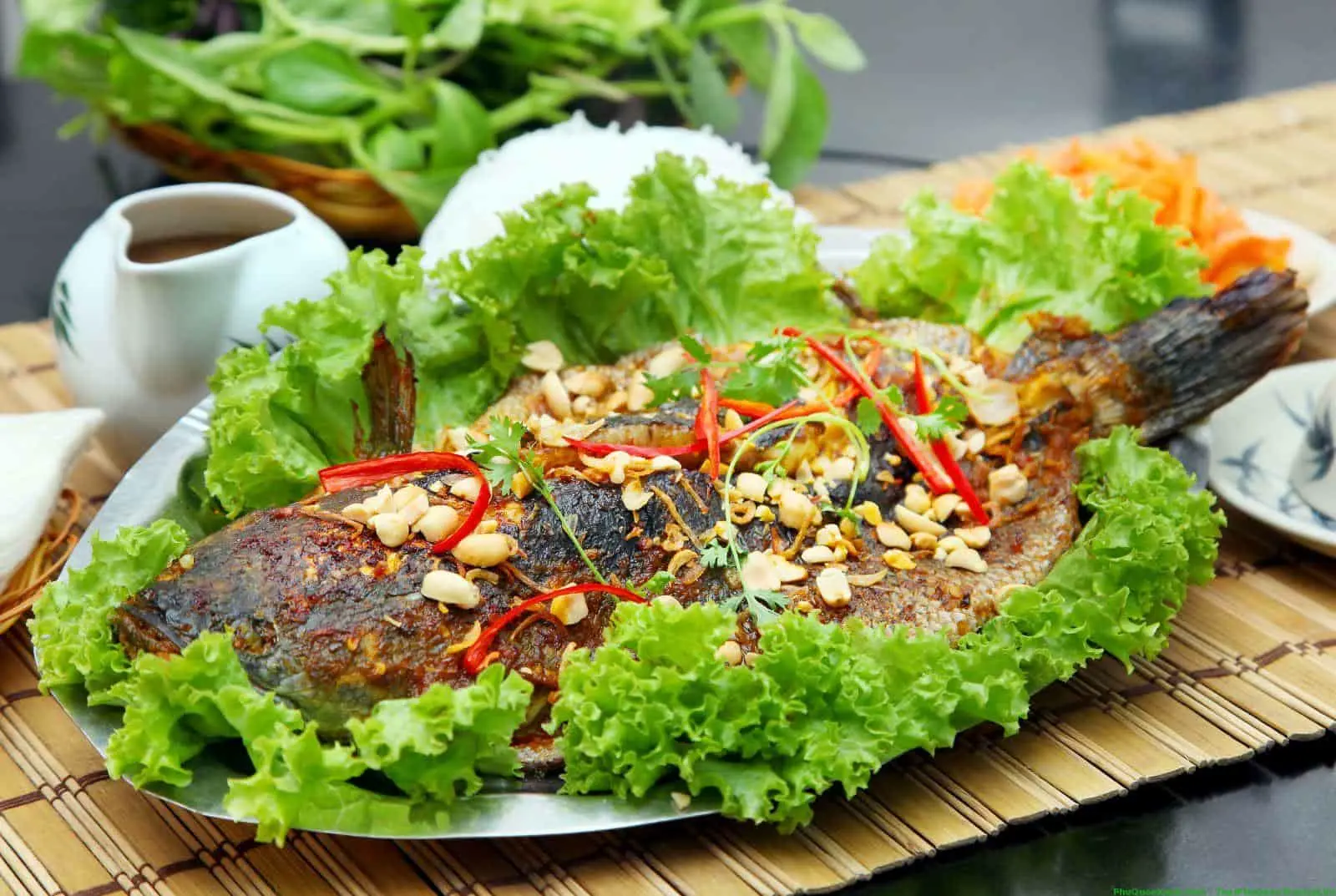
Phu Quoc’s cuisine is dominated by what the sea provides, seasoned by what the land grows. A few specifics worth communicating to clients:
- Ham Ninh crab: boiled mud crab served with a dipping sauce of black pepper, salt, and lime juice. The crab is sweet; the pepper from the island is genuinely special. This combination is the dish that defines the island.
- Grilled seafood at the Dinh Cau Night Market: squid, prawns, scallops, sea urchin, and whole fish — all grilled over charcoal to order. Choose by pointing, pay by weight. Loud, vivid, excellent value.
- Pepper crab and pepper seafood: almost every seafood dish can be elevated by specifying Phu Quoc black pepper. It’s worth doing every time.
- Herring salad (gỏi cá trích): thinly sliced raw herring with grated coconut, herbs, fried garlic, and lime — a dish unique to the island and not easily found elsewhere in Vietnam.
- Fresh Phu Quoc fish sauce tasting: at any fish sauce factory, premium-grade nước mắm direct from the barrel is a revelation for clients who know the ingredient and a conversion experience for those who don’t.
How Travel Agents Programme Phu Quoc Into a Vietnam Itinerary
Phu Quoc works in two distinct modes: as a self-contained island escape (fly in, stay 4–7 nights, fly out) or as the beach finale of a longer north-to-south or south-focused Vietnam programme. The right choice depends entirely on the client brief.
Island escape (standalone)
For Russian clients and Europeans who want primarily a beach holiday with cultural texture, Phu Quoc works brilliantly as a standalone: 5 to 7 nights, morning activities (cable car, factory tour, fishing village, national park trail), afternoons on the beach, evenings at the market or a resort restaurant. The Mui Ne Beach Retreat and the Ho Tram Beach Retreat offer reference structures for this kind of coastal programming from Saigon; Phu Quoc operates on the same principle with more island depth.
North-to-south itinerary finale
The classic full-Vietnam routing is Hanoi → Halong Bay → Ninh Binh → Hue → Hoi An → Saigon → Mekong Delta → fly to Phu Quoc. The island becomes the reward: a week of cities, temples, boat tours, and street food, followed by three to five nights of complete decompression on white sand. This is the structure that gets the strongest client reviews and the most repeat bookings.
The Vietnam Insider Journey (15 Days) is the strongest foundation for this structure, covering 12 destinations from north to south. VietOne’s team can extend this with a Phu Quoc finale for clients who want the full arc. For group programmes, our Vietnam Group Tour: Start in Ho Chi Minh City guide explains why Saigon is the most agent-friendly southern launch point, with Phu Quoc as the natural island extension.
| BRIEFING TIP — THE PHU QUOC VISA STORY Always mention the 30-day visa-free entry when pitching Phu Quoc to Russian or European clients who haven’t sorted their Vietnam visa yet. The rule applies if they fly directly into Phu Quoc International Airport and don’t travel to the Vietnamese mainland. For travel agents whose clients want a simple, low-admin beach holiday in Vietnam without navigating e-visa paperwork, this is a decisive practical advantage that applies nowhere else in the country. |
Why 2026 Is the Breakthrough Year for This Phu Quoc Island Guide
For travel agents building their 2026 Vietnam portfolio, the numbers in this Phu Quoc island guide are impossible to ignore: 72% growth in international arrivals, 983,000 tourists in a single month, a 60.7% surge in overall visitor numbers in January. Expedia placed Phu Quoc among the top searched destinations of 2026. The airport expansion brings capacity to 20 million passengers annually. Major international airlines including Air India, China Eastern, and Cathay Pacific have all added or increased routes.
Three forces are driving this simultaneously.
First, the Russian market. Russian clients surged 212% to Vietnam overall in early 2026, and Phu Quoc — with its long Phu Quoc dry season aligned with Russian winter, its competitive luxury pricing, its improving direct connectivity, and its 30-day visa-free rule — is the clear preferred destination for this market.
Second, infrastructure confidence. The new airport capacity, the Hon Thom cable car, the Vinpearl resort developments, and the government’s explicit positioning of Phu Quoc as its premier international beach destination all signal to international agents that the logistics are solved. The island has crossed the reliability threshold.
Third, European pivot from Thailand. A meaningful share of the 2026 European market has shifted from Phuket and Koh Samui — both seen as over-developed and over-priced — toward Southeast Asian alternatives. Phu Quoc offers comparable beach quality, dramatically lower prices, better food, more authentic cultural experiences, and the added depth of a full Vietnam programme around it.
For agents who positioned Bali as the answer three years ago and Phuket as the answer before that, the 2026 answer for clients who want a beautiful, uncrowded, culturally rich Pearl Island Vietnam experience at excellent value is increasingly clear: Phu Quoc.
| Add Phu Quoc to your Vietnam programme Whether it’s a standalone island escape or the perfect finale to a north-to-south Vietnam journey, Phu Quoc is the beach destination that delivers what clients come back and rave about. The VietOne team in Saigon can build the right programme around your client’s brief — from boutique beach breaks to full multi-destination itineraries with a sun-soaked finale. |