All 14 coastlines worth knowing about — where to stay, when to send clients, and the local tips you won’t find in a guidebook.
Here is a thing about Vietnam that does not come up enough at trade shows: the country Vietnam has more coastline than Italy — 3,260 km of it — and many of the best. Over 3,260 kilometres of it — and yet the best beaches in Vietnam are still unknown to most European travel agents.
That is an information problem this guide is designed to fix. Over 3,260 kilometres of it, running from the misty karsts of the north to the tropical island chains of the south, with thirty different beach destinations stretched out in between. Yet ask most European clients to name a Vietnamese beach and you will get one of three answers — Halong Bay (which is technically a bay), Da Nang, or Phu Quoc — and that is on a good day.
This is partly an information problem. Vietnam beach holidays are still sold as an afterthought. Vietnam still gets sold to Western markets as a culture-and-cuisine destination with a beach tacked on at the end. Hanoi, Halong, Hue, Hoi An, Saigon — and then “a few days at the beach” as if any beach will do. The reality is that Vietnam has at least eight genuinely world-class coastal destinations and another half-dozen that are quietly excellent. Each one has a different climate, a different aesthetic, and a different traveller who will love it.
This Vietnam beach guide is for travel agents who want to stop selling Vietnam beaches as an afterthought. We have walked these shorelines, eaten the seafood, and stayed at the resorts. Below is everything you need: where each beach sits, when to send clients, what to book, where to eat, and which sunset is worth the photo. Feel free to use it as a reference, copy bits into your client emails, or send the whole thing to that one agent who keeps booking the same Phu Quoc resort because they cannot remember the name of a second island.
| Vietnam’s coastline does not look like Thailand’s, Bali’s, or the Philippines’. The country’s elongated shape — stretching from the subtropics in the north to the tropics in the south — means its beaches span multiple climate zones, ecosystems, and cultural backdrops simultaneously. |
Getting this right is the single most valuable thing a travel agent can do for a Vietnam beach holiday.
Vietnam Beach Guide 2026: The Climate Map Every Agent Needs
Vietnam’s coast does not have one season. It has three. Booking a Phu Quoc trip in August and a Da Nang trip in November will both go badly, but for different reasons. The country is so long that when one coast is having its perfect dry season, the other is being hit by typhoons. This single fact, more than any other, determines whether your clients come home raving or come home ringing your office line.
The shorthand: central beaches are best from March to August. Southern beaches are best from November to April. Northern beaches are best from May to early September, and even then the sea is rougher than your clients expect. The detailed version:
| Region | Send clients | Avoid |
|---|---|---|
| Northern coast (Halong, Cat Ba, Lan Ha) | May – early Sep | Late Oct – Feb (cool, misty, rougher seas) |
| Central coast (Lang Co, Da Nang, Hoi An) | Mar – Aug | Oct – Nov (typhoon risk, heavy rain) |
| South-central (Quy Nhon, Nha Trang) | Feb – Aug | Oct – Dec (rainy) |
| Mui Ne / Phan Thiet | Nov – Apr (kite season Nov – Mar) | Jun – Sep (occasional rain) |
| Phu Quoc | Nov – Apr | Jun – Oct (monsoon, rough on west coast) |
| Con Dao | Mar – Sep (calm seas, best diving) | Oct – Feb (rough seas, ferries cancelled) |
The strategic implication for itineraries is straightforward. From November to April, route clients south — Phu Quoc, Con Dao, Mui Ne — and combine with a couple of days in central Vietnam if possible. From May to September, send them to Da Nang, Hoi An, Quy Nhon, or Nha Trang. The shoulder months (April and October) are tricky and reward a knowledgeable agent who can match a specific week to a specific coast.
Best Beaches in Vietnam: The North (Drama Over Relaxation)
Northern Vietnam is not really beach country. The water is colder, the season is short, and the appeal is dramatic limestone scenery rather than long stretches of sand. That said, when central Halong gets crowded — and it does — there are a handful of beaches in the area that hold up beautifully on their own terms.
1. Cat Ba & Lan Ha Bay
| Region | Northern Vietnam, Hai Phong |
| Best for | Adventure travellers, kayakers, Halong overflow with fewer crowds |
| When to send | May to early September |
| Get there | 2.5 hrs from Hanoi by road and ferry; or by overnight cruise |
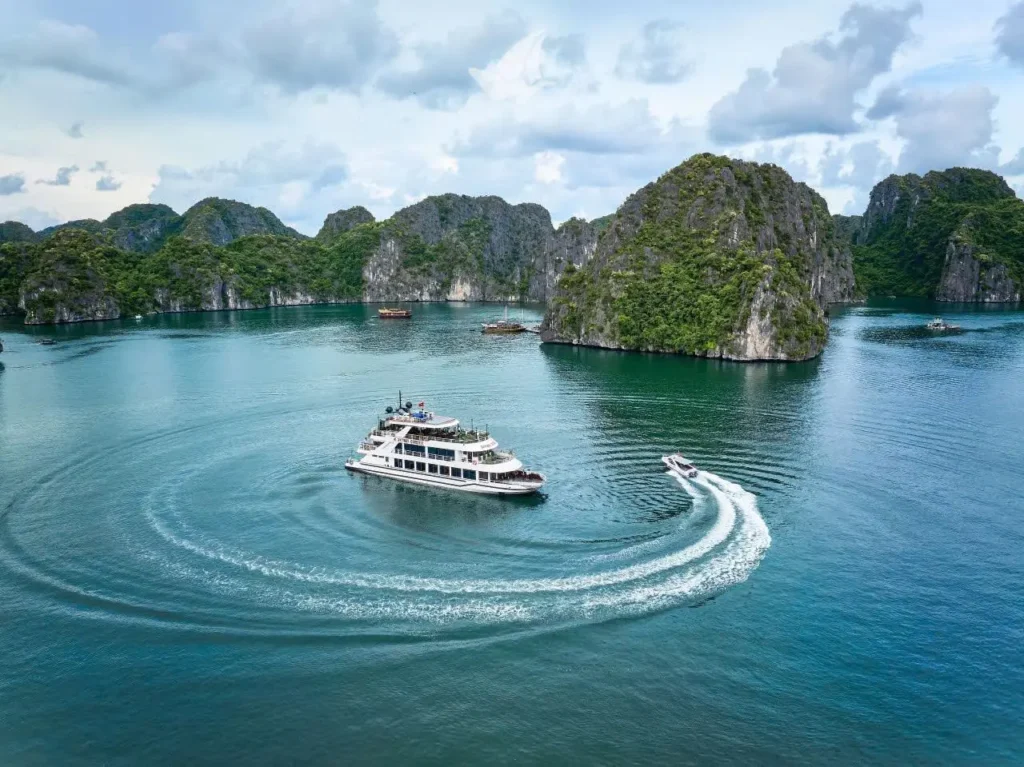
Cat Ba is the largest island in the Halong Bay archipelago, and the beaches here — Cat Co 1, 2, and 3 — are connected by a scenic clifftop path that ranks as one of Vietnam’s most underrated short walks. Cat Co 1 is closest to town and gets busy. Cat Co 3 is the quiet one with cleaner water. None of them are Phu Quoc, but they are not trying to be. The point of Cat Ba is what comes after the beach: kayaking through Lan Ha Bay, climbing in the karsts, eating seafood pulled out of floating fishing villages an hour earlier.
Lan Ha Bay, just south of Halong proper, is the move for travellers who want the limestone scenery without the cruise-ship traffic. It has roughly 300 karst islands, far fewer boats, and more swimmable beaches tucked into the coves. Pair it with two nights on a quality cruise (Aclass Legend, Indochina Junk, or any of the smaller fleets) and your clients get the famous Halong photo without the famous Halong queue.
- Where to stay: Cat Ba Sunrise Resort and Flamingo Cat Ba on the island; or boat-based stays in Lan Ha for the bay experience.
- Where to eat: Floating restaurants in the bay (try the squid). On the island, Yummy Bar and Buddha Belly are reliable for Western and Vietnamese fare.
- The sunset: Better seen from the water than the beach — book a sunset kayak or a junk’s sundeck.
Pair this beach with our Halong Bay & Lan Ha cruise package for clients who want both icons in one trip.
Best Beaches in Vietnam: The Centre — Where the Famous Ones Live
Central Vietnam is where the country earns its beach reputation. The coastline from Hue down to Quy Nhon includes most of Vietnam’s flagship beach destinations, two UNESCO World Heritage sites, and a rapidly expanding collection of five-star resorts. The dry season runs March to August. Outside those months, the typhoon risk is real and the experience disappointing.
2. Lang Co Beach
| Region | Between Hue and Da Nang, central Vietnam |
| Best for | Scenic-drive travellers, luxury seekers, agents pairing Hue with beach |
| When to send | March to August |
| Get there | 1 hr from Da Nang airport, 1.5 hrs from Hue |
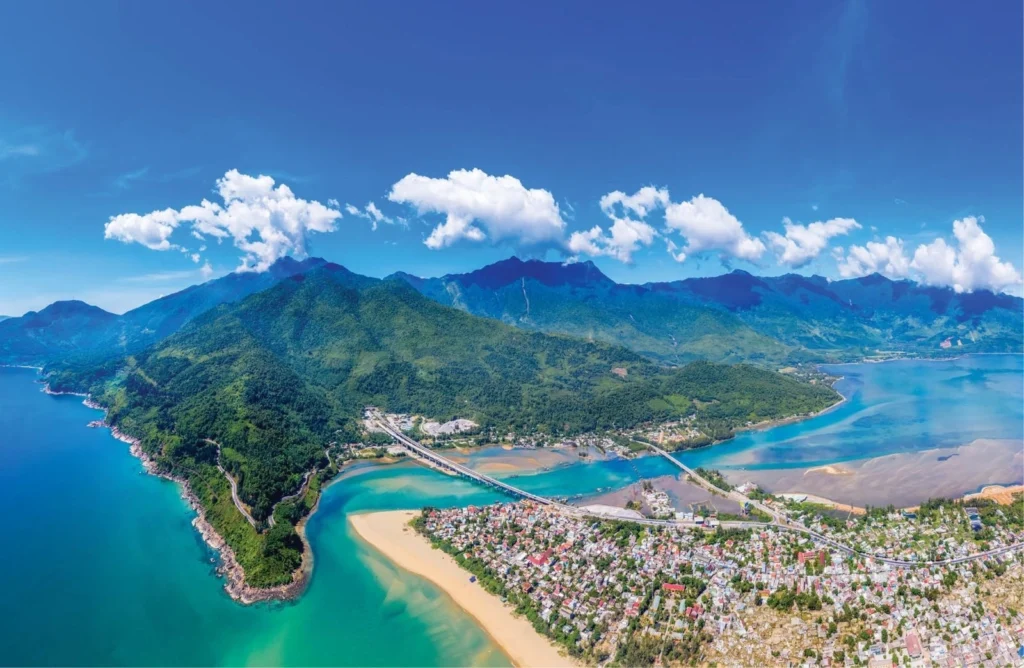
Lang Co is the beach most travellers drive past without realising it. It sits in the gap between Hue and Da Nang, hugging the road that leads up to the Hai Van Pass — and that is exactly the problem. Tour buses cross it in twenty minutes on the way to somewhere else. They should not.
Lang Co is one of just 29 bays in the world recognised by Club des Plus Belles Baies du Monde — the official Most Beautiful Bays Club, which exists and is taken seriously by the people who run beach destinations. The setup is cinematic: a long lagoon on one side, the open East Sea on the other, the Truong Son mountains rising up behind, and the Hai Van Pass twisting along the ridge. Stand on the beach at dawn and you can watch fog burn off the lagoon while fishing boats slide back in with the night’s catch.
The luxury anchor here is Banyan Tree Lang Co and its sister property Angsana, which together occupy a quiet stretch of coast with a Nick Faldo-designed golf course attached. For agents who want to combine Hue’s imperial heritage with two or three nights of beach time, Lang Co is the obvious answer — and a far more interesting one than tacking Da Nang onto the same itinerary.
- Where to stay: Banyan Tree Lang Co (luxury), Angsana Lang Co (mid-luxury, family-friendly).
- Where to eat: The lagoon-side seafood shacks are extraordinary — grilled oysters, steamed clams, whole fish straight from the aquaculture nets. Banyan Tree’s Saffron is the best fine-dining option in the area.
- The sunset: From the Hai Van Pass viewpoint above the bay. Cinematic is the word.
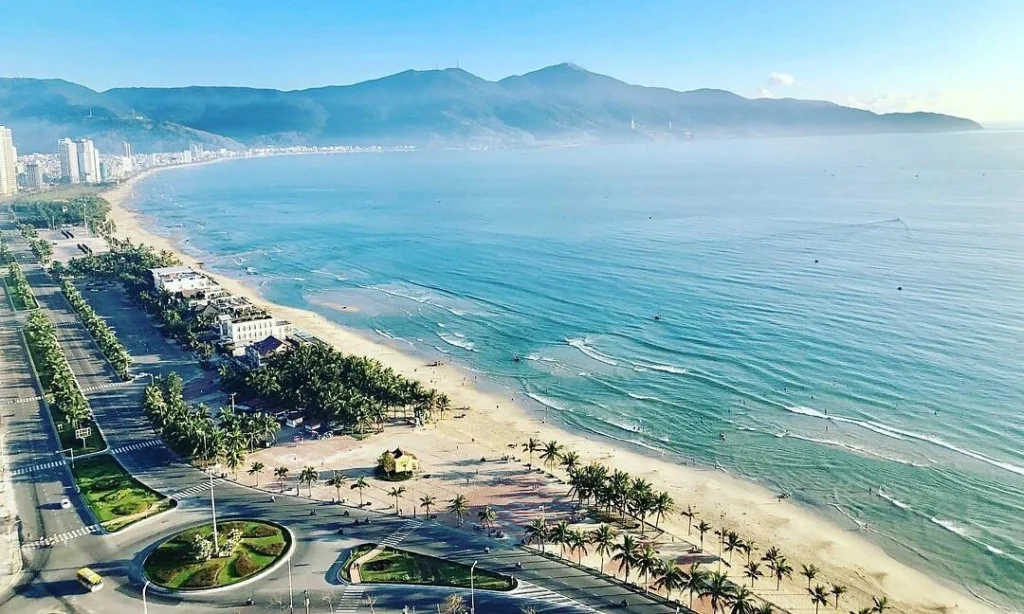
3. Da Nang Beach: My Khe (The One Everyone Gets Right)
| Region | Da Nang, central Vietnam |
| Best for | City-break-meets-beach clients, multigenerational families, first-timers |
| When to send | March to August |
| Get there | 15 minutes from Da Nang International Airport |
My Khe Beach is the practical choice. It is nine kilometres of soft white sand, fifteen minutes from a major international airport, lined with five-star resorts on one side and a walkable beachfront promenade on the other. Forbes has called it one of the most beautiful beaches in the world, which is generous, but it is genuinely an excellent beach with extremely good infrastructure. American soldiers nicknamed it China Beach during the war. Today it is the easiest beach in Vietnam to sell, and there is nothing wrong with that.
The southern stretch — between My An and the Marble Mountains — is where the resort cluster sits. InterContinental Sun Peninsula is technically just up the road on the Son Tra Peninsula and is one of the great Asian resort properties (Bill Bensley designed it, and it shows). Furama Resort, Pullman, Hyatt Regency, Premier Village, TIA Wellness, and the Crowne Plaza all line the coastal road with private beach access. The northern stretch, near Son Tra, is quieter and gives you the Lady Buddha statue as your daily backdrop.
What makes Da Nang special for agents is the Hoi An factor. Forty minutes south sits one of the most photogenic UNESCO towns in Asia. Forty-five minutes inland is the Golden Bridge at Ba Na Hills. The whole region works as a single base, which is why a lot of well-designed Vietnam itineraries use Da Nang as the central hub for everything from the demilitarised zone in the north to My Son Sanctuary in the south.
- Where to stay: InterContinental Sun Peninsula (the showstopper), Furama Resort (classic luxury), Hyatt Regency (family-friendly), TIA Wellness (adults-only retreat), TMS Hotel Da Nang Beach (mid-range with a great rooftop).
- Where to eat: East West Brewing for Western food and craft beer, Mad Platter for sharing plates, Esco Beach for atmosphere, Hai San Pho for live-tank seafood, and Mi Quang Ba Mua for the local noodle dish that Da Nang invented.
- The sunset: Faces the wrong way for sunset, but sunrise over the East Sea — particularly from the Marble Mountains — is the local highlight. The Dragon Bridge fire-and-water show on weekends at 9 pm is the after-dark equivalent.
Pair this beach with our Da Nang, Hoi An & Hue cultural circuit — three UNESCO sites and a beach in seven nights.
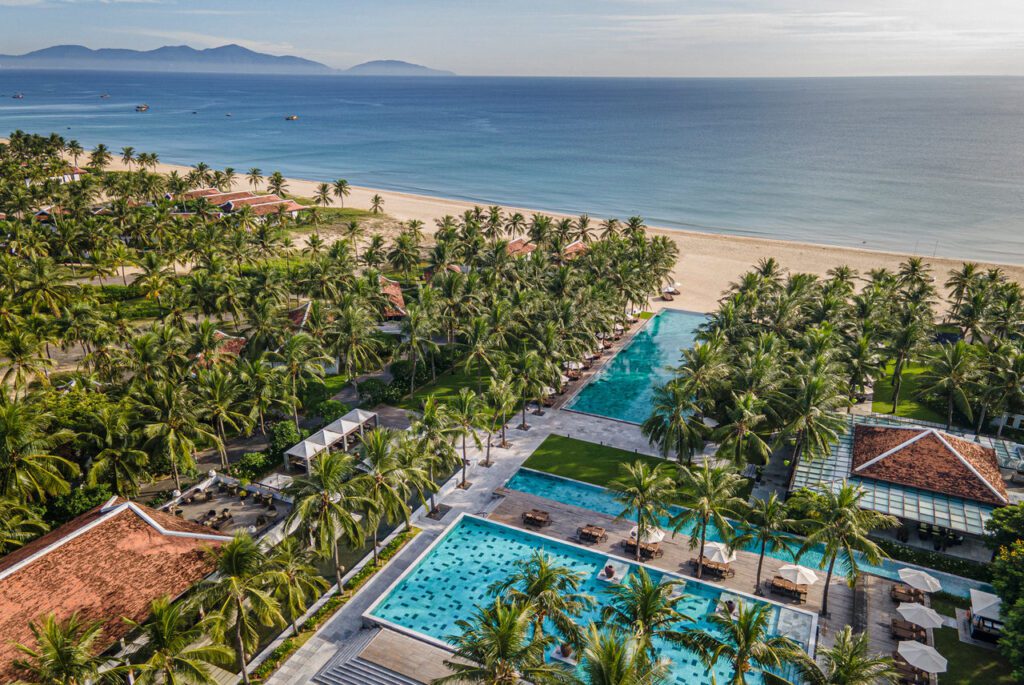
4. An Bang & Cua Dai Beach (Hoi An)
| Region | Hoi An, Quang Nam province |
| Best for | Couples, photography enthusiasts, anyone who wants a slower beach |
| When to send | March to August |
| Get there | 10 minutes from Hoi An Old Town by bicycle through the rice fields |
An Bang is the antidote to My Khe. Where Da Nang’s beach is wide, busy, and surrounded by high-rises, An Bang is narrower, slower, and ringed by boutique villas and beachfront shacks where you can rent a sunlounger for the price of a coconut. It sits five kilometres from Hoi An Old Town, which means clients can spend the morning wandering lantern-lit streets and the afternoon watching the South China Sea roll in. The bicycle ride between the two passes through working rice paddies. It is one of the great ten-minute commutes in Asia.
Cua Dai Beach, just south of An Bang, was the original Hoi An beach until coastal erosion claimed most of its sand in the early 2010s. Restoration is ongoing and parts have been reclaimed, but An Bang has comfortably taken over as the main attraction. The Four Seasons Resort The Nam Hai sits between the two beaches and is the area’s standout luxury property — eighty pool villas, three infinity pools, and a beach long enough to forget anyone else is staying there.
The beachfront restaurants at An Bang have evolved into something genuinely lovely. Soul Kitchen, La Plage, Sound of Silence, and Deck House anchor a strip of places where the structure of the day is: arrive late morning, swim, eat, drink, swim, watch the sun drop behind the Marble Mountains in the distance, repeat tomorrow.
- Where to stay: Four Seasons The Nam Hai (luxury), Aira Boutique Hoi An, CHiEM Hoi An (boutique), Linh Seaside Villa (mid-range).
- Where to eat: Soul Kitchen for atmosphere, La Plage for French bistro vibes on the sand, Deck House for sunset cocktails, Mom’s Restaurant for fresh tilapia at local prices.
- The sunset: The Marble Mountains silhouette behind the beach makes this one of central Vietnam’s better sunset spots.
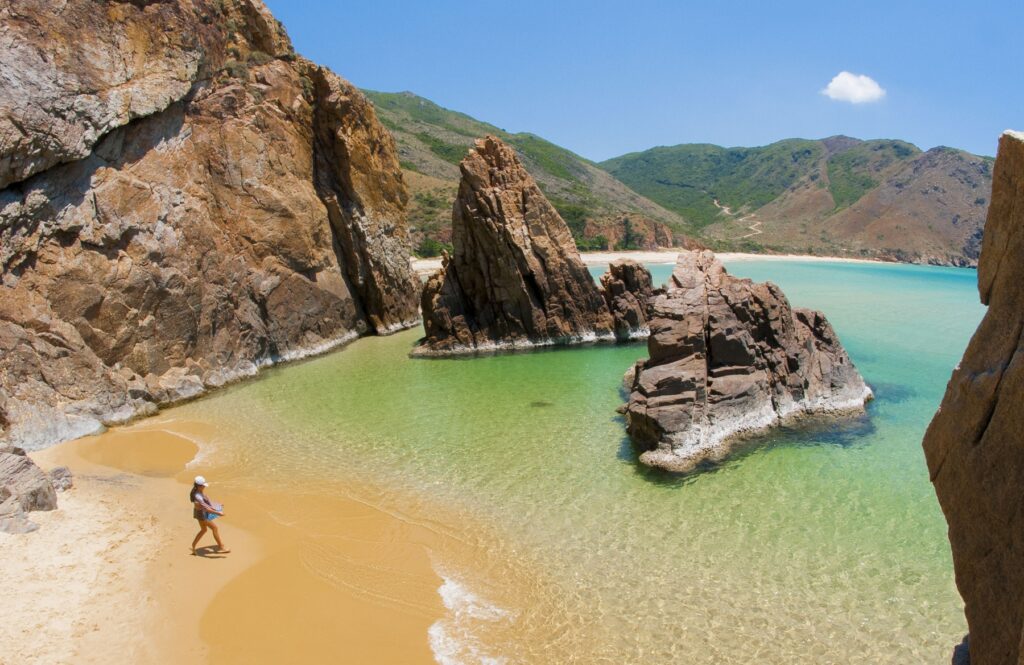
5. Quy Nhon & Ky Co
| Region | Binh Dinh province, south-central Vietnam |
| Best for | Off-the-beaten-path clients, photographers, travellers who have done Vietnam before |
| When to send | February to August (March–April is peak) |
| Get there | 1 hr direct flight from Hanoi or Ho Chi Minh City |
Quy Nhon is the beach destination Vietnam will be talking about by 2028. Right now it is in that sweet spot where the infrastructure is good — there are direct flights from both Hanoi and Saigon, the coastal road is paved, and the resort scene is mature enough to deliver — but international tourist numbers are still low enough that you can have an empty beach to yourself in the middle of high season.
The city itself is a small, walkable coastal town of half a million people, with a long crescent-shaped beach, a relaxed promenade, and a string of contemporary cafés and seafood restaurants opening up along the waterfront. At night, the bay lights up with the flicker of squid-fishing lanterns. It is one of those places where you take a week-long trip and start asking the resort about long-term apartment rentals.
The real draw, though, is what sits just outside the city. Ky Co Beach, around 25 kilometres north on the Nhon Ly peninsula, has been nicknamed “the Maldives of Vietnam” — which it is not, but it is closer to that comparison than anywhere else on the mainland. A hidden bay surrounded by granite cliffs, accessible only by boat or by a steep coastal road, with shallow turquoise water and natural rock pools. Bai Xep, Eo Gio, and the lesser-known beaches of Phu Yen province (just to the north) round out the area.
| Quy Nhon is a small city that has all of the offerings you could ask for; high rise hotels with gorgeous views, rooftop bars, and night markets. But it’s small enough that it’s not as overwhelming as Vietnam’s larger cities. |
- Where to stay: Anantara Quy Nhon Villas (luxury, private pools), Avani Quy Nhon (excellent value), FLC Luxury Resort, Crown Retreat Quy Nhon.
- Where to eat: Surf Bar Quy Nhon, Barbara’s Backpackers Kitchen, the seafood restaurants on Xuan Dieu beach road. The local specialty is banh xeo tom nhay — “jumping shrimp” pancakes — and you should make a point of eating them.
- The sunset: Eo Gio (“Wind Strait”) cliff at sunset, twenty minutes north of Quy Nhon, is the cinematographer’s dream — basalt cliffs, narrow inlets, golden light, almost no one there.
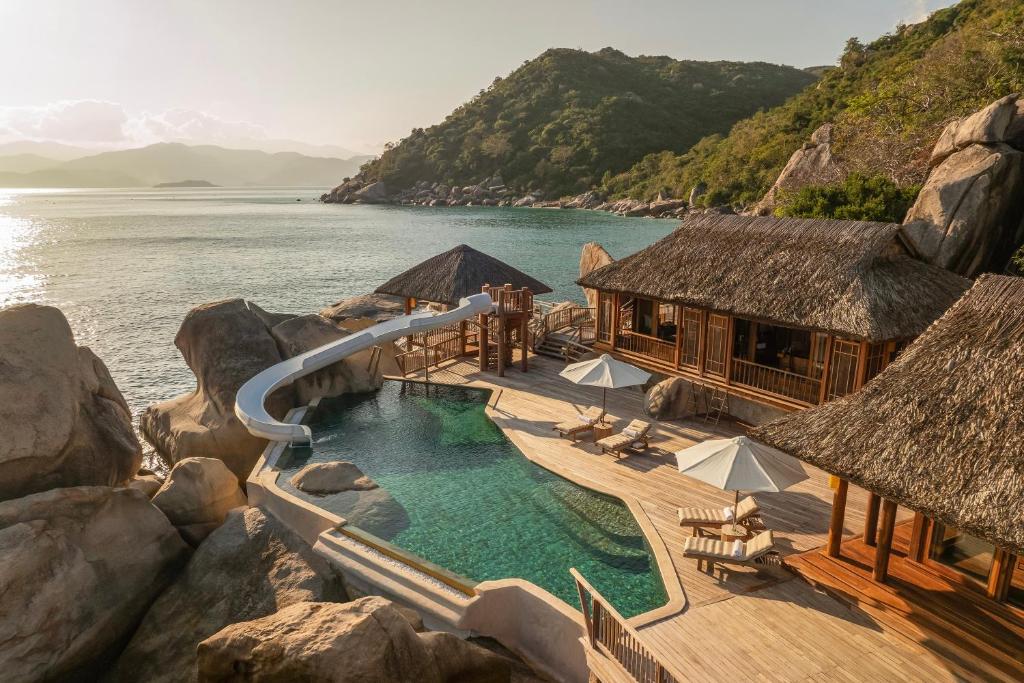
6. Nha Trang Beach & Ninh Van Bay: The Established Resort Coast
| Region | Khanh Hoa province, south-central Vietnam |
| Best for | Resort holidays, diving and snorkelling, Russian-speaking clients, families |
| When to send | January to August |
| Get there | Direct international flights to Cam Ranh airport from many European cities |
Nha Trang beach is Vietnam’s most established resort city — 6 km of sand, the best dive scene in the country, and direct international flights. The advantages: a six-kilometre crescent of golden sand right in the middle of town, the most developed beach infrastructure in the country, daily diving boats heading out to Nha Trang Bay’s nineteen islands, and direct international flights that let you skip the Saigon connection. The caveats: the city beach gets crowded, the high-rise development is unrelenting, and the food scene leans more towards “international tourist menu” than “local discovery”.
The trick with Nha Trang is to pick your zone carefully. The city beach itself is fine for a quick swim and a stroll along Tran Phu Boulevard. But the real Nha Trang sells in two specific pockets. The first is the northern coast, where boutique luxury properties like Amiana Resort have private beaches that you would not believe are five kilometres from a major city.
The second is Ninh Van Bay, an exclusive horseshoe inlet about an hour north and twenty minutes by speedboat. Six Senses Ninh Van Bay sits there with no road access — guests arrive by boat, and the only dining is at the resort. It is, by some distance, one of the best resort properties in Asia.
South of Nha Trang sits Cam Ranh Bay (where the airport is) and Vinh Hy Bay, where Amanoi perches on a clifftop above the Nui Chua National Park. Amanoi is what happens when the Aman group decides to build a hotel that looks like a lost Vietnamese village. It is not for every client, but for the right one it is unforgettable.
- Where to stay: Six Senses Ninh Van Bay (boat-access only, world-class), Amanoi (cliffside luxury), Amiana Resort (boutique, private beach), Mia Resort Nha Trang (excellent value), Anam Cam Ranh (family-friendly).
- Where to eat: Sailing Club for the beach setting, Lac Canh for Nha Trang’s famous grilled beef, Yen’s Restaurant for upscale Vietnamese, the food street on Nguyen Thien Thuat for budget-friendly evenings.
- The sunset: Faces east, so sunset is over the city behind you. The compensation is sunrise over the bay — get up for it once, your clients will thank you.
- The dive scene: Hon Mun Marine Reserve has the country’s most accessible coral diving. Vietnam’s first dedicated dive operator, Rainbow Divers, is based here.
Best Beaches in Vietnam: The South — Tropical, Island-Shaped, Year-Round
Once you cross south of Nha Trang, the climate changes character. The seasons flip — the dry months are November to April rather than March to August — and the landscape takes on the proper tropical look that European clients picture when they imagine Southeast Asia. Palm-lined beaches, warm water year-round, and Vietnam’s two great island destinations: Phu Quoc and Con Dao.
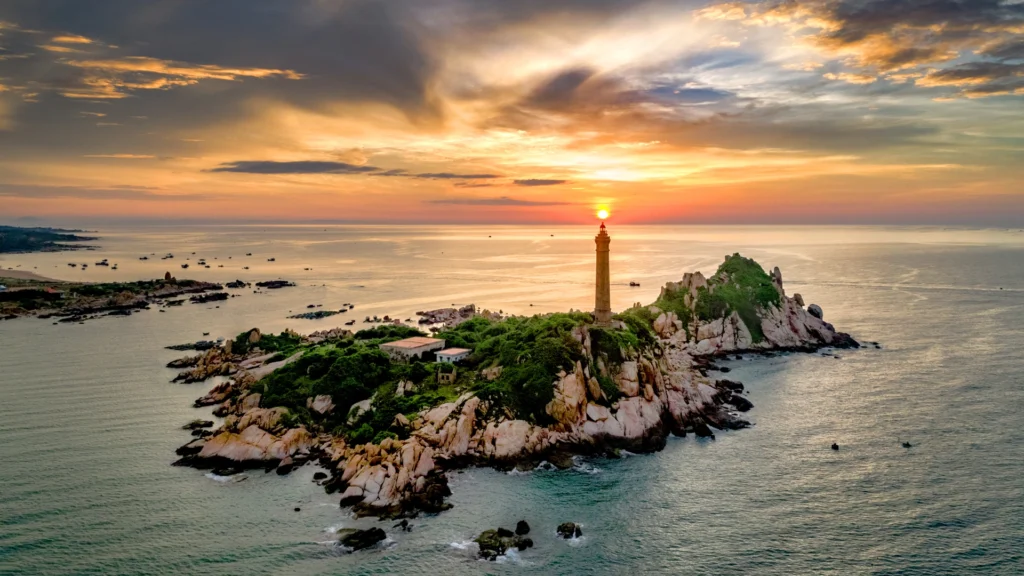
7. Mui Ne & Phan Thiet
| Region | Binh Thuan province, southern Vietnam |
| Best for | Kitesurfers, windsurfers, Russian-speaking clients, weekend Saigon escapes |
| When to send | November to April (kite season is November to March) |
| Get there | 4 hrs from Ho Chi Minh City by road; 2 hrs once the new expressway is fully open |
Mui Ne occupies a strange and specific corner of the Vietnam beach landscape. The beach itself is decent rather than spectacular — a long, flat strip of pearl-coloured sand, wider than it is dramatic. What makes the destination unique is what surrounds it. The Red Sand Dunes and White Sand Dunes that flank the village are the closest thing Southeast Asia has to a desert, and they make Mui Ne one of the most photographable spots in Vietnam (especially at sunrise, when the light hits the dunes and the crowds have not yet arrived).
Mui Ne is also Asia’s serious kitesurfing destination. The wind blows hard and consistently between November and March, the bay is large and forgiving, and the kite schools — particularly C2Sky and Manta — have been running for over a decade. For active clients, this is the obvious pairing with a few days in Saigon and the Mekong Delta.
For travel agents serving Russian-speaking clients: Mui Ne has been Russia’s favourite Vietnamese beach for two decades. Restaurant menus come in Russian, the resort staff speak it, and clients flying in from Moscow or St Petersburg often choose Mui Ne over Phu Quoc precisely because it feels familiar. This is a feature, not a bug, when you are building itineraries for that segment.
- Where to stay: Anantara Mui Ne Resort (the classic luxury choice), The Cliff Resort & Residences, Princess D’An Nam Resort, Mia Resort Mui Ne.
- Where to eat: Bo Ke seafood street (the dozen-strong row of family-run seafood shacks east of the village) — order whatever they pulled out of the sea that morning. Sandals at the Mia Resort is the upscale option. Loving Hut for vegetarian. The food in Mui Ne is, frankly, one of the best surprises of the destination.
- The sunset: From the top of the White Sand Dunes, with the lake below and the South China Sea on the horizon. Wake up at 4:30 am for it. Worth it.
- Worth knowing: The Fairy Stream — a shallow red-sand creek you walk through barefoot — is a 30-minute detour and one of those quiet wins that makes a half-day excursion.
Pair this beach with our Saigon, Mekong Delta & Mui Ne package for a southern Vietnam loop that does not require a single domestic flight.
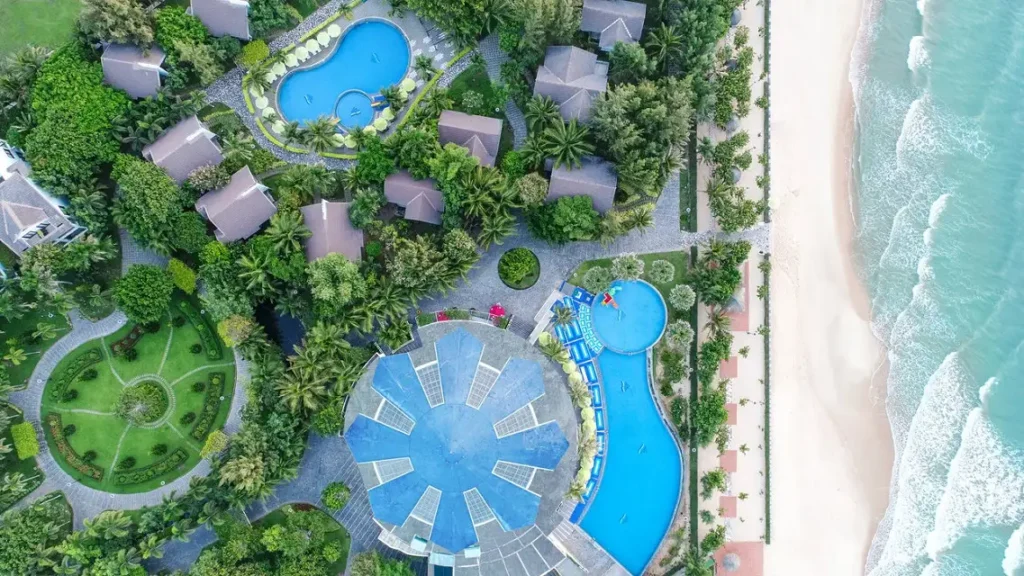
8. Ho Tram & Long Hai
| Region | Ba Ria-Vung Tau province, southern Vietnam |
| Best for | Luxury weekenders, golfers, peace-and-quiet seekers |
| When to send | November to April |
| Get there | 2.5 hrs from Ho Chi Minh City by road |
Ho Tram is the quiet luxury option in southern Vietnam. The beach itself is long, undeveloped, and lined with casuarina trees — the local pine that anchors the dunes and stops the sand from blowing off. It is not a sightseeing destination. There is no village, no famous viewpoint, no must-see temple. Clients come here for one of two things: to do nothing in extreme comfort, or to play golf at one of Asia’s best-rated courses.
The two anchor properties are The Grand Ho Tram (which has the casino, multiple resorts, and the Bluffs golf course designed by Greg Norman) and Six Senses Ho Tram, which opened in 2023 and immediately joined the conversation about Vietnam’s best resorts. Six Senses sits on its own private stretch of beach and runs the kind of seamless, eco-conscious operation the brand is known for. For agents with a client who wants a luxury beach week without crowds, without an island flight, and within easy reach of Saigon, Ho Tram is the answer.
Long Hai, just north of Ho Tram, is the more low-key version — a working fishing town with a long, quiet beach and a cluster of small to mid-size resorts. Carmelina Resort and Long Hai Beach Resort are the two reliable options. It is the choice for Saigon expats who want a Friday-night drive to the sea.
- Where to stay: Six Senses Ho Tram, The Grand Ho Tram (casino resort), InterContinental Grand Ho Tram (under construction), Carmelina Resort Long Hai.
- Where to eat: Mostly resort dining — this is not a destination for restaurant-hopping. The seafood shacks in Long Hai’s fishing port are the exception.
- The sunset: Faces east, so sunset is behind. Sunrise here, however, is one of the best on the Vietnamese mainland.
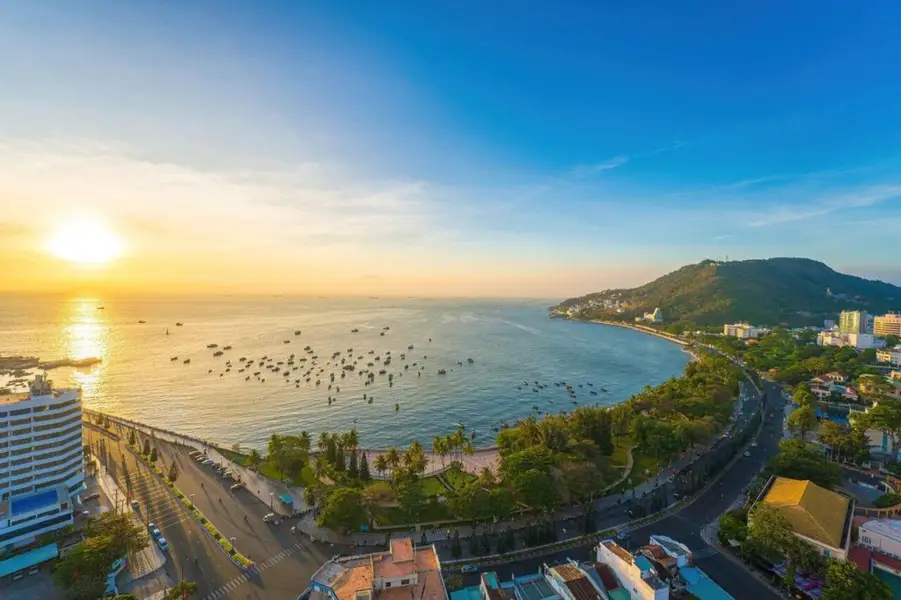
9. Vung Tau
| Region | Ba Ria-Vung Tau province, southern Vietnam |
| Best for | Saigon residents on a weekend break, French-colonial history fans |
| When to send | November to April |
| Get there | 90 minutes from Ho Chi Minh City by hydrofoil; 2 hrs by road |
Vung Tau is included here for completeness rather than as a primary recommendation. It is the closest beach to Ho Chi Minh City, which means it is what Saigon residents do for a weekend. The beach quality is moderate, the development is dense, and the experience is more “city by the sea” than “beach holiday”. For most international itineraries, it does not warrant a stop.
That said, Vung Tau has a story. It was the French colonial seaside resort — Cap Saint Jacques, they called it — and Paul Doumer’s old governor’s mansion (the Bach Dinh, or White Villa) still sits on the hill above the bay. There is a giant Christ statue, modelled on Rio’s, that you can climb for the view. There is a respectable Vietnamese-French food scene downtown. For agents building a culture-focused itinerary that wants a half-day beach break before Saigon, Vung Tau works.
- Where to stay: Pullman Vung Tau, Marina Bay Vung Tau Resort & Spa, The Imperial Hotel.
- Where to eat: Ganh Hao for seafood with a sea view, Banh Khot Goc Vu Sua for the local mini-pancake specialty, Lan Rung Resort’s beachfront restaurant.
- The sunset: From the Christ statue lookout, with Bai Truoc (Front Beach) curving below.
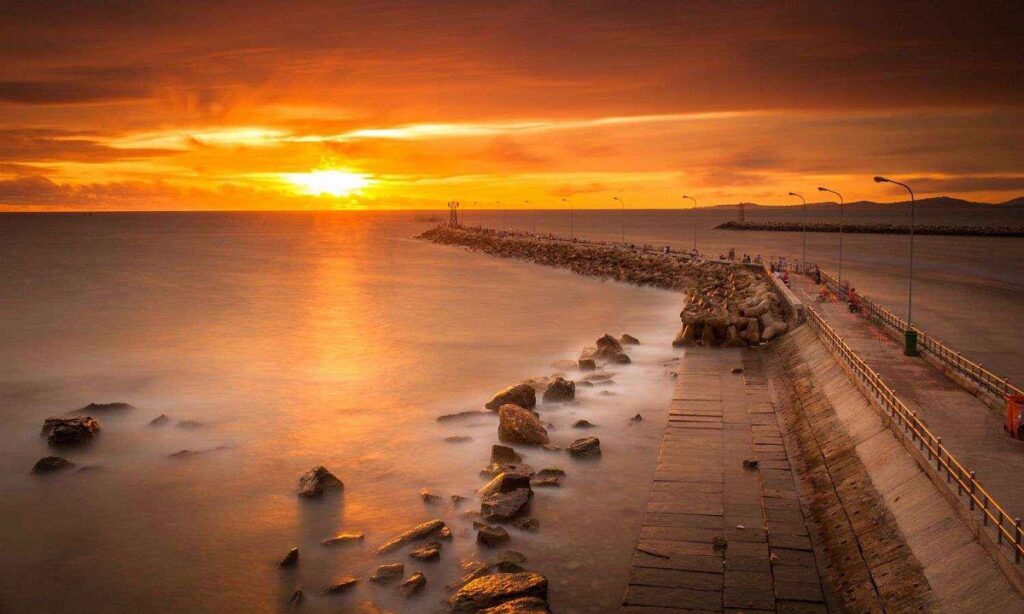
10. Phu Quoc Island
| Region | Gulf of Thailand, off Vietnam’s southwestern coast |
| Best for | Honeymooners, families, luxury beach holidays, agents who need a sure thing |
| When to send | November to April |
| Get there | Direct international flights from many Asian and European cities; 1 hr from Ho Chi Minh City |
Phu Quoc beach is, unambiguously, the most polished destination Vietnam has. The island is roughly the size of Singapore, sits in the Gulf of Thailand, and contains within its borders just about every kind of beach experience an agent could need. There are blockbuster five-star resorts on Long Beach (the western coast), there is the protected national park covering most of the north, there is the famous powdery white sand of Bai Sao on the south, and there are the new high-end developments around Khem Beach in the southwest. Phu Quoc International Airport handles direct flights from Seoul, Bangkok, Singapore, Frankfurt, and (during peak season) several Russian and Eastern European cities.
For travel agents, Phu Quoc island is the easy yes. It works year-round-ish (with the caveat that June–October brings monsoon weather to the west coast), it has a hotel for every budget bracket, and the infrastructure is the most reliable in Vietnam. The trade-off is that the centre of the island has been developed quickly and somewhat aggressively — VinWonders theme parks, Sun World cable car, Grand World shopping complex — and the famous Bai Sao Beach can get busy at midday.
The strategic move is to pick a coast and stay there. The west coast (Long Beach, Ong Lang Beach, Vung Bau) is where the sunsets are and where the mature resort scene sits. The south (Khem Beach, the area around the cable car and JW Marriott Emerald Bay) is the newest and most polished development. The north and east are quieter, more local, and more for the client who wants to scoot around on a motorbike and find their own coves.
| Phu Quoc has soft white sand beaches, clear water, and luxury seaside resorts. Activities include snorkeling, island hopping, sunset cruises, and seafood dining by the sea — it is widely considered the best beach destination in Vietnam. |
- Where to stay (luxury): JW Marriott Emerald Bay (Bill Bensley designed; Pink Pearl restaurant has Michelin-starred chef Olivier Elzer), InterContinental Phu Quoc Long Beach, Regent Phu Quoc, Sailing Club Signature Resort, Premier Village (private-pool villas).
- Where to stay (boutique): La Veranda Resort MGallery (heritage colonial style), Mango Bay (eco-resort), Cassia Cottage, Salinda Resort.
- Where to eat: Pink Pearl at JW Marriott (French fine dining), The Spice House at Cassia Cottage (best-in-class Vietnamese), Crab House for blue crab, Dinh Cau Night Market for live seafood at local prices.
- The sunset: Sunset Sanato Beach Club, INK 360 rooftop bar at the JW Marriott (highest bar on the island), or any spot on Long Beach with a hammock.
- Don’t miss: Hon Thom cable car (the world’s longest sea-crossing cable car), Phu Quoc National Park trekking, the An Thoi archipelago snorkelling tour, the Phu Quoc Prison Museum for context, and a fish-sauce factory tour for genuinely good content.
Pair this beach with our Phu Quoc luxury island escape or our Saigon to Phu Quoc beach finale for a classic city-and-sea closer.
11. Con Dao Beaches: The Secret the Brochures Don’t Mention
| Region | Off the southern coast of Vietnam, 230 km from Ho Chi Minh City |
| Best for | Honeymooners, divers, serious beach purists, history-curious clients |
| When to send | March to September |
| Get there | 45-minute flight from Ho Chi Minh City; 1 hr from Can Tho |
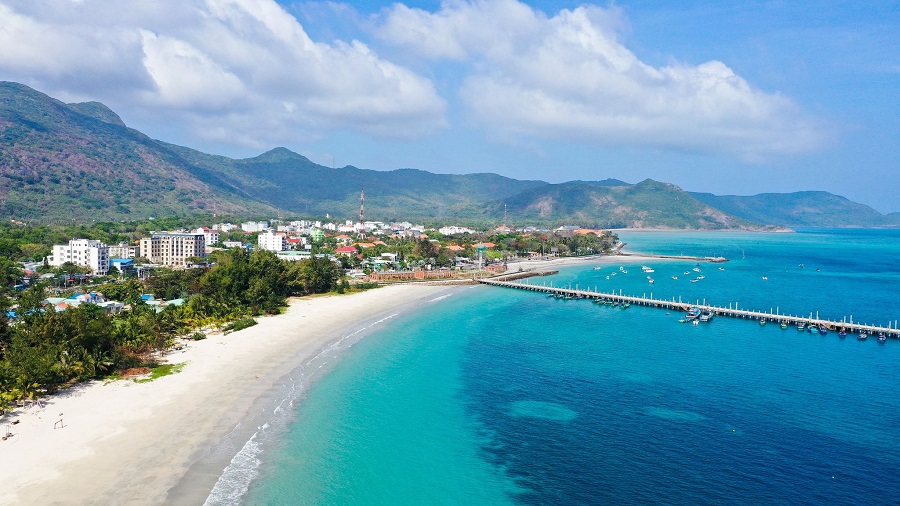
Con Dao beaches are the secret. It is an archipelago of sixteen islands. It is an archipelago of sixteen islands sitting off the southern coast, classified as a national park, and home to what are quietly the most beautiful beaches in Vietnam. Dam Trau Beach — the one where planes skim low overhead on landing — has white sand fine enough to squeak under your feet. An Hai is a long, calm crescent. Bai Nhat appears at low tide and disappears at high tide. The water is clearer than anything on the mainland.
The marine life is what makes Con Dao genuinely special. The waters around the islands are a protected marine reserve, with thriving coral reefs, sea turtles, dugongs, and (between May and September) green turtle nesting colonies that you can visit on guided ranger tours. It is the best diving and snorkelling destination in Vietnam by some distance, and one of the better ones in Southeast Asia.
Con Dao also has a heavy and fascinating history. It was a French colonial prison — and later a South Vietnamese one — and the prison complex on the main island is now a memorial site that gives the destination an unexpected emotional weight. Most clients will visit for an afternoon, find it more affecting than they expected, and then head back to the beach with a different perspective on what they are looking at.
The luxury anchor for Con Dao beaches is Six Senses Con Dao, consistently named one of Asia’s best resorts. Fifty pool villas spread along a private beach, all sustainably built, all impeccably operated. The Secret Con Dao and the Poulo Condor Boutique Resort are the more accessible alternatives. There are also a handful of well-run mid-range guesthouses if your client just wants somewhere clean to sleep between dives.
- Where to stay: Six Senses Con Dao (the showstopper), The Secret Con Dao, Poulo Condor Boutique Resort, Con Dao Resort.
- Where to eat: Six Senses’ By The Beach restaurant, Thu Tam restaurant in Con Son town (local seafood), Infiniti restaurant for a sunset cocktail.
- The sunset: From the cliff at Hang Duong, looking back over Con Son Bay. Ben Dam harbour at sunrise is the other one.
- Don’t miss: Con Dao National Park trekking, the turtle conservation programme on Bay Canh Island (May–September), Hang Duong cemetery (for the historical context), and a snorkelling day around the southern islands.
This is the right pairing for our Vietnam honeymoon journey — and it is what we would book ourselves. For couples, Con Dao beaches are our first recommendation for a Vietnam honeymoon.
Three more worth knowing about
12. Doc Let Beach
Forty-five minutes north of Nha Trang, Doc Let is the local hideout — a long, calm beach with shallow water, soft white sand, and almost no international tourists. For agents who want to build a Nha Trang itinerary with a half-day side trip that feels properly off-grid, this is the move.
13. Whale Island (Hon Ong)
A tiny private island off Nha Trang, accessible only by speedboat, with one rustic-luxury bungalow resort and effectively no other tourists. Whale sightings between February and April are the gimmick. The reality is that this is one of those end-of-the-world bucket-list places that suits a very specific kind of traveller — and they will love it.
14. Tuy Hoa & Phu Yen Province
The Phu Yen coastline, just north of Quy Nhon, is what Quy Nhon was five years ago — quiet, dramatic, almost unknown. Tu Nham Beach in particular is being talked about as one of Vietnam’s best up-and-coming beaches. Worth keeping on the radar for adventurous clients who want something genuinely under-discovered.
How Travel Agents Should Use This Vietnam Beach Guide
Three quick rules of thumb that will make your beach itineraries much better, in order of importance:
1. Match the season to the coast, not the calendar. If your client is travelling in November, do not send them to Da Nang. Send them to Phu Quoc. If they are travelling in May, do not send them to Phu Quoc. Send them to Da Nang or Hoi An. The single most common mistake we see in incoming itineraries is a southern beach booked during monsoon or a central beach booked during typhoon season.
2. Match the beach to the client, not the brochure. Phu Quoc is not the right answer for everyone. Honeymooners are usually happier on Con Dao or in Ninh Van Bay. Active travellers are happier in Mui Ne or Quy Nhon. Multigenerational families do well in Da Nang because of the airport access and the activities outside the beach. Use the table below as a starting reference.
3. Pair the beach with something. Vietnam’s coastline rewards combinations. Hue + Lang Co. Hoi An + An Bang. Saigon + Mekong + Phu Quoc. The beach-only itinerary is fine for repeat clients, but for first-timers, the combination is what makes Vietnam feel like Vietnam.
Quick-reference: which client to send where
| Client type | Best fit | Recommended properties |
|---|---|---|
| Honeymooners | Con Dao or Ninh Van Bay | Six Senses Con Dao, Six Senses Ninh Van Bay, Amanoi |
| Multigenerational families | Phu Quoc or Da Nang | JW Marriott Emerald Bay, InterContinental Phu Quoc, Furama Da Nang |
| Active / wellness travellers | Mui Ne or Quy Nhon | Anantara Quy Nhon, Anantara Mui Ne, Avani Quy Nhon |
| Culture-and-beach combo | Lang Co or An Bang (Hoi An) | Banyan Tree Lang Co, Four Seasons Nam Hai |
| Luxury island purists | Con Dao | Six Senses Con Dao, The Secret Con Dao |
| Beach + city break | Da Nang (My Khe) | InterContinental Sun Peninsula, Furama Resort, Hyatt Regency |
| Russian-speaking clients | Nha Trang or Mui Ne | Amiana Resort, Anantara Mui Ne, Mia Resort Nha Trang |
| Adventure-leaning couples | Cat Ba / Lan Ha Bay | Cat Ba Sunrise Resort, boat-based stays |
| Ready to build a beach itinerary that actually fits your client? Our team has been crafting Vietnam beach holidays and luxury resort itineraries for travel agents for over three decades. — and we know which resort delivers, which sunset is worth the early start, and which combination of coast and culture will make your client send you a thank-you bottle of wine. |