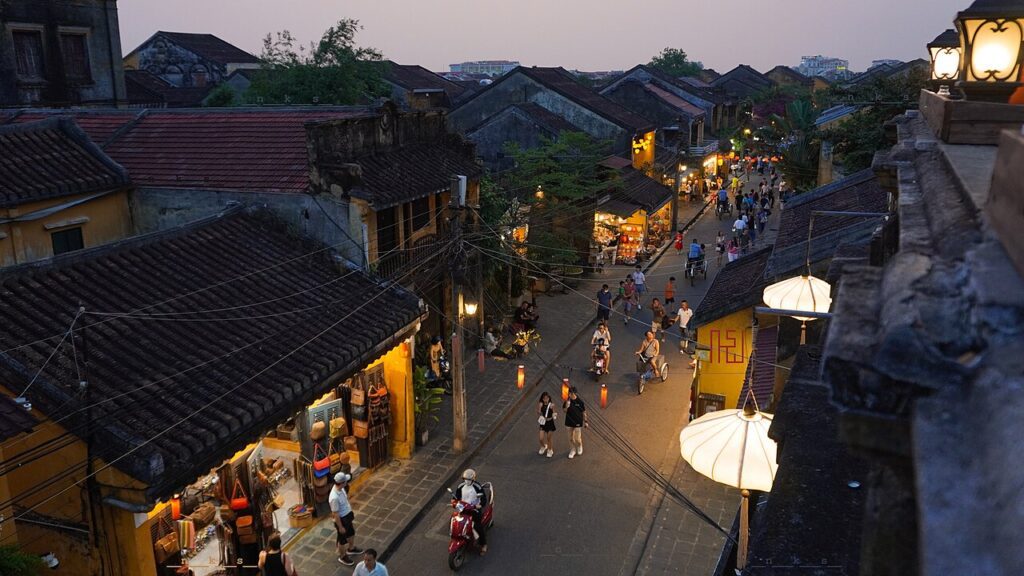
Hoi An Ancient Town is one of the most compelling destinations a travel agent can put in front of a European client — and one of the least work to sell. Before there was a Vietnam as we know it, before borders or passports or Tripadvisor reviews, European traders were already making the journey here.
That’s not poetic licence. Hoi An, a small and impossibly beautiful port on Vietnam’s central coast, was one of the most important trading hubs in Southeast Asia from the 15th century onwards. Portuguese sailors came first. Then the Dutch. Merchants from Japan and China set up permanent quarters and never quite left. The silk, ceramics, and lacquerware that passed through this town ended up in homes across Europe long before anyone there had heard the word “Vietnam.“
For your European clients, Hoi An Ancient Town isn’t just history. It’s a connection. A reason to feel, from the very first walk along the Thu Bon River, that this is somewhere they already belong.
Here’s everything you need to know to sell it well.
| “Hoi An was already trading with Europe a century before the Eiffel Tower was built. Some towns just have a head start.” |
Hoi An Ancient Town History: A Port Before the World Was Mapped
The Hoi An Ancient Town history starts with geography. The town sits at the mouth of the Thu Bon River — a natural harbour for ocean-going vessels crossing the South China Sea as early as the 2nd century AD.
By the 15th and 16th centuries, Hoi An — then known as Faifo to its European visitors — had evolved into a full-blown international port. Ships arrived carrying porcelain from China, copper from Japan, textiles from India, and spices from the Spice Islands. They left loaded with Vietnamese silk and lacquerware destined for the courts of Europe.
The Portuguese were among the first European traders to arrive, making contact in the early 16th century. Dutch merchants followed, establishing a trading post in 1636. At its peak, Hoi An’s Ancient Town was home to permanent communities of Japanese, Chinese, and European traders — all living and doing business side by side in an arrangement remarkably cosmopolitan for its time.
The result? A town that looks like nowhere else in Vietnam. Possibly nowhere else in the world.
What Hoi An Ancient Town’s Trading Past Left Behind
Most ancient trading cities have been swallowed by modernity — their historic quarters buried under concrete, their heritage reduced to a plaque on a wall. Hoi An didn’t get the memo.
The Hoi An UNESCO World Heritage listing, awarded in 1999, recognises something almost miraculous: the town is intact. The buildings your clients walk through today are the same buildings that merchants from Guangzhou, Nagasaki, and Lisbon walked through centuries ago. For a travel agent selling Central Vietnam, that living quality is impossible to manufacture and effortless to sell.
A few highlights worth knowing:
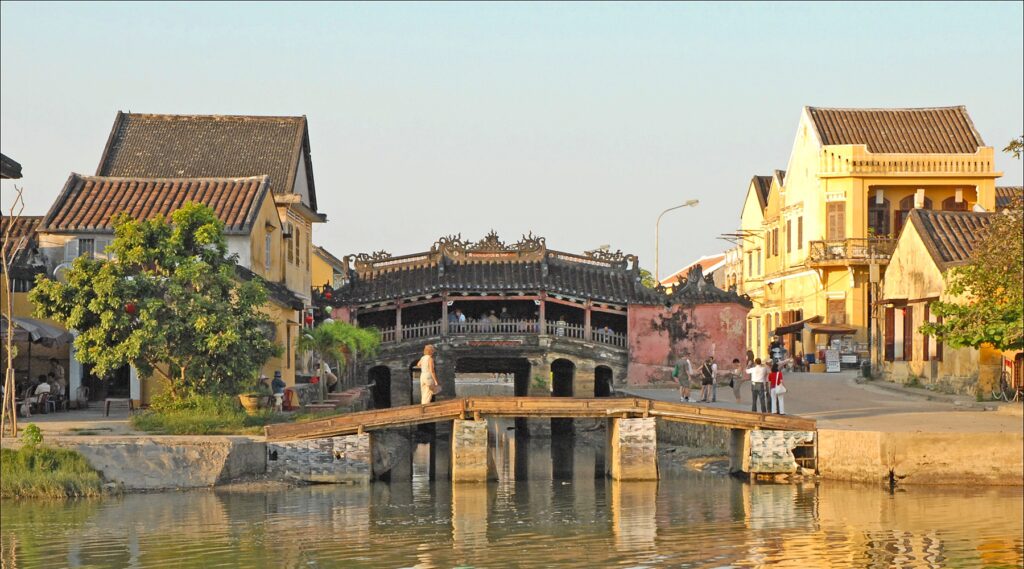
- The Japanese Covered Bridge (Chùa Cầu) — The most iconic symbol of Hoi An Ancient Town, built in the early 1600s by the Japanese merchant community. This arched wooden Japanese Bridge was designed to connect the Japanese quarter to the Chinese quarter — an early experiment in multicultural urban planning. It remains the most photographed structure in Central Vietnam.
- The Chinese Assembly Halls — Five elaborate meeting halls, each built by a different Chinese merchant community — Cantonese, Fujianese, Hainanese, and more. Each is a testament to the wealth these trading families brought to Hoi An. The Fujian Assembly Hall, in particular, is one of the most beautiful rooms in all of Vietnam.
- The Old Merchant Houses — Tan Ky House and Phung Hung House are two of the best to visit — many still owned by the same families who built them generations ago. Step inside and find a remarkable blend of Japanese, Chinese, and Vietnamese architecture under a single roof.
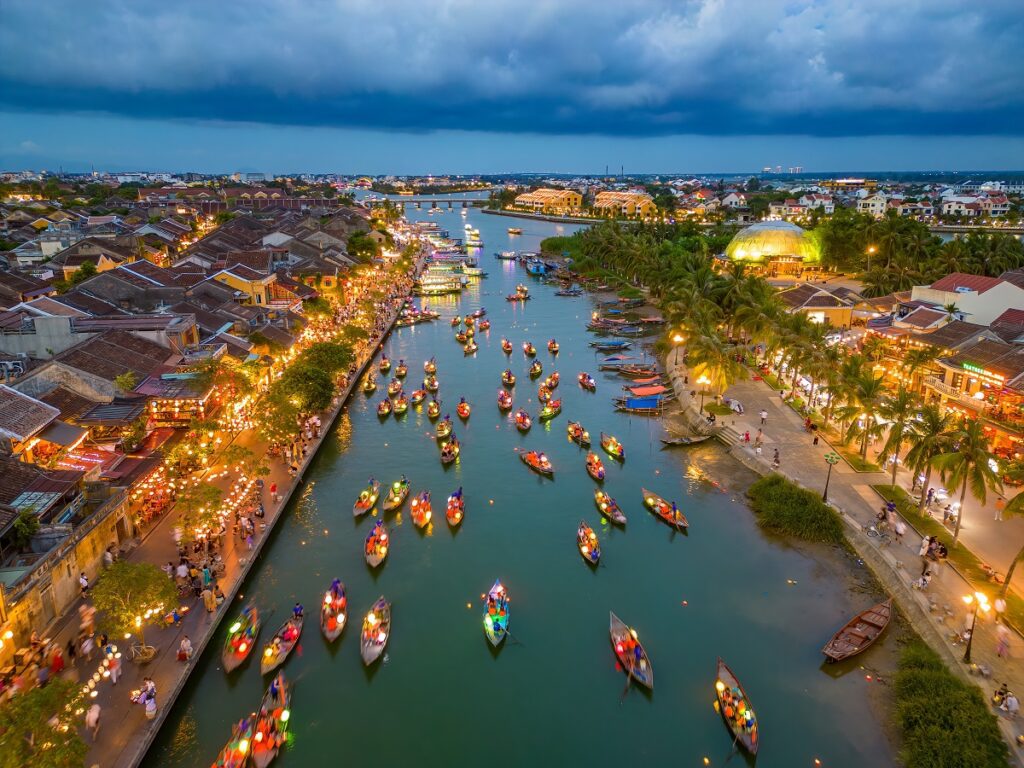
- The Thu Bon Riverside — The waterway that once welcomed trading vessels from across Asia. Today it’s lined with cafés, silk lanterns, and the kind of golden-hour light that makes travel photographers weep with gratitude.
| 🏛️ Full Day Excursion To Hoi An From Da Nang: Tra Que Herb Village, a basket boat ride through Cam Thanh’s palm forest, the ancient streets of Hoi An, the Japanese Bridge, and the Fujian Assembly Hall. A complete cultural immersion. |
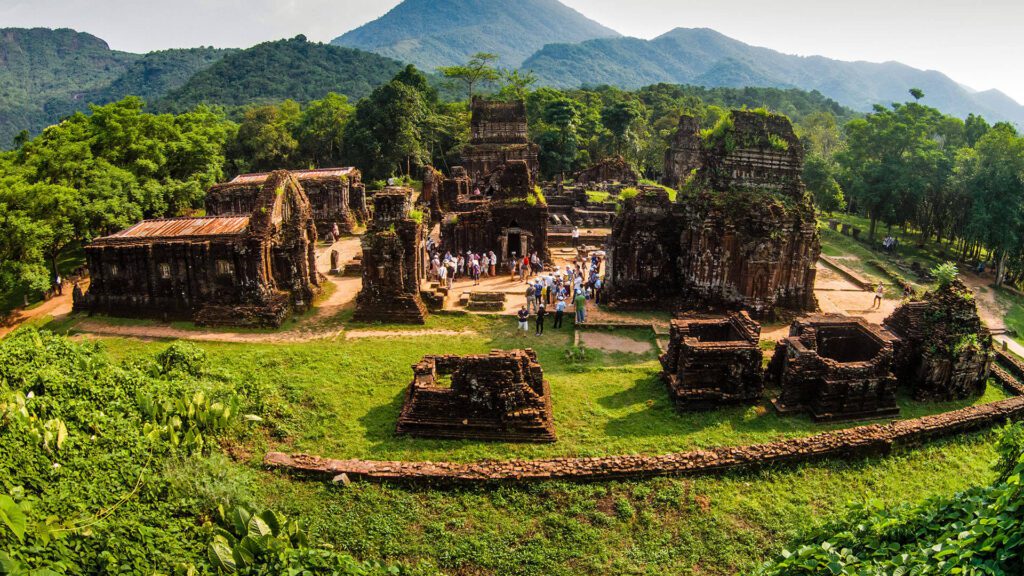
My Son: The Central Vietnam Temple Complex Your Clients Have Never Heard Of
Hoi An Ancient Town pairs beautifully with My Son — a nearby complex of ancient Cham Hindu temples sitting quietly in a jungle valley about 40 km from the Old Town. For travel agents building a Central Vietnam itinerary, this combination is one of the most powerful cultural days in the entire region.
My Son was the religious and political capital of the Cham Kingdom for nearly ten centuries — from the 4th to the 14th century. At its height, it was a place of ritual importance comparable to Angkor Wat or Bagan. Today, the remaining towers are UNESCO-listed, genuinely atmospheric, and the kind of site that makes clients stop talking and just stand there.
The contrast with Hoi An is part of the appeal: cobblestones and lanterns in the morning; ancient jungle temples in the afternoon. It’s a complete cultural day that sells itself on the description alone.
| 🛕 Day Trip To My Son And Hoi An The Ancient Town’s historic streets and Japanese Bridge in the morning — then the Cham ruins at My Son, a basket boat ride in Cam Thanh Village, and the Fujian Congregation Hall in the afternoon. Two UNESCO sites, one extraordinary day. |
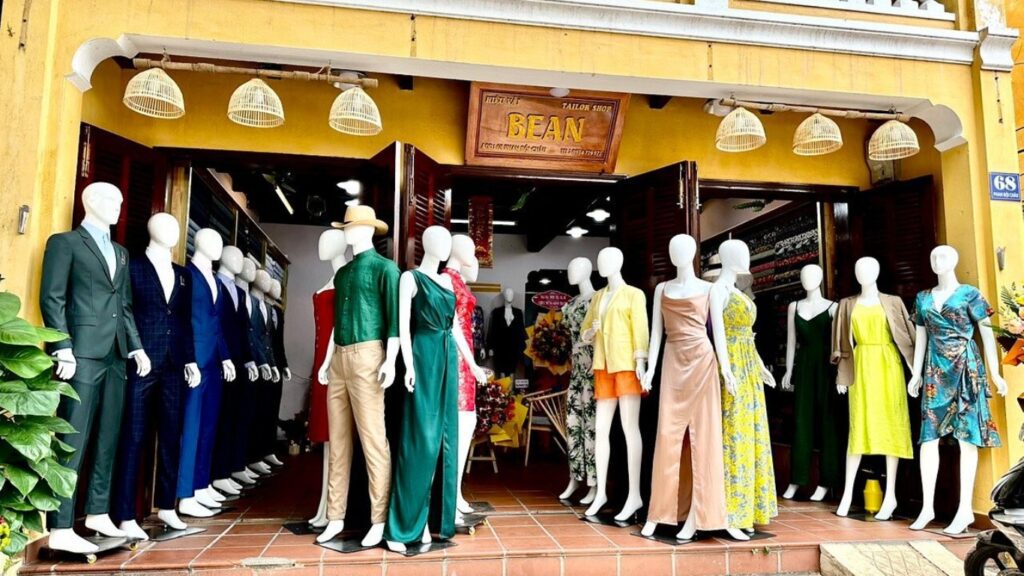
Hoi An Tailors: A 400-Year-Old Industry Still Going Strong
You cannot talk about Hoi An Ancient Town without talking about fabric. The town’s textile trade goes back to its merchant heyday, and today the Hoi An tailors are one of the most delightful experiences you can offer European clients.
Hoi An has hundreds of skilled tailors who can create bespoke suits, dresses, ao dai (Vietnamese tunics), shirts, and virtually anything else a client can sketch, describe, or point to on a phone screen. The quality is genuinely high. Turnaround is astonishingly fast — most pieces are ready within 24 to 48 hours.
For European clients used to paying €800 for a made-to-measure suit in Milan or Paris, getting the same quality for a fraction of the price in a lantern-lit Old Town is, to put it mildly, a memorable experience. Recommend they book at least 2 nights in Hoi An — one evening for fitting, one to collect and enjoy wearing their new wardrobe around town.
| ““My suit was ready in 36 hours and cost less than my flight upgrade. Hoi An has ruined Milan for me.” — A returning client, 2024” |
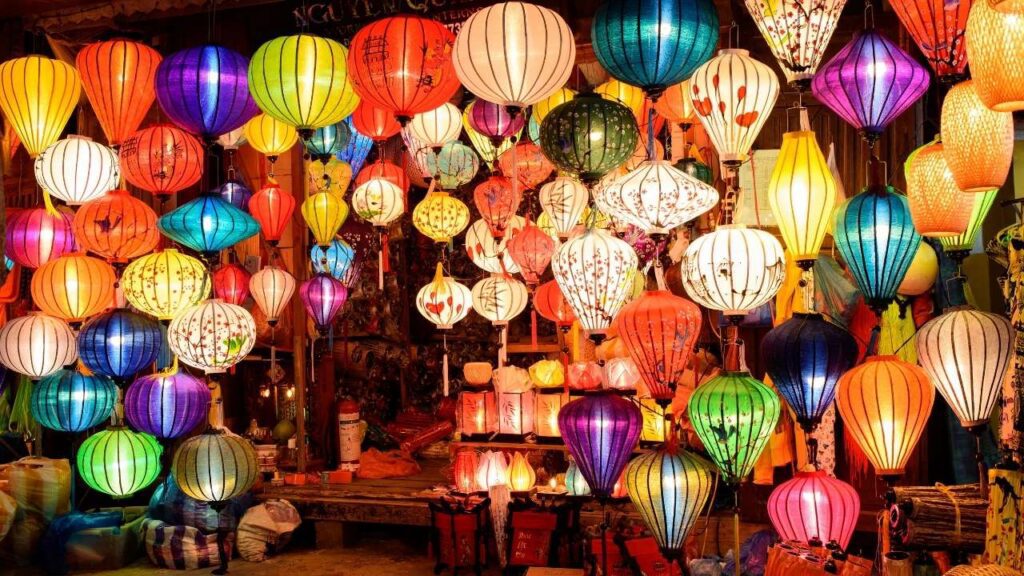
The Hoi An Lantern Festival: When the Town Becomes a Painting
Every month, on the night of the full moon, something remarkable happens in Hoi An Ancient Town. The electric lights go out. Paper lanterns in red, yellow, and gold are lit along every street and floated down the Thu Bon River. The Ancient Town, already beautiful by day, becomes something out of a dream.
The Hoi An Lantern Festival — locally known as Hội An Phố Cổ — draws visitors from around the world, but the experience still feels intimate. More like being invited to a private ceremony than watching a tourist show.
If you can synchronise your clients’ Central Vietnam itinerary to include a full moon night in Hoi An, do it. It’s the kind of evening that gets talked about for years. The full moon dates shift monthly — check the lunar calendar when booking and lock the nights accordingly.
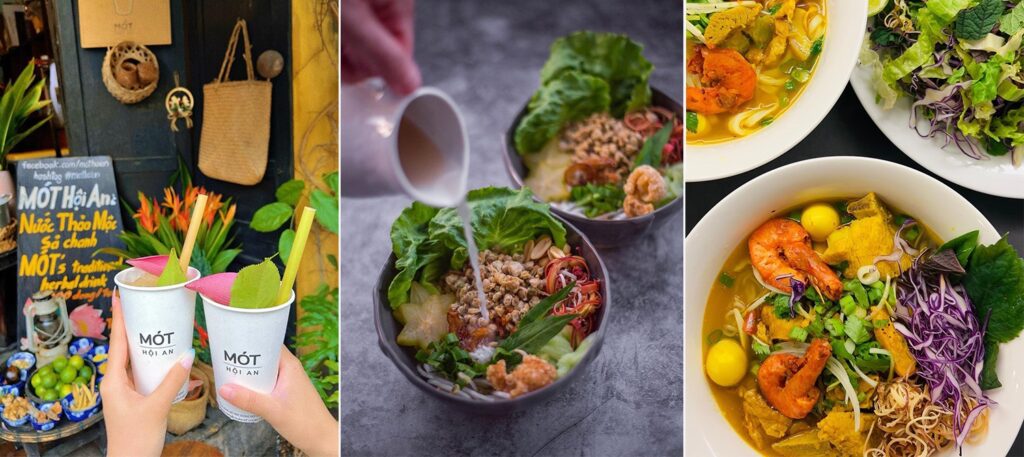
Hoi An Food: Why This Town Has Its Own Cuisine
Centuries of international trading didn’t just leave behind buildings. They left behind recipes. The Hoi An food culture is distinct from the rest of Vietnam — influenced by Chinese, Japanese, and Vietnamese cooking in equal measure — and three dishes in particular have become globally famous:
- Cao Lầu — A noodle dish made with pork, fresh herbs, and chewy rice noodles that can only be made authentically with water from a specific ancient well in Hoi An. The dish has existed for centuries. Find it at any market stall early in the morning.
- White Rose Dumplings (Bánh Bao Vạc) — Delicate, translucent shrimp dumplings shaped into a white rose. A single family has kept the recipe secret for generations and supplies every restaurant in town.
- Bánh Mì Phượng — Hoi An’s answer to the sandwich, and many food critics’ pick for the best bánh mì in Vietnam. Anthony Bourdain called it a “symphony in a baguette.” Queue accordingly.
For travel agents building food-focused itineraries, Hoi An Ancient Town is one of the strongest arguments in all of Central Vietnam. A cooking class, a market walk, or simply a morning at the street food stalls — any of these can anchor a day and delight even the most well-travelled client.
Hoi An Travel Guide: Practical Notes for Travel Agents
Everything below is structured for quick reference when you’re mid-call with a client and need the key details fast.
| Best Time | February to April: dry, comfortable, ideal. July–August: hot. November: light flooding — atmospheric, locals in rubber boots. |
| How Long | 2 nights minimum. 3 nights ideal: time for tailoring, My Son day trip, and a sunrise rice field ride. |
| Getting There | Da Nang Airport: 30 km, ≀40 minutes. Combines easily with Hue (2 hrs north) and a Da Nang beach stay. |
| Perfect For | History lovers, culture travellers, foodies, photographers, couples, honeymooners, and shoppers. |
| Pairs With | My Son Sanctuary, Da Nang beach, Hue Imperial City, Marble Mountains, Bach Ma National Park. |
| 🌆 Danang Full Day City Tour With Hoi An A comprehensive day covering both cities: the Cham Sculpture Museum, Linh Ung Pagoda, Marble Carving Village, and Hoi An’s ancient streets — including the Japanese Bridge and historic temples. |
Why Hoi An Ancient Town Sells Itself — With a Little Help From You
Here’s the thing about Hoi An Ancient Town: once your clients arrive, it does all the work. The history is visible. The Hoi An food is extraordinary. The tailors are waiting. The lanterns are ready. And the sense of walking through a living museum — one genuinely known to European traders 500 years ago — gives the whole experience a weight that no theme park can manufacture.
Your job as a travel agent is simply to make sure they go. And to make sure they stay long enough.
Two nights minimum. Three if you can manage it. They’ll thank you at the airport on the way home, wearing a perfectly tailored linen suit and carrying a bag full of silk lanterns.
| 📋 Partner With VietOne For Central Vietnam VietOne Travel is your specialist DMC for Central Vietnam with 33 years of local expertise. We handle all logistics, guides, accommodation, and transfers — so your clients get a seamless experience and you get the margins you deserve. |