Why Halong Bay looks nothing like the photos — and why that’s actually better
DESTINATION GUIDE • HALONG BAY | Reading time: ∼7 min | Best for: agents booking North Vietnam, nature & landscape tours, first-time Vietnam travellers
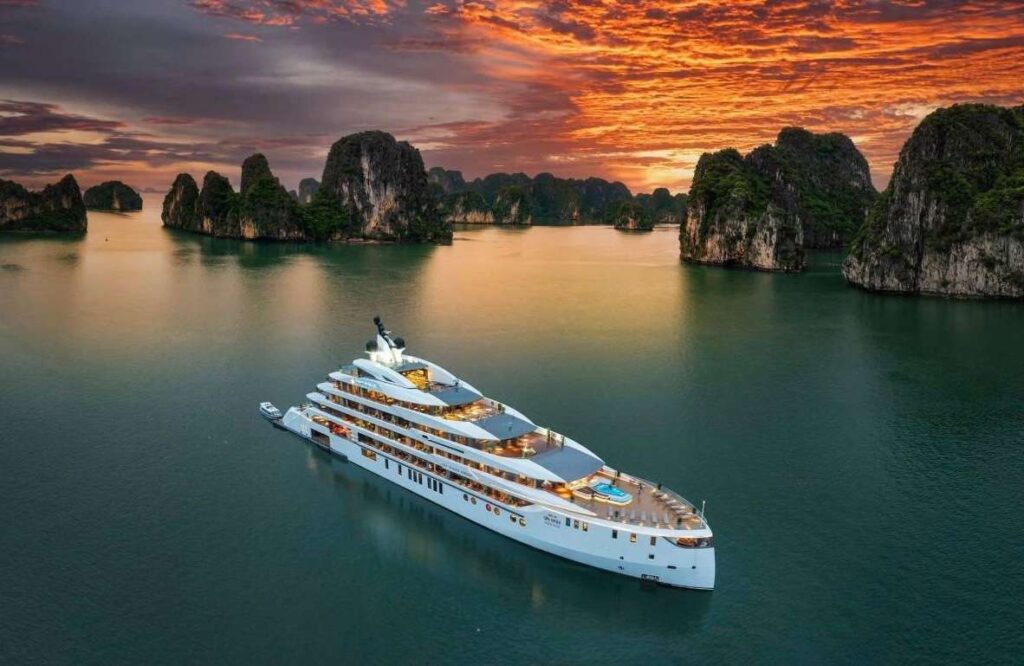
Every travel agent who has ever sold Halong Bay has faced the same problem. The client has seen the photos — that iconic image of limestone karsts rising from a glassy turquoise sea, mist curling around the peaks, not another boat in sight. It looks like something from a fantasy novel. It looks, frankly, too good to be true.
And in one important sense, it is. That perfect, deserted, golden-hour version of Halong Bay exists in photographs. It exists in the imagination. But it is not quite what your clients will experience when they arrive.
This Halong Bay travel guide gives you the honest truth that most travel content doesn’t. The real Halong Bay is not a disappointment — it’s something far stranger and more interesting than any photo can capture. But travel agents who don’t manage expectations properly are setting their clients up for a moment of confusion. So let’s set the record straight.
| The photos show Halong Bay on its best day, at its best hour, from its best angle. Reality shows it to you from the inside. That’s always going to be more interesting. |
What the Photos Get Wrong About Halong Bay
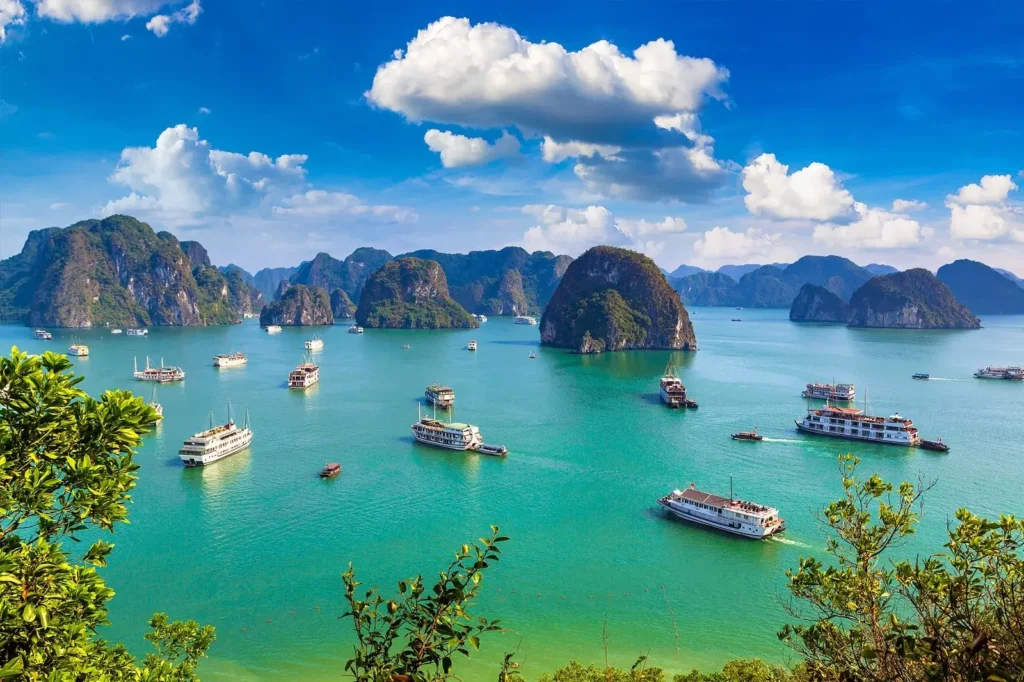
Let’s start with the most obvious issue: the photos show you an empty bay. No other boats. No tour groups. No floating villages. Just limestone and water and sky.
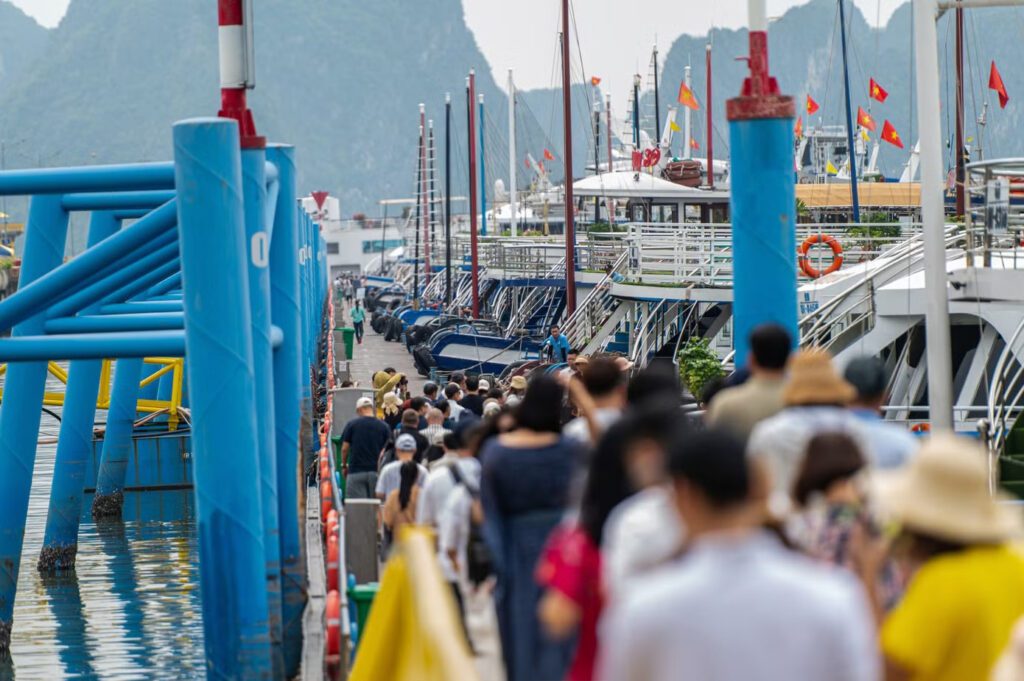
The reality is that Halong Bay sees millions of visitors a year and is home to one of the most active Halong Bay cruise industries in Southeast Asia. On a typical day in peak season, dozens of vessels are moving through the bay simultaneously. It’s a functioning, busy, commercial waterway — and it has been for centuries, since fishing communities built their lives on these very waters.
Does this make it less beautiful? Not even slightly. But it does make it different from the isolated wilderness your clients might expect. The boats, the floating villages, the other tourists — these are part of Halong Bay’s story. They’re not an intrusion on it.
The second thing the photos get wrong is the light. Halong Bay is famous for its mist — a low, atmospheric haze that rolls in from the Gulf of Tonkin and settles between the limestone karst formations like something from a Chinese ink painting. Most photographs are taken on rare, perfectly clear days. But misty days — which are common, especially from October to April — produce a visual effect that is, if anything, even more dramatic. The karsts disappear into the fog. New islands materialise as you sail past. The scale becomes impossible to judge. It’s genuinely otherworldly.
No travel photographer has ever produced the definitive image of Halong Bay on a misty morning, because it changes every five minutes and the camera cannot quite capture the depth of it. Your clients will have to see it for themselves. That’s a selling point, not a problem.
| 💡 Agent Tip: Set Expectations, Then Exceed Them When briefing clients, tell them: ‘Halong Bay will surprise you. It’s busier than the photos suggest, and the light is often misty rather than blazing blue. Both of these things make it more interesting, not less. Be open to it.’ This simple framing transforms potential disappointment into wonder. |
The Scale Is What No Halong Bay Photo Can Prepare You For
There is one thing the photographs do get right, and it’s the one thing that absolutely no amount of preparation makes less shocking: the scale.
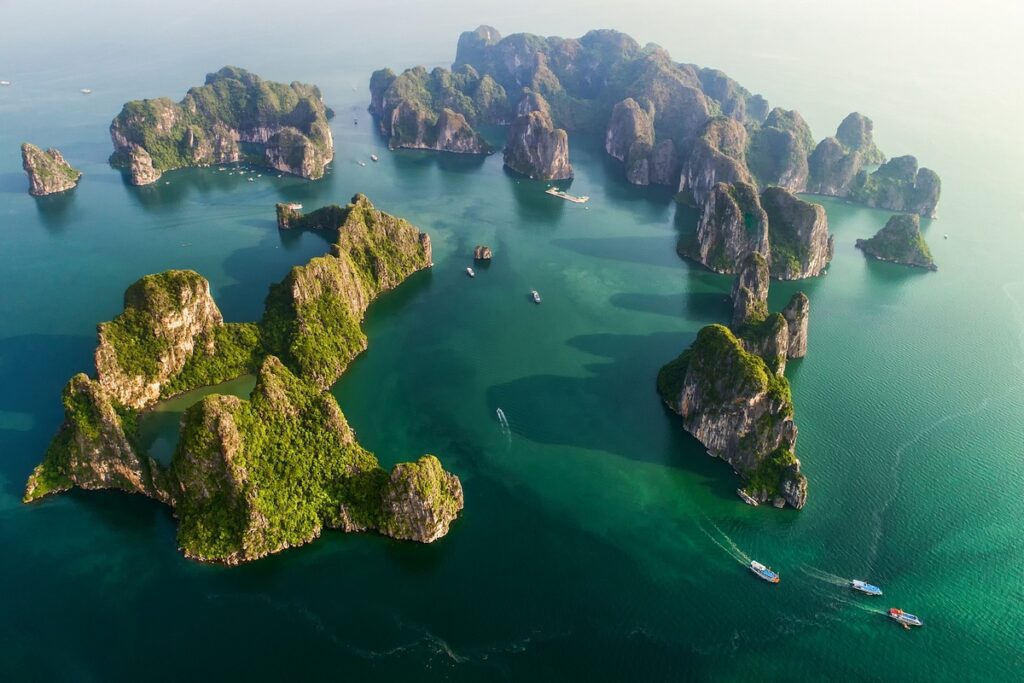
Halong Bay covers nearly 1,600 square kilometres of water. Within that area, there are approximately 1,600 limestone karst islands — each one a vertical column of rock draped in jungle, riddled with caves, dropped into the sea with no apparent logic. Standing on the deck of a boat in the middle of the bay, surrounded by islands in every direction, is one of those experiences that makes people very quiet for a moment.
The photos show you individual karsts. The reality is that you’re surrounded by hundreds of them simultaneously. The horizon disappears. You’re in a maze of rock and water with no visible end. It’s one of the few landscapes in the world that genuinely changes the way you experience your own sense of scale — and that experience simply cannot be photographed.
This is the moment your clients will remember. Not the sunset on the poster. Not the turquoise water in the brochure. The moment they realised Halong Bay was so much bigger than they thought.
| 1,600 islands. Nearly 1,600 square kilometres of water. No map prepares you for it. No photo comes close. |
The Halong Bay Caves Are Nothing Like What You Imagine
The tourist literature tends to describe the Halong Bay caves as ‘magnificent’ and ‘awe-inspiring’ — which is accurate but not particularly useful. Let’s be more specific.
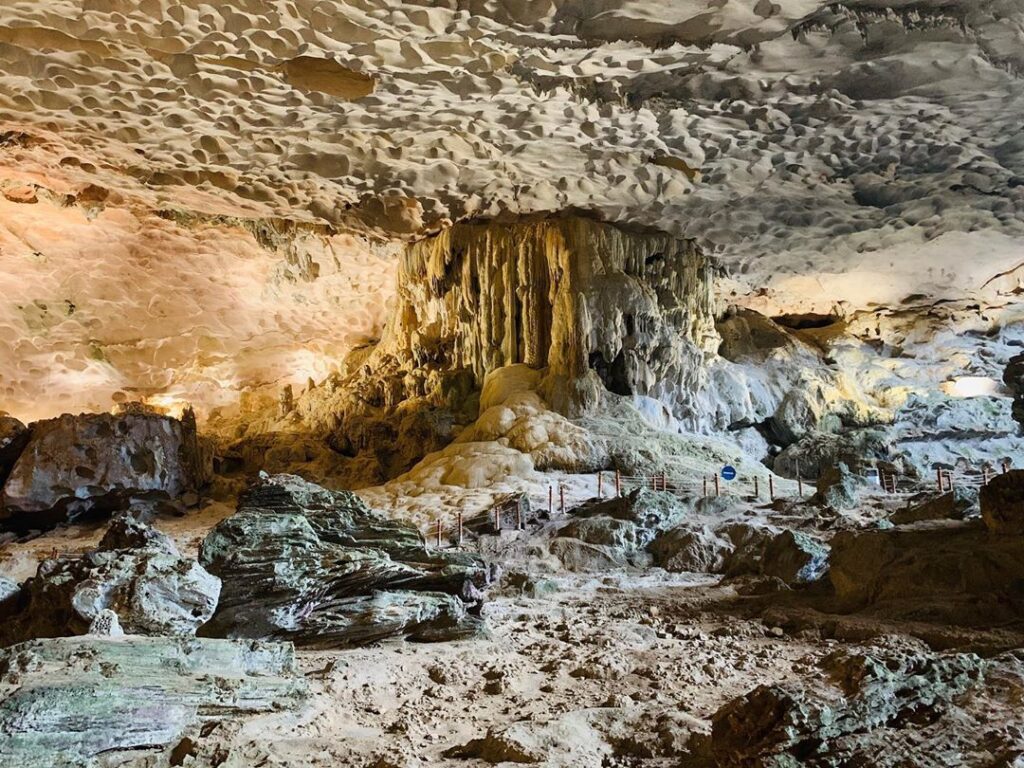
Thien Cung Cave (Heavenly Palace Cave) is the most famous of the Halong Bay caves, and it earns its name. The main cavern is roughly the size of a concert hall, with formations that took millions of years to grow. Stalactites hang from the ceiling in shapes that look vaguely like animals, dragons, and weather systems. The cave is lit dramatically, which adds to the theatricality of the space.
Dau Go Cave is older, larger, and darker — one of the biggest caves in the bay, used by fishermen for shelter for centuries. Walking through it is genuinely eerie in the best possible way: the sound of dripping water, formations emerging from shadow, the sense of being inside a landscape that has nothing to do with human time.
Both Halong Bay caves are included in VietOne’s day excursion. What the photos of these spaces don’t convey is the temperature — about 20°C year-round, which feels extraordinarily cool after the humid air outside — or the smell, which is cold stone and ancient water. These are full sensory experiences, not just visual ones. Remind your clients to bring a light layer.
| ⛵ Full Day Excursion to Halong Bay A complete Halong Bay cruise: Thien Cung and Dau Go caves, dramatic limestone karst scenery, a delicious onboard lunch, and the full sensory experience of one of the world’s great UNESCO sites. Departs from Hanoi. |
Halong Bay Tips: How to Beat the Crowds (And When Not to Bother)
Here’s the honest Halong Bay guide to managing the crowd question — because your clients will ask.
The bay is busiest from May to September, which is also peak summer season for European travellers. In these months, the most famous areas of the bay — particularly around the karst clusters closest to Ha Long City — are genuinely busy, and the experience of being surrounded by a fleet of cruise boats is part of the deal.
The solution isn’t to avoid Halong Bay. It’s to book smart. Here are the best practical Halong Bay tips for travel agents:
- Depart early. Boats that leave before 8am have the bay largely to themselves for the first two hours. The morning mist, the stillness of the water, and the absence of other vessels in those first hours is extraordinary.
- Consider the shoulder seasons. The best time to visit Halong Bay for fewer crowds is March–April and October–November: comfortable weather, significantly fewer boats, and more atmospheric mist in cooler months.
- Go further in. The outer zones of the bay — further from the main tourist docks — see a fraction of the traffic. Extended Halong Bay itineraries that spend more time in these zones offer a genuinely different experience.
- Use the floating villages. The fishing communities that live on the water full-time are one of Halong Bay’s most remarkable features, and most short-stay tourists never visit them. They’re not in the photos. They’re far better than the photos.
| 💡 Agent Tip: The Floating Villages Are the Highlight You’re Not Selling Most agents focus on the limestone karsts. But the floating villages — communities of several hundred people who live entirely on the water, with schools, shops, and livelihoods — are one of the most extraordinary things in Southeast Asia. If your clients are curious about culture as well as landscape, make sure the village is on the Halong Bay itinerary. |
The Perfect Halong Bay Itinerary: Combining It With North Vietnam
Halong Bay is best understood not as a standalone attraction but as the centrepiece of a North Vietnam itinerary that builds context and contrast around it.
Hanoi, just 3–4 hours away, is the perfect counterpoint: a chaotic, fascinating, 1,000-year-old capital city that rewards curiosity with extraordinary food, colonial architecture, and a street life that never quite stops. The cultural immersion of Hanoi makes the wild emptiness of Halong Bay feel all the more dramatic when you arrive.
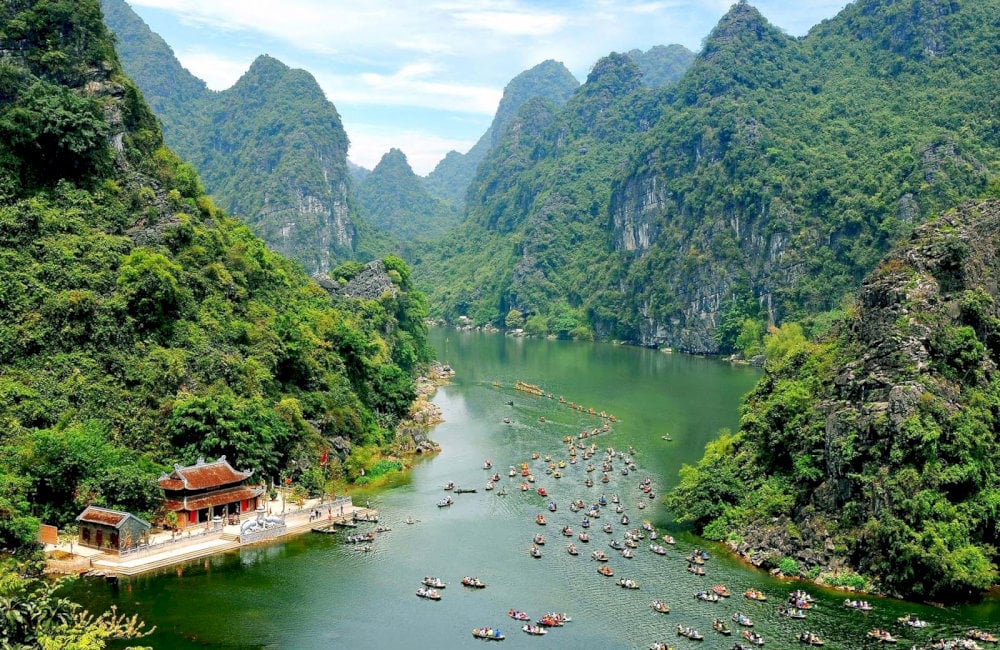
The city of Ninh Binh, roughly halfway between Hanoi and the coast, adds another layer still — it’s often called ‘Halong Bay on land’ for its limestone karst scenery rising from rice paddies rather than water. A boat trip through the flooded valleys of Trang An is one of the most peaceful experiences in Vietnam. Ninh Binh rewards the North Vietnam travel agents who know to include it.
| 🗺️ Hanoi – Ninh Binh – Ha Long (5 Days) The complete North Vietnam cultural arc: Hanoi’s history and street life, a boat trip through Ninh Binh’s flooded karst valleys, and a Halong Bay cruise visiting Thien Cung and Dau Go caves. 5 days, 4 nights, max 10 travellers. |
For Clients Who Want the Full North Vietnam Experience
For travellers with more time — or those who want to go deeper into the north — VietOne’s 8-day Tonkinese Landscape Marvels itinerary takes the Halong Bay experience and surrounds it with the full range of North Vietnam’s extraordinary landscape.
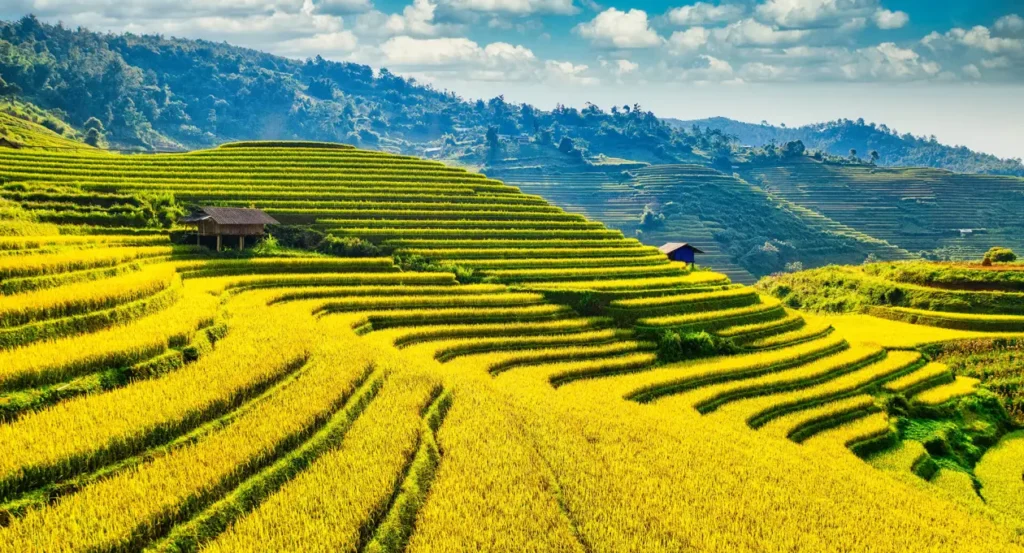
The route moves from Hanoi through the rice valleys of Mai Chau, into the jungles of Cuc Phuong National Park, across the karst scenery of Ninh Binh, and finally onto the legendary limestone karst islands of Halong Bay. It’s a journey through five completely different ecosystems in eight days — and it gives clients an understanding of Vietnam’s northern geography that a single destination visit simply cannot provide.
For European travellers with an interest in landscape, biodiversity, and cultural depth, this North Vietnam itinerary is one of the strongest products available in Southeast Asia.
| 🏔️ Tonkinese Landscape Marvels – 8 Days Hanoi, Mai Chau rice valleys, Cuc Phuong jungle, Ninh Binh karst scenery, and Halong Bay. Five destinations, eight days, one of the most complete North Vietnam itineraries available — for travellers who want to see it properly. |
Halong Bay Travel Guide: Practical Notes for Travel Agents
Everything below is structured for quick reference when you’re mid-call with a client and need the key facts fast.
| Best time to visit | October–April: cooler weather and dramatic mist, fewer crowds. May–September: busier but still beautiful — book early morning departures. |
| UNESCO status | Designated a UNESCO World Heritage Site in 1994 for outstanding geological and biological value — one of only a handful of sites listed for both natural and cultural significance. |
| Getting there | 3–4 hours by road from Hanoi, or 2.5 hours via the newer expressway. Most tours depart Hanoi in the morning and return in the evening, or include an overnight cruise. |
| What to wear | Light, breathable clothing on the boat. A light jacket or layer for cave visits (temperatures drop noticeably inside). Non-slip footwear for boat decks and cave paths. |
| What to tell clients | Busy in peak season, misty in cooler months, always dramatic. Early morning is the best time of day, full stop. Honest expectations = clients who come home blown away. |
| VietOne advantage | Over 33 years as a Vietnam DMC. We work with carefully selected boat operators and build Halong Bay itineraries around the bay’s quieter zones and best departure times. |
Sell the Real Halong Bay — It’s Better
Halong Bay is not the perfect, deserted paradise of the photographs. It’s something more interesting: a living, working, Halong Bay UNESCO-listed natural wonder that has been surprising people for centuries and shows no signs of stopping.
The clients who arrive with honest expectations — who know there will be other boats, who know the light will be misty, who know the Halong Bay caves are darker and stranger than they look on Instagram — are the clients who come home blown away. Because reality consistently outperforms expectations when you’ve set those expectations correctly.
That’s what good travel agents do. And that’s why the contrarian angle on Halong Bay isn’t just a content strategy. It’s genuinely good advice.
| 📋 Partner With VietOne for North Vietnam VietOne Travel has been crafting North Vietnam itineraries for European and Russian travel agents for over 33 years. As your Vietnam DMC, we handle the logistics while you focus on your clients. Competitive agent rates, responsive team, deep local knowledge. |