Last checked: 2 November 2026 · Next review: September 2027 (season and wind data, package details)
QUICK ANSWER: Mui Ne’s dry, windy season runs from November to April. The kitesurfing season is most reliable from December to February, when local schools report a typical 15-25 knots, building in the afternoon. For most travellers December to March is the sweet spot. Visit the White Sand Dunes at sunrise, keep afternoons for the beach or wind, and book Christmas and Tet (6 February 2027) early.
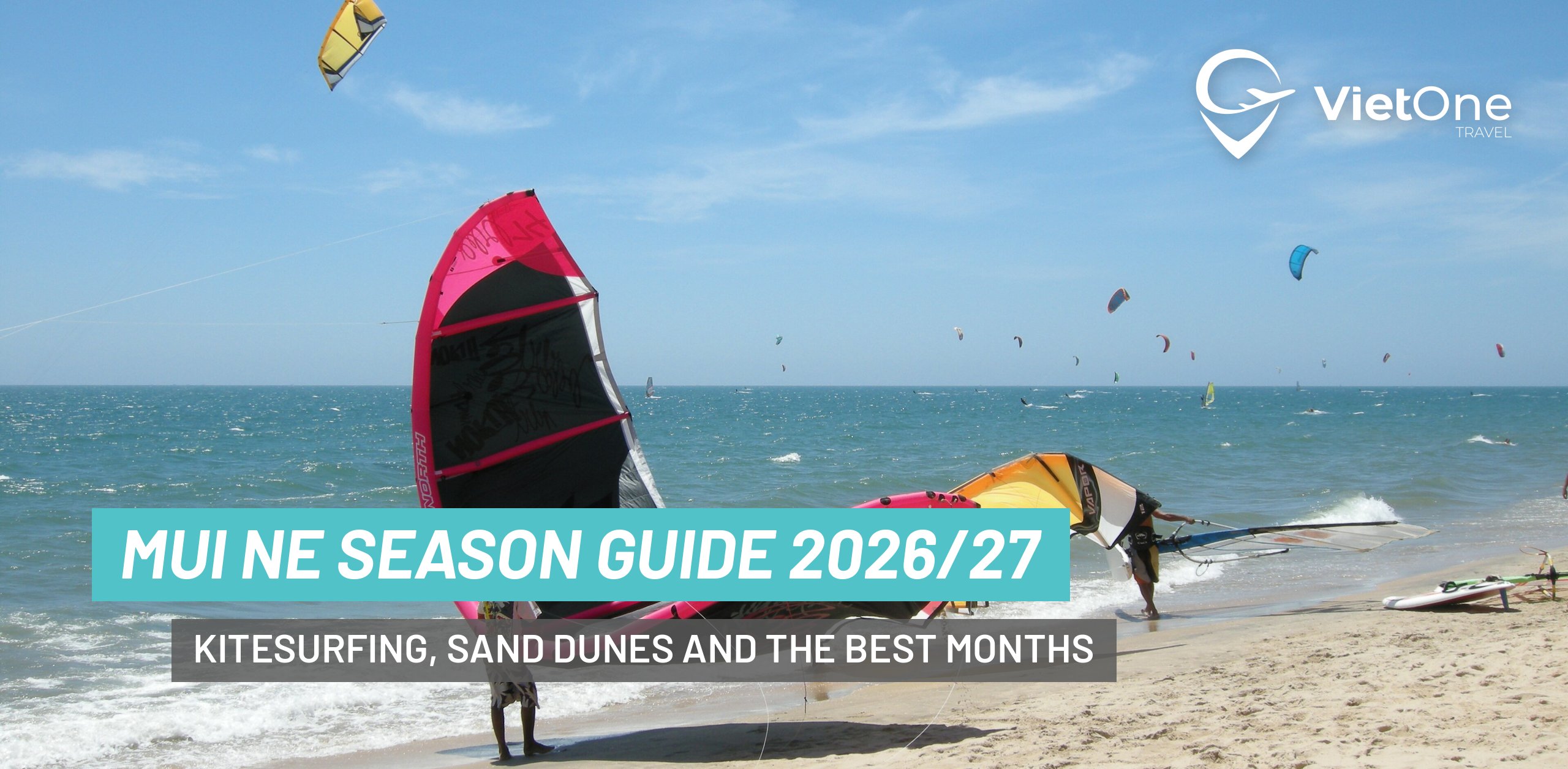
Every November, something changes along the coast east of Phan Thiet. The rains of summer fade, the skies clear, and a steady north-easterly wind starts to blow across Mui Ne bay. Within weeks the beach is dotted with colourful kites, and this former fishing village becomes one of the best-known wind spots in Asia.
You do not have to kitesurf to love Mui Ne in this season. The same dry, sunny weather is perfect for the sand dunes, slow beach days and fresh seafood. Here is how the Mui Ne kitesurfing season works, which months suit whom, and how to fit a few days by the sea into your Vietnam trip.
Mui Ne at a glance
Mui Ne lies on the south-central coast, roughly 200 kilometres east of Ho Chi Minh City. Since the expressway towards Phan Thiet opened, the drive takes around four hours, depending on traffic. The area is one of the driest in Vietnam, framed by red and white sand dunes, a long sandy bay lined with resorts, and a working fishing harbour at its eastern end.
Best months to visit Mui Ne
Mui Ne has two clear seasons:
- November to April: dry season and high wind season. Sunny, low humidity, very little rain. Air temperatures sit in the high twenties Celsius and the sea is warm. This is peak season for both kiters and beach travellers.
- May to October: wet season. Short, heavy showers, more humidity and a lighter, less reliable wind from the south-west. Quieter and often cheaper, but less predictable.
For most travellers the sweet spot runs from December to March: settled weather, long sunny days and the most consistent wind. If you are travelling over Christmas or Lunar New Year (Tet falls on 6 February 2027), book early, as Vietnamese families and international visitors arrive at the same time.
Kitesurfing in Mui Ne: the season month by month
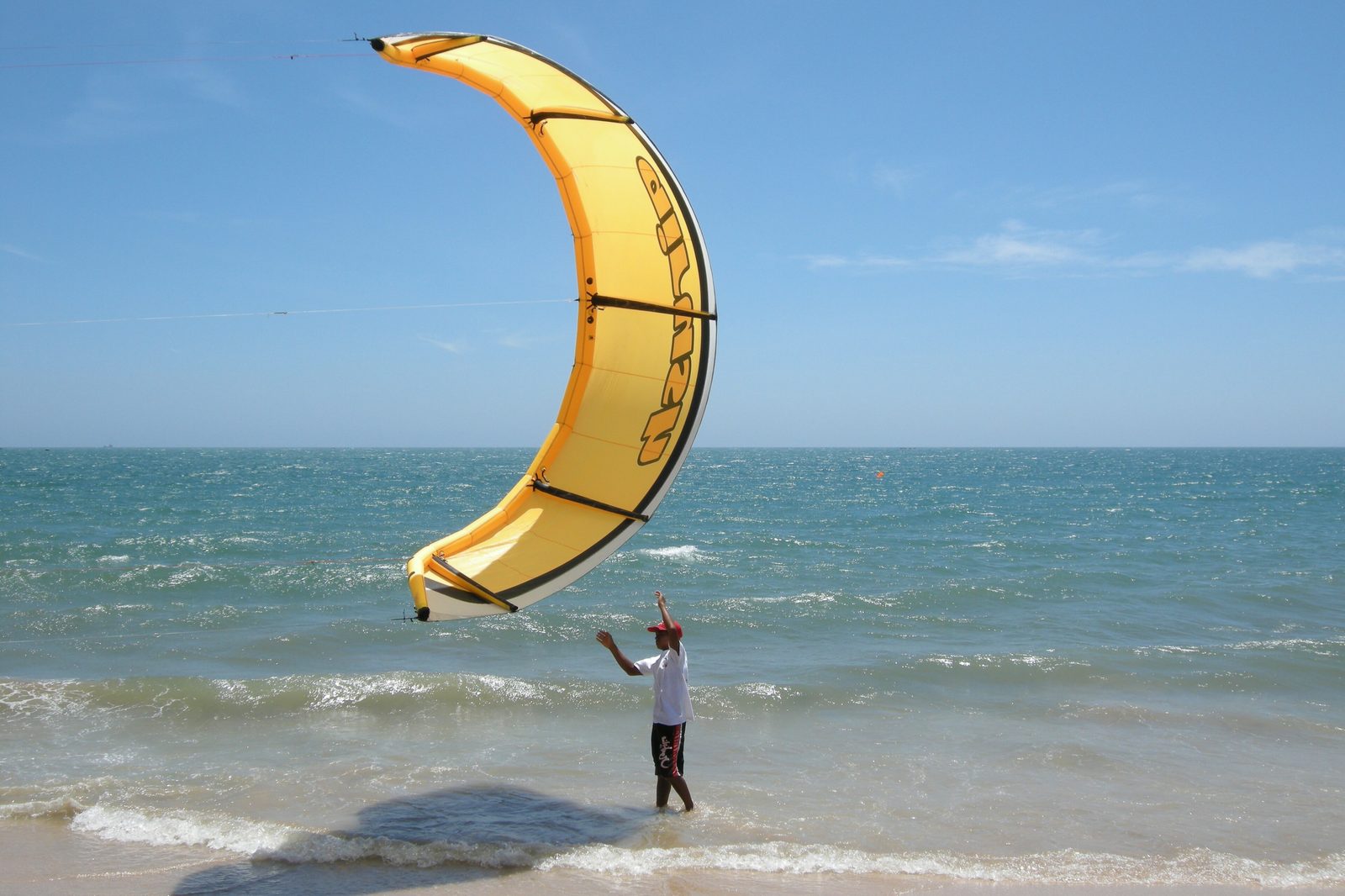
The wind is the reason Mui Ne became famous. During the north-east monsoon, local schools report a typical range of about 15 to 25 knots, with stronger days in the core of the season. The wind usually fills in from late morning and builds through the afternoon as the land heats up, so many riders start on a bigger kite and size down later.
- November: the season starts. Wind becomes more regular through the month, though there can still be calm days. A good time to learn before the strongest weeks.
- December to February: the most reliable period, with wind on most days. January and February are usually the windiest, which experienced riders love and beginners should plan for with lessons in the calmer morning hours.
- March and April: still a strong season, gradually less consistent, with warmer water and fewer crowds.
The main kiting beach has a cross-onshore wind, which helps keep riders close to shore, and the water is warm enough for boardshorts or a thin shorty. Waves are mostly small chop in front of the main beach, with bigger swell at quieter spots outside the bay.
Learning to kite? A beginner course usually takes several days. Choose an IKO-certified or similarly accredited school with radio helmets and a rescue boat, and book lessons for the mornings in January and February when the wind is gentler. Many schools also offer equipment rental for experienced riders, and windsurfing and wing foiling are popular too.
The sand dunes: White and Red
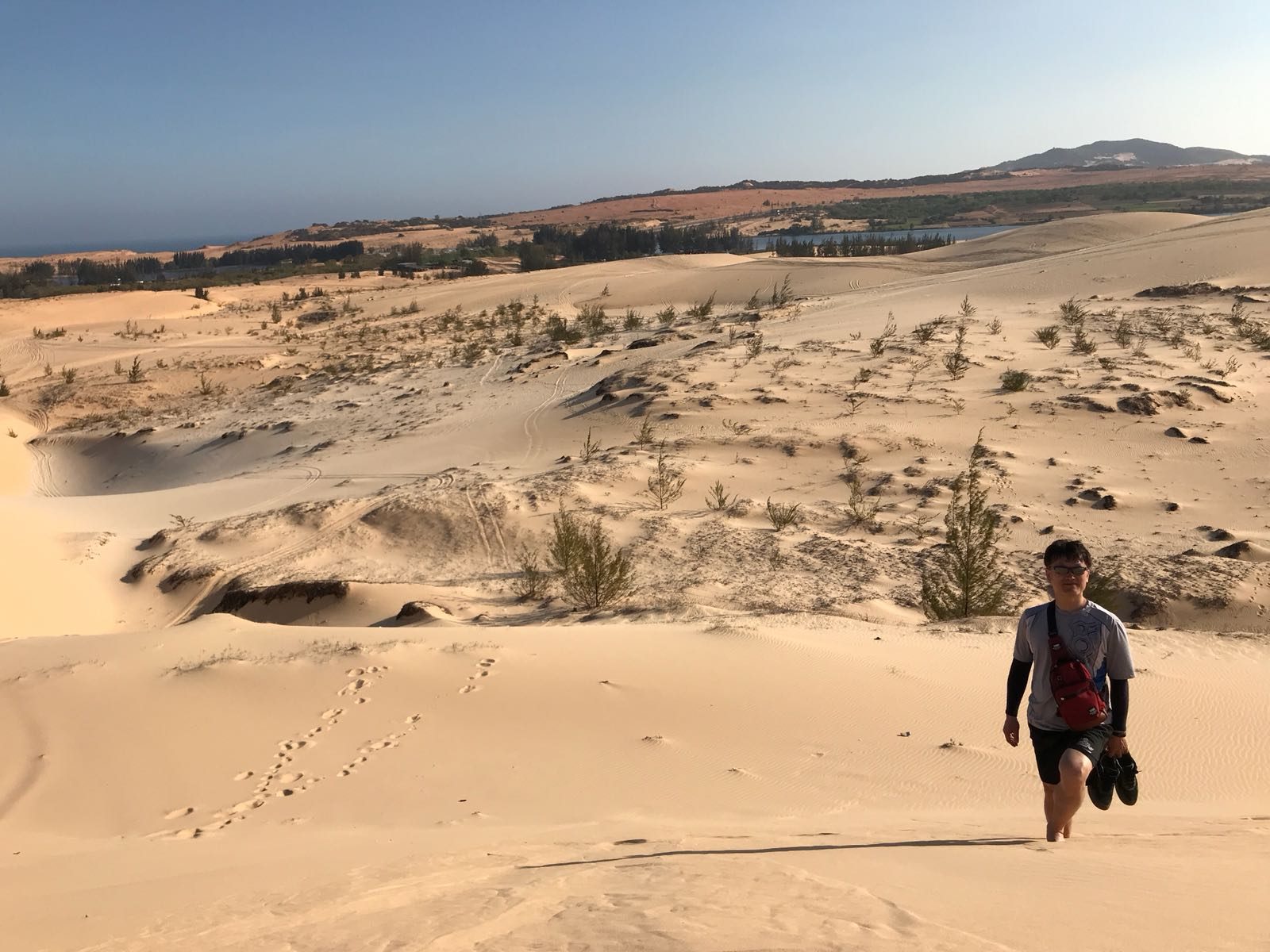
Mui Ne’s dunes are the region’s other big draw, and they look their best in the dry season.
- White Sand Dunes (Bau Trang): a vast landscape of pale, shifting dunes and small lakes, about an hour’s drive north-east of the main beach. Go at sunrise: the light is soft, the sand is cool, and the wind has not yet picked up. Jeep and quad rides take you over the crests.
- Red Sand Dunes: close to Mui Ne village, smaller and easy to reach, popular for sunset and for sliding down on plastic boards.
Bring sunglasses, a scarf for blowing sand and a bottle of water. Even in winter, the sun is strong once it is up.
Beyond the beach
Fairy Stream
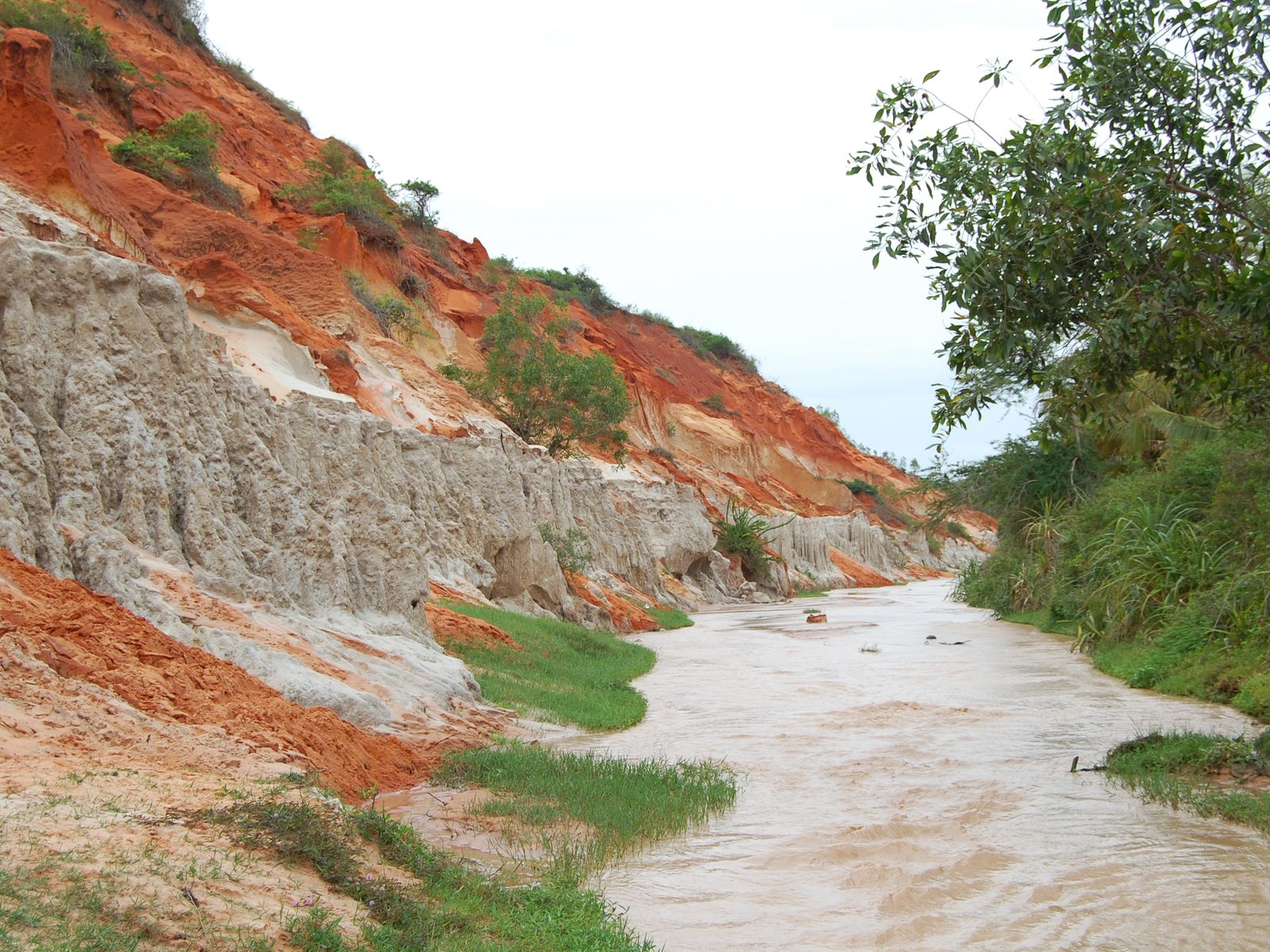
A shallow, ankle-deep stream winds through a small canyon of red and white sand cliffs. You walk barefoot upstream in the water, which makes it a relaxed late-afternoon outing when the wind is strongest on the beach.
Fishing village
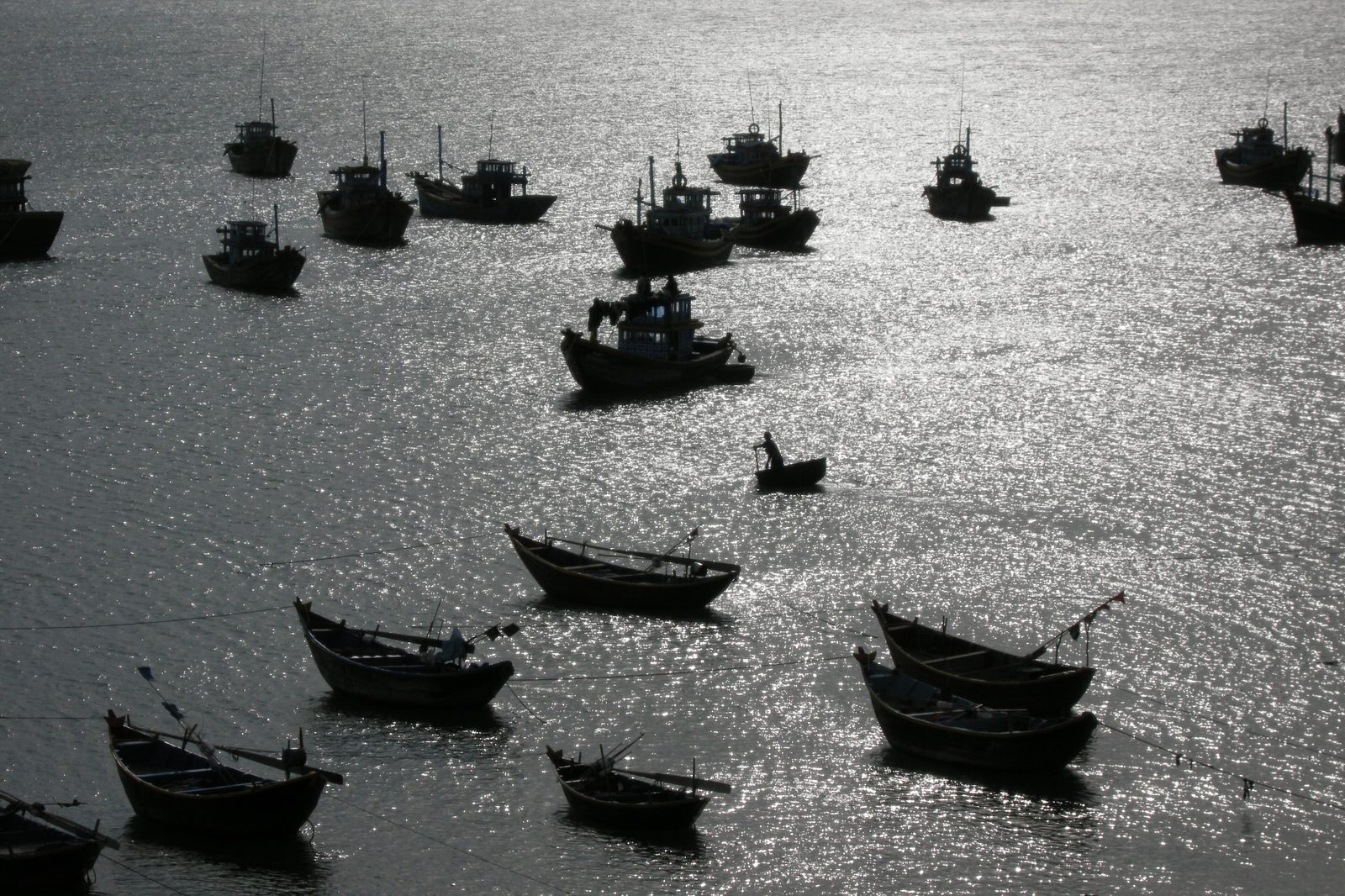
At the eastern end of the bay, Mui Ne harbour is still full of fishing boats and round basket boats. Come early in the morning to see the catch landed and sorted on the beach. It is one of the most authentic scenes on this stretch of coast.
Ta Cu Mountain
On the way from Ho Chi Minh City, Ta Cu Mountain is worth the stop. A cable car climbs through the forest, and a short walk leads to a huge reclining Buddha, one of the largest in Southeast Asia, with views over the dragon fruit farms below.
How to plan your Mui Ne days
Three nights in Mui Ne is ideal for a first visit: one day for the dunes, one free day for the beach or a kite lesson, and travel days at each end. Our Mui Ne Beach Escape (4 days) is built exactly this way:
- Saigon to Mui Ne, with the Ta Cu Mountain cable car and a forest walk to the Reclining Buddha on the way.
- A sunrise jeep ride across the White Sand Dunes, then the afternoon at the beach.
- A completely free day to kitesurf, take a lesson, relax by the pool or explore Mui Ne and Phan Thiet.
- Return to Saigon by private transfer after a final morning swim.
The package includes three nights at a seaside hotel or resort with daily breakfast, a private air-conditioned vehicle for the round trip, the cable car tickets and the private sunrise jeep, with an English-speaking guide. Kite lessons and rental are not included, so you can book exactly the level you need on the free day.
Mui Ne also pairs well with a longer route: after the cool mountains of northern Vietnam or a few busy days in Saigon, a beach finale in the dry season is hard to beat.
Practical tips
- Sun protection: high-factor sunscreen, a hat and a lycra top for kiting. The wind hides how strong the sun is.
- Mornings for sightseeing, afternoons for wind: plan the dunes and harbour early, and the beach or kiting later.
- Book Tet and Christmas early: resorts fill quickly in late December and around early February.
- Travel insurance: if you plan to kitesurf, check that your policy covers water sports.
Plan your Mui Ne escape
From November to April, Mui Ne offers warm sun, reliable wind and some of Vietnam’s most unusual landscapes, all a short drive from Saigon. Whether you come to ride or simply to watch the kites over a cold drink, the season is just beginning.
See the full itinerary and request your dates on our Mui Ne Beach Escape (4 days), or contact our team to combine Mui Ne with a longer Vietnam trip.
Related reading: Cu Chi Tunnels guide · Mekong Delta tour options · Vietnam in December: the best beaches
Header photo: Vyacheslav Argenberg, CC BY 4.0, via Wikimedia Commons.