The Hoi An ancient town history begins more than 500 years ago, when this small port on the central coast of Vietnam became one of Southeast Asia’s busiest trading hubs. a place so remote that most European maps didn’t even show it. Yet 500 years ago, this town was one of the busiest trading ports in all of Southeast Asia. Japanese merchants built wooden homes here. Chinese guilds controlled the spice trade. Dutch and Portuguese ships dropped anchor in the river. And local Vietnamese traders brokered deals in half a dozen languages.
That town is Hoi An. And remarkably, it still looks almost exactly the way it did back then.
A Port Born at the Crossroads of the World in Hoi An Ancient Town
Long before Vietnam was a country as we know it today, the central coastline was ruled by the Cham Kingdom — a powerful Hindu civilisation that controlled maritime trade across Southeast Asia. The Cham people were extraordinary sailors, and they recognised that the Thu Bồn River delta offered something rare: a sheltered harbour deep enough for ocean-going vessels, close enough to fertile land for fresh provisions, and perfectly positioned on the ancient Maritime Silk Road.
By the time the Cham Kingdom declined in the 15th century, Hội An had already become too valuable to abandon. Vietnamese lords — the Nguyễn lords of the South — took control and quickly grasped what they had. They didn’t just inherit a port. They inherited centuries of international connections.
They opened the doors wider.
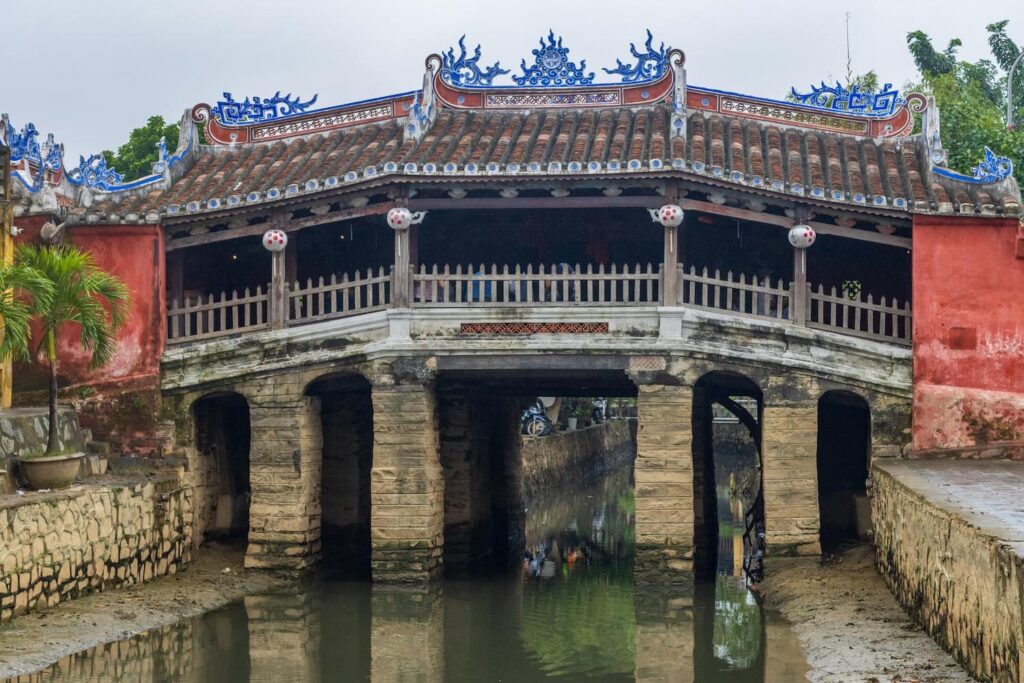
The Japanese Quarter in Hoi An Ancient Town History
In the late 1500s and early 1600s, Japanese merchants arrived in such numbers that they essentially built their own neighbourhood. They called it Faifo — a Japanised version of the Vietnamese name — and it became home to hundreds of families, warehouses, temples, and meeting halls.
The most iconic reminder of this era still stands today: the Japanese Covered Bridge (Cầu Chùa), built around 1593. It’s one of the most photographed landmarks in all of Vietnam, yet most visitors don’t know it was built by Japanese merchants to connect their quarter to the Chinese district across a small canal. The bridge even has a small temple built into it — dedicated to a deity said to control earthquakes.
| ✨ Fun fact: The Japanese Covered Bridge has appeared on the Vietnamese 20,000 đồng banknote for decades. You’ll probably have one in your pocket. |
The Japanese community thrived in Hội An until the early 17th century, when Japan’s isolationist Sakoku policy forced all Japanese traders to return home. They left almost overnight — but their bridge remained.
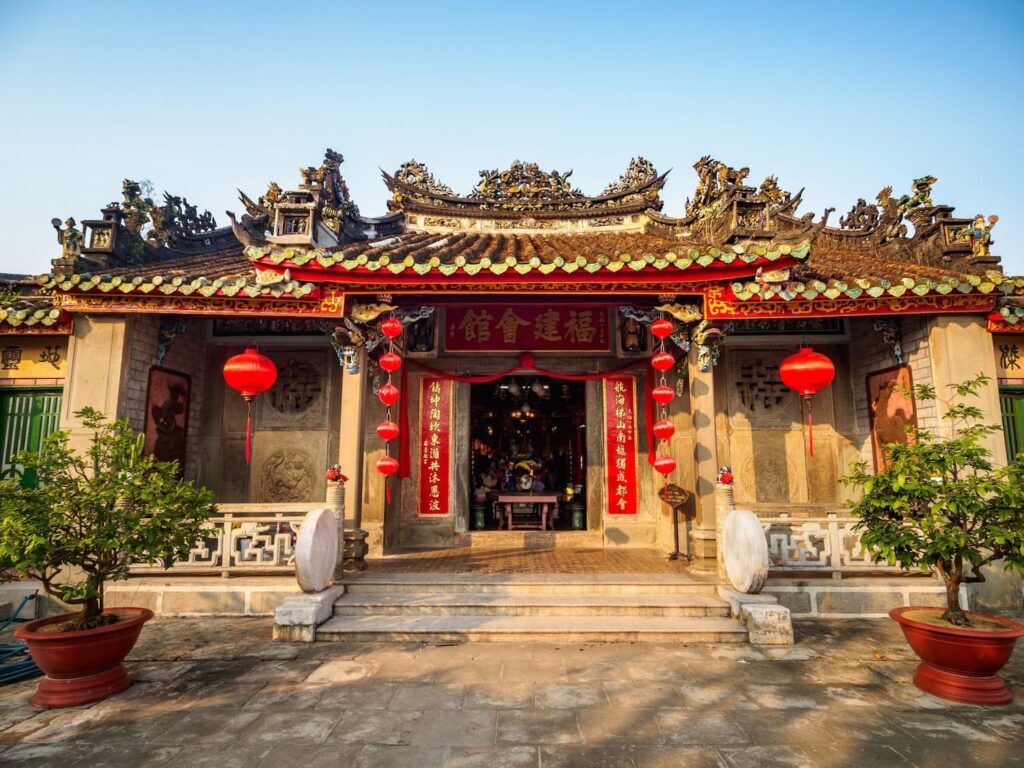
The Chinese Merchants Who Stayed
The Japanese left. The Chinese never did.
Chinese merchants from Fujian, Guangdong, and Hainan provinces had been trading in Hội An since at least the 14th century, and over time they became the dominant commercial force in the town. They settled, married locally, and built institutions designed to last.
Walk down Trần Phú Street today and you’ll still pass the assembly halls (hội quán) that different Chinese merchant communities built to honour their ancestors and conduct business. The Phúc Kiến Assembly Hall, built by merchants from Fujian province, is particularly breathtaking — a riot of red lacquer, gilded dragons, and incense smoke that hasn’t changed much in 300 years.
These weren’t just religious buildings. They were the chambers of commerce of the 17th century — places where deals were struck, disputes were resolved, and community bonds were strengthened.
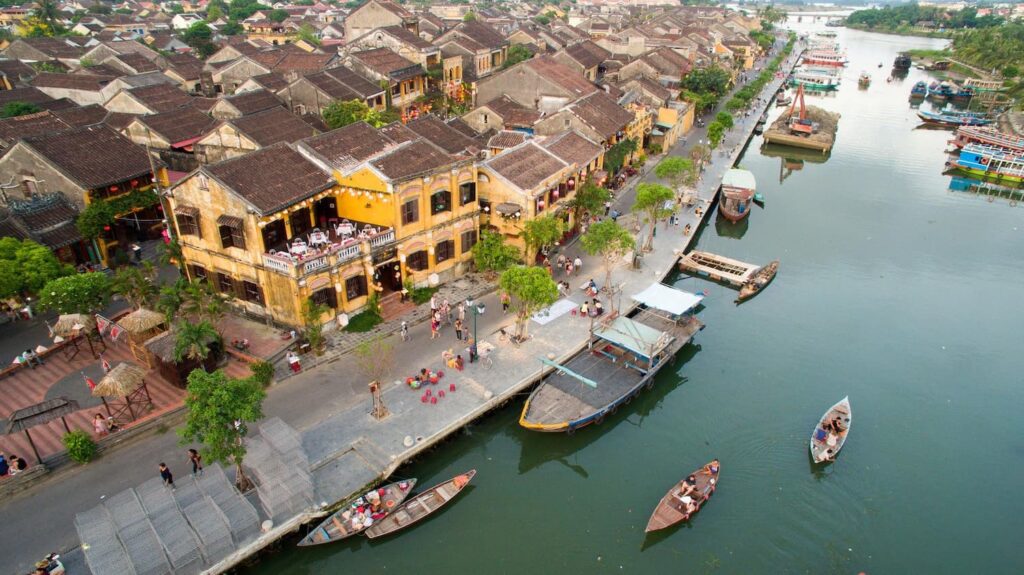
The Europeans Who Came to Buy
By the early 1600s, European ships were a regular sight in Hội An’s harbour. The Portuguese arrived first, followed by the Dutch, and later the English and French. What were they buying? Silk, primarily. Also ceramics, lacquerware, pepper, cinnamon, and a fragrant resinous wood called agarwood — worth more than gold in the perfume markets of Persia, India, and Arabia.
The Dutch East India Company (VOC) established a trading post in Hội An in 1636. For a brief period, this small Vietnamese river town had representatives of half the colonial powers of Europe doing business within walking distance of each other.
A Jesuit missionary named Alexandre de Rhodes passed through Hội An in the 1620s. He was working on something that would change Vietnam forever: a romanised alphabet for the Vietnamese language — chữ Quốc ngữ — the writing system Vietnamese people still use today. Hội An was, in a small way, the birthplace of modern written Vietnamese.
Why Hội An Was Frozen in Time
By the 19th century, Hội An’s great era was over. The Thu Bồn River silted up, making it increasingly difficult for larger ships to dock. The French colonial administration chose the deeper harbour at Đà Nẵng (just 30 kilometres away) as their regional port. Trade moved north. The merchants left.
And because no one had any reason to tear down the old buildings and replace them with new ones, Hội An was simply… preserved. The wooden shophouses with their characteristic yellow-washed walls and terracotta tile roofs survived intact. The assembly halls kept their incense burning. The Japanese Covered Bridge kept standing.
In 1999, UNESCO declared Hội An’s Ancient Town a World Heritage Site — one of only two in Vietnam (the other being the Imperial Citadel of Huế). The recognition made official what every visitor already knew: this place is irreplaceable.
Walking Through 500 Years of History
Today, the Ancient Town of Hội An is compact enough to explore entirely on foot. Within a few hundred metres you can pass through architectural layers of five centuries of international commerce:
• The Japanese Covered Bridge, with its small Taoist shrine
• The Phúc Kiến Assembly Hall, blazing with red and gold
• The Tấn Ký Ancient House, blending Chinese, Japanese, and Vietnamese design in a single building
• The Museum of Trading Ceramics, where broken shards from China, Japan, and the Middle East tell the story of global commerce
• The riverside market, where sampan boats still bring fresh produce down from the hills each morning
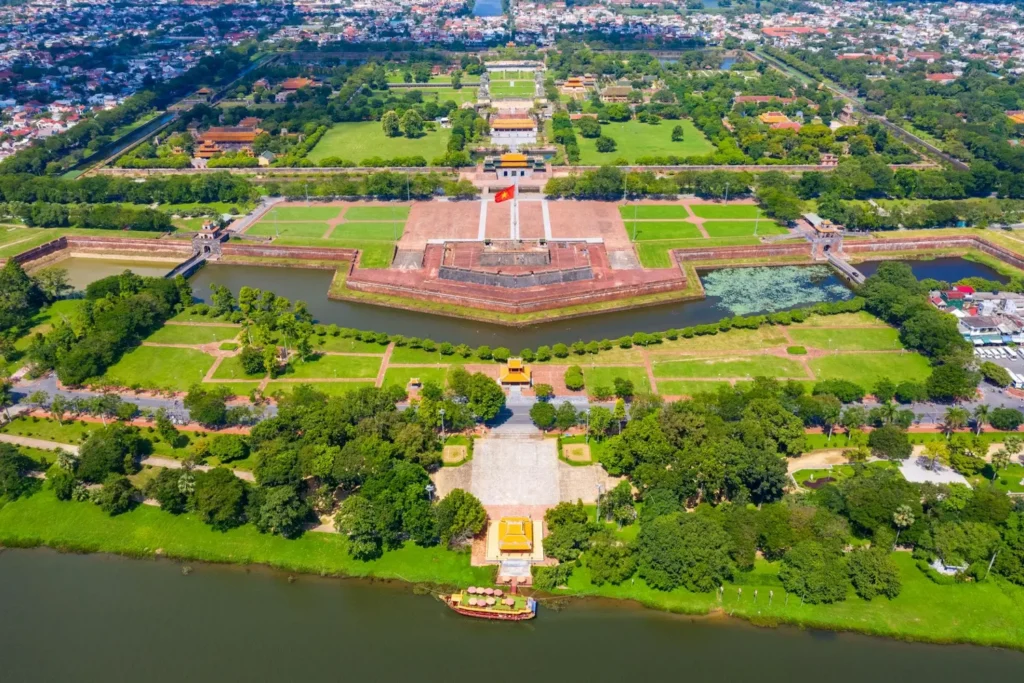
Hội An as a Base for Exploring Central Vietnam
Hội An isn’t just a history lesson. It’s one of the best bases for exploring central Vietnam — a region packed with extraordinary sites within easy driving distance:
• 30 km north: The ancient imperial city of Huế, with its Citadel, Royal Tombs, and Thien Mu Pagoda
• 30 km south: The dramatic Marble Mountains, five limestone hills riddled with Buddhist sanctuaries and caves
• 60 km south: The Mỹ Sơn Sanctuary, the most important surviving Cham temple complex — a Vietnamese Angkor Wat that most tourists never find
Planning a trip through central Vietnam? Our Central Vietnam Discovery Package covers Hội An, Huế, and Đà Nẵng in a beautifully paced itinerary. For a deeper dive, our Hội An Cultural Immersion Tour includes guided walks with a local historian, a cooking class, and a lantern-making workshop. For a full overview, the Vietnam Highlights Tour takes you from Hanoi to Hội An to Ho Chi Minh City.
The Quiet Miracle of Hội An
There’s something almost miraculous about the fact that Hội An exists the way it does. The 20th century was extraordinarily brutal to Vietnam. Wars, bombing campaigns, forced relocations, and rapid development destroyed or transformed most of the country’s historical fabric. Countless ancient temples, merchant houses, and colonial-era buildings were lost forever.
Yet here, on a quiet bend of the Thu Bồn River, 500 years of world history survived almost intact — not because anyone planned it that way, but simply because the river silted up at the right moment and left a town with nothing left to lose and nothing worth replacing.
For travellers who want to understand not just Vietnam, but the deep human history of trade, culture, and connection in Southeast Asia, Hội An is not just a stop on an itinerary.
It’s a destination that changes how you see the world.
| Ready to visit Hội An?Browse VietOne Travel’s central Vietnam packages or contact our team for a tailor-made itinerary built around your interests and travel dates. |