Time Out ranked it the 17th most beautiful place on Earth this year. Tuyen Quang province rewrote the rules for motorbike tours in April. Here is how a travel agent turns the most-searched road in Vietnam into a product you can put your name to.
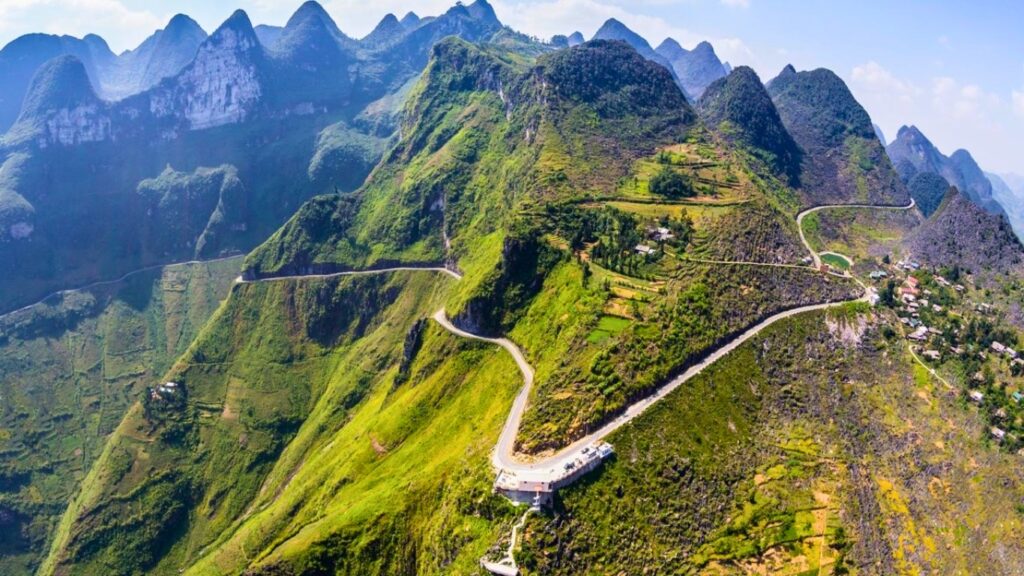
Every travel agent who sells Vietnam has now had the conversation. A client — often younger, sometimes not — has seen the Ha Giang Loop on social media: a ribbon of road hanging above the Nho Que river, limestone peaks stacked to the horizon, H’Mong children waving from the roadside. They want it. And you have read the headlines about a 19-year-old British passenger who died on the loop in March 2026, and about the provincial directive that followed. Your instinct is to say no.
You do not have to. The directive of 13 April 2026 did what agents had wanted for years: it made the licensed, contracted, insured version of the loop the only legal version. That is precisely the product a DMC can deliver and a travel agency can sell. This article explains what the loop is, what changed, what your clients legally need, which of the four ways to travel it suits which client, when to go, and what to write into the contract.
The Ha Giang Loop in 60 seconds
| What | The agent’s fact |
|---|---|
| Where | Far north of Vietnam on the Chinese border; the former Ha Giang province, part of Tuyen Quang province since 1 July 2025 |
| The road | Roughly 350 km circuit from Ha Giang city through Quan Ba, Yen Minh, Dong Van, the Ma Pi Leng Pass, Meo Vac and Du Gia |
| Protected status | Dong Van Karst Plateau, Vietnam’s first UNESCO Global Geopark (2010), 2,357 km², 17 ethnic groups |
| Duration | 3 days minimum, 4 days recommended |
| Getting there | 300 km from Hanoi; 5–6 h by limousine van, 6–8 h by sleeper bus, no airport |
| Best time | October–November (buckwheat, dry) and March–April; September for rice terraces |
| Legal to ride | 1968-Convention international driving permit with the right motorcycle category, plus a border-area permit |
| Agent-safe formats | Easy-rider (local driver, client as passenger) or private car / jeep tour |
| 2026 price guide | Easy-rider 3 days US$170–220 pp; 4 days US$215–285; private car or jeep tour US$145–185 pp for a group of four |
What the loop actually is
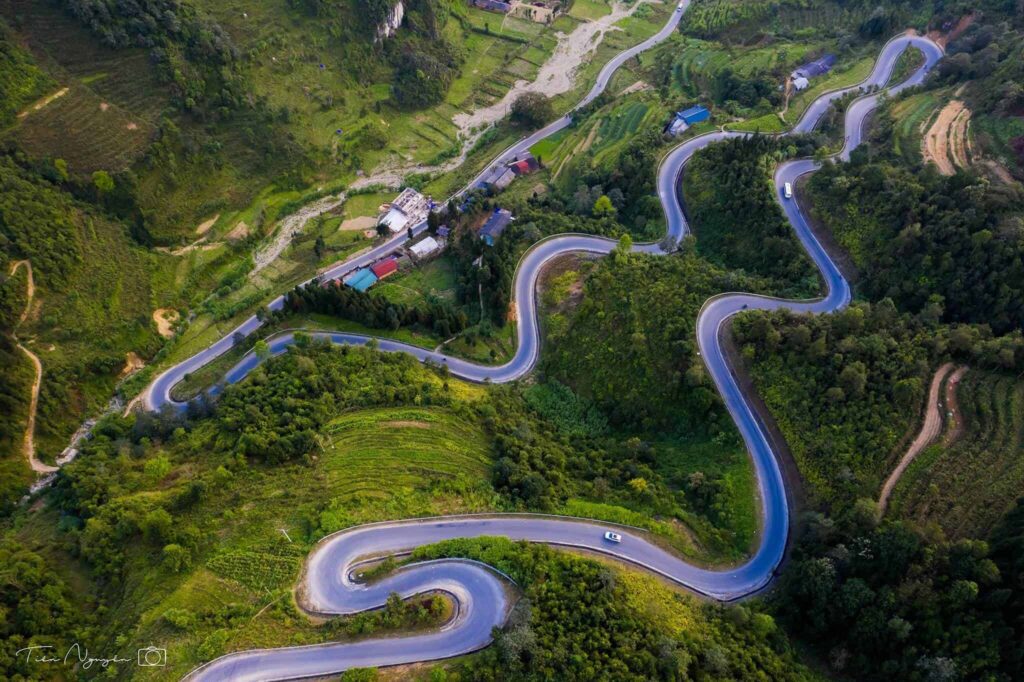
The Ha Giang Loop is a circuit of mountain roads around the Dong Van Karst Plateau, a landscape of grey limestone towers, terraced valleys and deep river canyons pressed against the Chinese border. Its spine is National Highway 4C, known as the Happiness Road, built between 1959 and 1965 by workers from sixteen ethnic groups; the section over the Ma Pi Leng Pass alone took more than a thousand people almost two years. The pass looks down 800 metres into the Tu San canyon, the deepest in Southeast Asia, where the Nho Que river runs an improbable jade green.
Along the way are the Quan Ba Heaven Gate and its twin conical hills, the H’Mong hemp-weaving cooperative at Lung Tam, the Vuong family palace of the “H’Mong King” in Sa Phin, the stone-and-timber old quarter of Dong Van, the Lung Cu flag tower at Vietnam’s northernmost point, the Sunday markets of Dong Van and Meo Vac where H’Mong, Dao, Tay, Lo Lo and Giay families trade in full traditional dress, and the Lo Lo Chai village at the foot of the flag tower, home to one of Vietnam’s smallest ethnic groups. It is not a beach, not a temple circuit, not a cruise. It is the reason repeat visitors come back to Vietnam, and it has almost no equivalent in Southeast Asia.
A note on the name. Ha Giang province merged into Tuyen Quang province on 1 July 2025, but “Ha Giang” remains the name of the city, the loop and the search term. Use it. Our guide to Vietnam’s new map explains the mergers.
What changed in 2026
On 29 March 2026 a 19-year-old British tourist riding as a passenger on an easy-rider tour died after her driver hit a motorbike ahead and then an oncoming lorry on Highway 4C. The driver has been prosecuted. On 13 April the Tuyen Quang Department of Culture, Sports and Tourism issued a directive that changed the market overnight:
- Only licensed tour operators may organise, promote or sell motorbike tours on the loop.
- Service providers must hold written, legally binding contracts with travel agencies that specify drivers, vehicles, route, designated rest stops and responsibility in the event of an incident.
- Drivers may not unilaterally change the itinerary, swap personnel or pool passengers.
- Bikes must be regularly maintained; full-face helmets and protective gear must be issued to every passenger before departure.
- Incidents must be reported immediately to the travel agency and the authorities.
By early June the provincial People’s Committee and the Traffic Police had identified 30 businesses operating tours, briefed almost 2,000 drivers who signed compliance commitments, ordered vehicle inspections, started driver training in emergency handling and first aid, and increased patrols. Since then operators report that checkpoints on the plateau are again asking foreign riders for their international driving permit and border permit.
Read that list again from an agent’s point of view. It is a description of a professionally operated tour. The province has outlawed the informal end of the market and required exactly the paperwork a European travel agency needs anyway.
What your clients legally need
To ride themselves. Vietnam recognises international driving permits issued under the 1968 Vienna Convention, carried together with the national licence, and the category must cover the bike. The permits most European clubs issue — Germany, France, Italy, the Netherlands, Austria, Switzerland, Russia — are 1968 permits; the United Kingdom issues both types, so British clients must specifically request the 1968 version.
Permits under the 1949 Geneva Convention (the United States, Canada, Australia) are not valid. A car-only licence is not enough for a 110–150 cc motorbike, and the German B196 extension is not recognised. Riding without a valid category carries a fine of 2–4 million VND on bikes up to 125 cc and 6–8 million VND above that, the bike is impounded, and — the part that matters — travel insurance is normally void.
To ride as a passenger. Nothing beyond the border-area permit, which the operator arranges. This is the point to make to the client: with an easy-rider or car tour, the licence question disappears.
For everyone. The Dong Van plateau is a border zone and foreigners need a border-area permit for Quan Ba, Yen Minh, Dong Van and Meo Vac — in other words, the whole loop. It costs around 200,000–250,000 VND, is issued at the immigration office in Ha Giang city against passport and visa, and every licensed operator includes it. Checkpoints near Lung Cu and the border villages check it.
Insurance. Confirm that the client’s policy covers motorcycle travel as a passenger (most do) and, if they intend to ride, that it covers riding with their specific licence category (many do not). The nearest major hospitals are in Hanoi, five to six hours away by road; there is no helicopter rescue. Our foreign-office summaries: the UK FCDO calls motorbike travel in Vietnam “much riskier than in the UK”; the German Foreign Office advises against renting your own vehicle. Neither advises against visiting Ha Giang.
Four ways to do the loop — and which client fits each
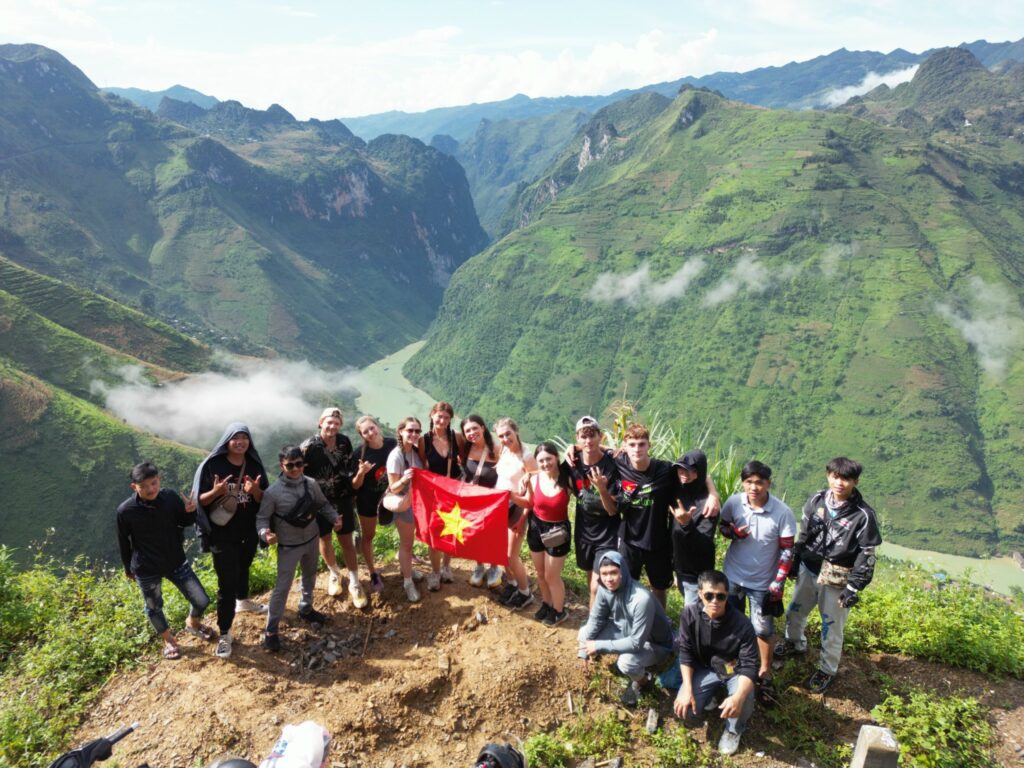
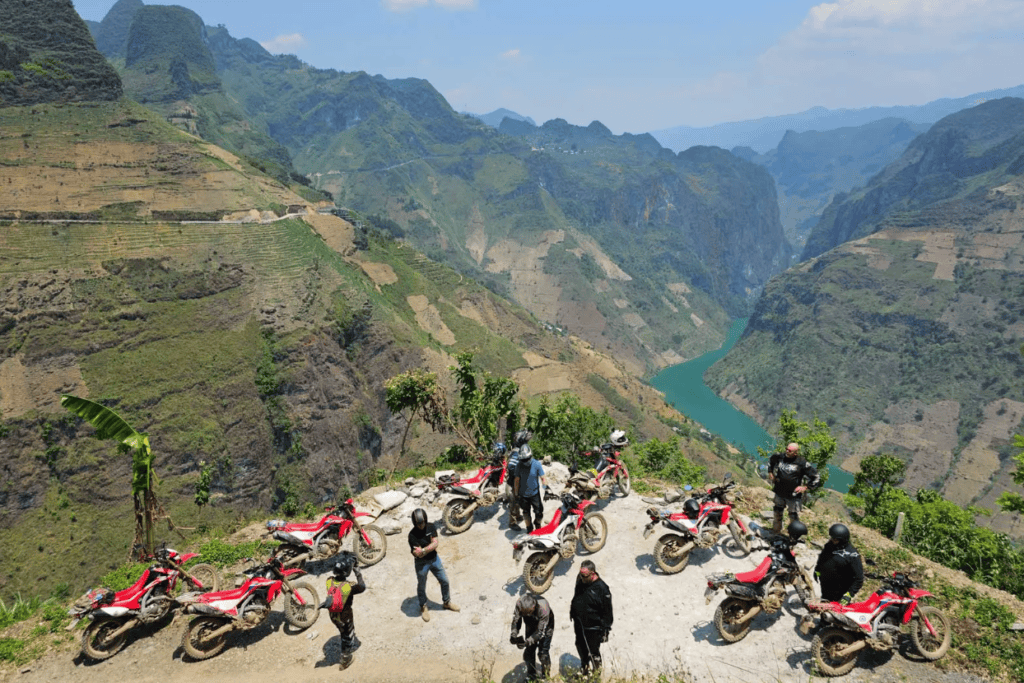
1. Easy-rider (the agent’s default). The client sits behind a licensed local driver on a 125–150 cc bike; luggage goes in a support vehicle or on the bike. This is the format the directive was written for, it needs no licence, and it delivers the full experience — the wind, the road, the stops in villages a car cannot reach. Three days from around US$170–220 per person, four days US$215–285, including driver, fuel, helmet, permit, homestays and most meals. Suits 18 to 60-year-olds in ordinary health, couples, small groups of friends, and anyone who wants the story without the risk.
2. Self-ride (licensed clients only). Rental Honda Wave or similar from US$7–10 a day, or a guided self-ride group from US$150–240 for three days with a lead rider. Sell it only to clients who hold a 1968 permit with the correct category, who ride at home, and who accept in writing that they carry the risk. In practice this is a small minority of European clients, and the province’s enforcement is now real.
3. Private car, SUV or jeep tour. Open Soviet-era UAZ and GAZ jeeps, closed jeeps, or a Fortuner or Land Cruiser with a driver-guide, three days and two nights, from about 3.75–4.85 million VND per person (around US$145–185) for a group of four; minivans for five or more. The route, the views and the villages are the same; the passes are driven, not ridden. This is the format for clients over 55, families with children, honeymooners who want the landscape without the helmet, incentive groups and anyone in the wet months. It is also the format we recommend for the whole of December to February, when fog and cold make two wheels miserable.
4. Walking and homestay add-ons. Day treks from Du Gia or Nam Dam (a Red Dao community-tourism village near Quan Ba), the Nho Que river boat through Tu San canyon, and the Sunday markets. Add one to any format for the client who wants people as well as passes.
Three or four days?
Three days covers the loop but means six to seven hours on the road each day. Four days is the honest recommendation and the one that avoids riding in the dark. The classic four-day shape:
| Day | Route | Distance | Highlights |
|---|---|---|---|
| 1 | Ha Giang – Quan Ba – Yen Minh | ~100 km | Heaven Gate, twin hills, Lung Tam weaving village |
| 2 | Yen Minh – Sung La – Dong Van | ~50 km | Vuong palace, Lung Cu flag tower, Lo Lo Chai, Dong Van old quarter |
| 3 | Dong Van – Ma Pi Leng – Meo Vac – Du Gia | ~90 km | The pass, Tu San canyon boat, Meo Vac market (Sunday) |
| 4 | Du Gia – Ha Giang | ~70 km | Waterfall swim, Tay villages, return to city for the night transfer |
Hoang Su Phi, the rice-terrace district photographed every September, is west of Ha Giang city and not on the loop; sell it as a separate one- or two-day add-on.
When to sell it
| Months | Weather | Verdict |
|---|---|---|
| Sep – Oct | 18–28 °C, mostly dry | Golden rice at Hoang Su Phi; loop dries out from mid-September; excellent |
| Oct – Nov | 14–26 °C, dry, clear | Peak: buckwheat flowers, Buckwheat Flower Festival opens 6 November 2026 in Dong Van; book lodges two to three months ahead |
| Dec – Feb | 5–17 °C, fog, occasional frost | Cold and grey on the passes; sell car tours only, or reroute to Cao Bang and the north-east |
| Mar – Apr | 14–27 °C, dry | Plum and peach blossom, warm days; second-best window, fewer crowds |
| May | 24–30 °C, showers building | Acceptable early in the month |
| Jun – Aug | 24–32 °C, heavy rain, landslides | Avoid; roads close without notice |
Getting there from Hanoi
There is no airport. From Hanoi the choice is a limousine van (five to six hours, US$25–35), a sleeper bus (six to eight hours, US$18–26) or a private car (US$160–240 return, and the only option that allows a stop at the Tay stilt-house villages en route). Most programmes leave Hanoi in the evening, sleep on the bus, and start the loop at eight the next morning; better programmes add a night in Ha Giang city or at the H’Mong Village Resort near Quan Ba (bungalows US$70–135) so the client starts rested. The Tuyen Quang–Ha Giang expressway is under construction and will cut the journey when it opens; do not quote a date.
Where clients sleep
Homestays are the point, not a compromise: a Tay stilt house in Du Gia, a H’Mong family compound near Dong Van, a Lo Lo house at Lung Cu. Private rooms cost US$15–20; shared rooms US$5–8. For clients who need a private bathroom and a firm mattress, there are now boutique lodges along the loop and the H’Mong Village Resort near Quan Ba with an infinity pool and a 120-seat restaurant that works for groups. Say clearly in the offer that hot water and heating are not guaranteed above 1,000 metres in winter.
The people, and how to visit them well
The plateau is home to 17 ethnic groups; across the former province the H’Mong are a third of the population, with Tay, Dao, Nung, Giay, La Chi and Lo Lo communities in the valleys. Two rules make a client welcome: ask before photographing, and spend money in the villages — the Lung Tam hemp cooperative, the market stalls, the homestay itself. Our guide to Vietnam’s ethnic minority festivals has the calendar, and the Khau Vai love market in late spring is the plateau’s own.
Selling to your markets
German-speaking clients ask first about the licence — the B196 problem is real — and about safety. Lead with the easy-rider format, the 1968 permit rule and the new contract requirement; Germans respond to regulation done well.
British clients know the accident. Address it directly: the province changed the rules, the informal operators are gone, and your DMC contract names the driver, the bike and the route. Then sell the four-day easy-rider.
Nordic and Dutch clients book 14–21 days and treat the loop as the adventure block; pair it with Cao Bang and Ban Gioc for a week in the north-east before Ha Long.
Russian clients are discovering the north beyond Sapa; the private jeep tour suits families and older couples, and there is a genuine Soviet-jeep nostalgia sell in the open UAZ.
Clients over 55. Do not say no; say car. The views from a Land Cruiser window on the Ma Pi Leng are the same views.
What to put in the contract
The April directive tells you what a compliant operator must provide. Ask your DMC to confirm each item in writing before you sell:
- Operator’s tour-operator licence number.
- Named drivers, their licence categories and years on the loop.
- Bike make, engine size, service record; full-face helmets and gear per passenger.
- Fixed route and overnight stops; no pooling of passengers; support vehicle for luggage.
- Border-area permit included and arranged in advance.
- Incident protocol: who calls whom, evacuation to Hanoi, and the operator’s liability insurance.
- Wet-weather and landslide alternatives, including a switch to a car at no penalty.
- Client’s own insurance confirmed for motorcycle pillion travel.
Combining the loop
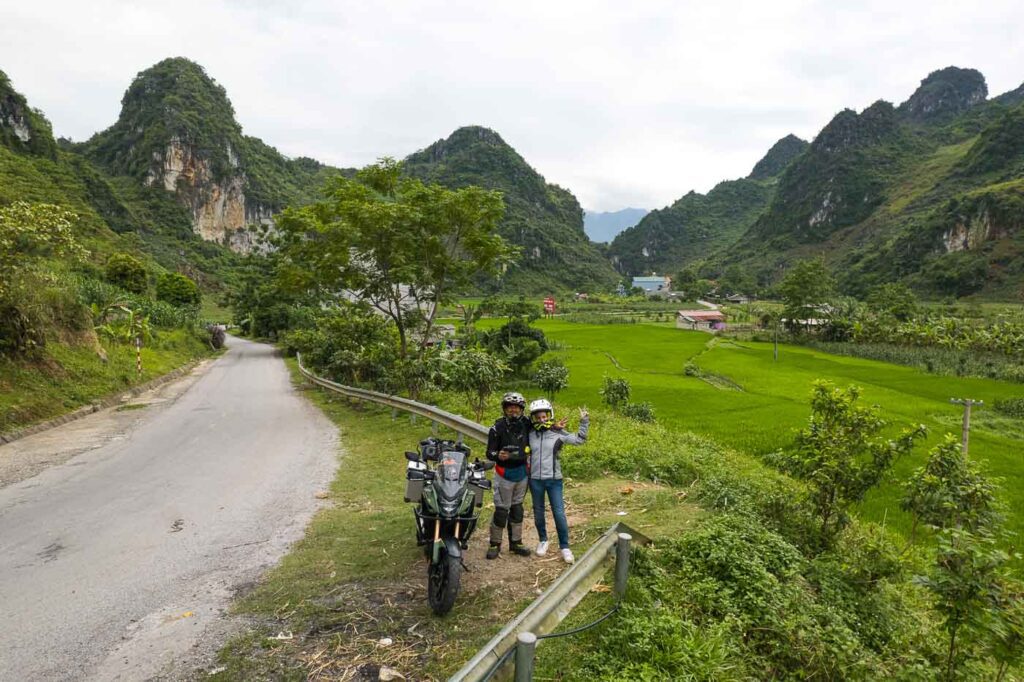
The loop sits naturally at the front of a northern itinerary: Hanoi, night transfer, four days on the loop, then either back to Hanoi for Lan Ha Bay, or east to Cao Bang’s geopark and the Ban Gioc waterfall for a north-eastern circuit that avoids backtracking. For rice-terrace clients, Hoang Su Phi in September and Mu Cang Chai in October are the add-ons. Twelve to fourteen days covers Hanoi, the loop, Cao Bang and the bay comfortably.
How VietOne helps
VietOne Travel operates the Ha Giang Loop only through licensed local partners contracted under the April 2026 requirements, with named drivers, inspected bikes, permits arranged in advance and a support vehicle on every departure. We run easy-rider, private car and jeep formats, English-, German- and Russian-speaking guides, and Hanoi-based emergency support. Send us your client’s dates and fitness level and we will return a costed programme, with the compliance points above confirmed, within one working day.