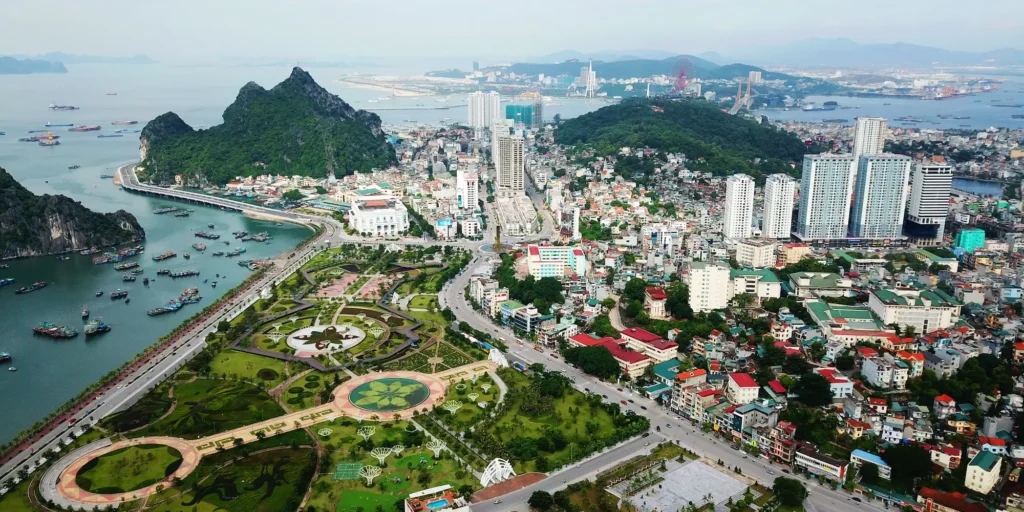
For years, the single biggest constraint on a northern Vietnam itinerary has been the road to Ha Long Bay.
Not the bay itself. Not the hotels, or the boats, or the caves. The drive. Two and a half hours each way, which means Ha Long has always had to be an overnight — and once you commit to an overnight, you have committed two days of a trip that might only be seven days long.
That constraint is about to disappear. And when it does, a great many itineraries that currently make sense will stop making sense.

What Is Actually Being Built
On 12 April 2026, ground was broken on the Hanoi – Quang Ninh high-speed railway. Here is what the project involves, according to International Railway Journal:
| Detail | Figure |
| Route | Co Loa (Hanoi) to Ha Long, Quang Ninh province |
| Length | 120 km, the majority of it elevated |
| Design speed | Up to 350 km/h |
| Journey time | Approximately 23 minutes |
| Intermediate stations | Gia Binh, Ninh Xa, Yen Tu |
| Investment | VND 147 trillion (about US$5.6 billion) |
| Developer | VinSpeed, a Vingroup subsidiary |
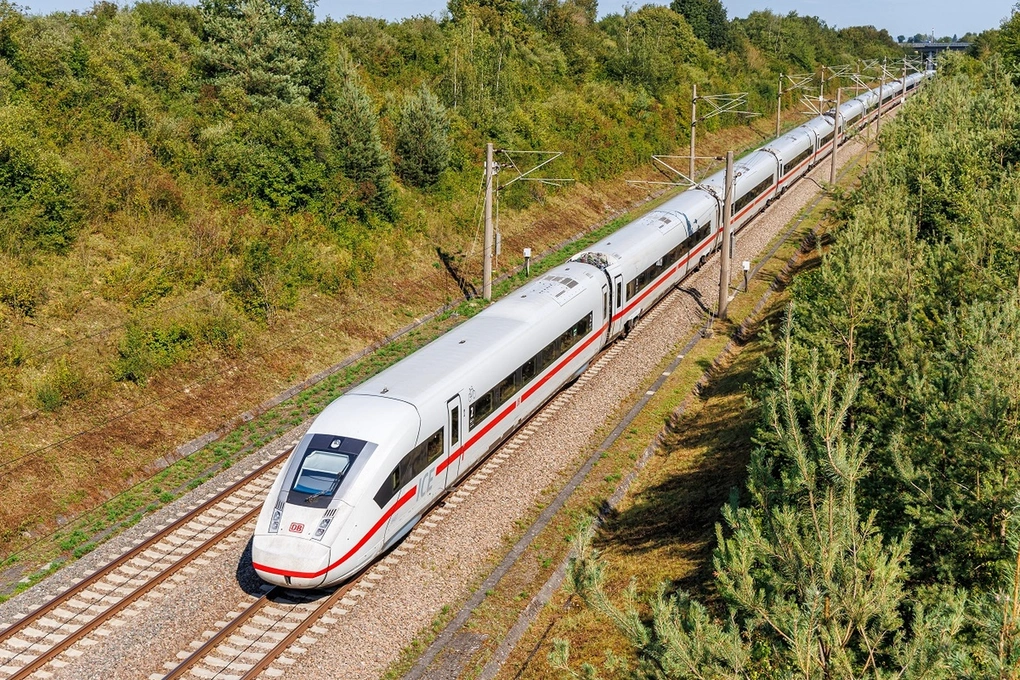
| Trains and systems | Siemens Mobility — Velaro Novo trainsets, ETCS Level 2 signalling with automatic train operation |
| Construction started | 12 April 2026 |
| Due for completion | End of 2028 |
Two details are worth pausing on. First, this is a private project — Vingroup is building it, which is unusual for infrastructure of this scale in Vietnam and is part of why it is moving quickly. Second, it has overtaken the much larger North–South line to become the country’s first high-speed railway to enter service.
Why 23 Minutes Changes the Arithmetic
Right now, a client who wants to see Ha Long Bay has two options, and neither is free.
Option one: the day trip. Leave Hanoi at 8am, drive two and a half hours, cruise for four hours, drive back, arrive at 7pm. It works — our Ha Long Bay Full Day Excursion does exactly this — but five hours of the day are spent in a vehicle.
Option two: the overnight cruise. Far better, and genuinely one of the great experiences in Southeast Asia. But it costs two days.
Now run the same maths at 23 minutes each way. Ha Long stops being a destination you travel to and becomes somewhere you simply go — the way a Parisian goes to Reims, or a Londoner goes to Brighton. A morning cruise and an afternoon back in Hanoi becomes an ordinary day, not a logistical feat.
Agent note: The overnight cruise will not disappear, and it should not. What changes is that it becomes a choice rather than a necessity. Clients who genuinely want to sleep on the bay will still book it. Clients who were only doing it because the drive made a day trip miserable will free up a night — which you can then sell somewhere else.

The Stations Nobody Is Talking About
Most coverage of this line focuses on the two ends. That is a mistake, because the three intermediate stops are the interesting part — each one lands next to something genuinely worth stopping for.
Co Loa (Hanoi terminus). The line starts beside one of the oldest sites in Vietnamese history: the spiral-walled citadel of Co Loa, capital of the Au Lac kingdom in the third century BC. A high-speed terminus at a 2,300-year-old fortress is the kind of detail that writes its own tour commentary.
Gia Binh and Ninh Xa (Bac Ninh province). This is the sleeper. Bac Ninh is the heartland of Quan Ho folk singing — UNESCO-recognised, performed at the Lim Festival every spring — and home to Dong Ho woodblock painting and the But Thap Pagoda. It has always been slightly awkward to reach, which is why most visitors never go. Our Hanoi – Bac Ninh Full Day Excursion covers exactly this ground, and it is about to become dramatically easier to sell.
Yen Tu. The most significant stop of the three. Yen Tu mountain is the birthplace of Truc Lam Zen Buddhism and one of Vietnam’s most important pilgrimage sites, drawing enormous crowds during the spring festival season. Until now it has been a serious detour from any standard route. A high-speed station at its foot turns it from a specialist add-on into something you can slot into a mainstream itinerary — which matters a great deal for anyone building religious and spiritual tours.
Put those three together and the line is not really a Hanoi–Ha Long shuttle at all. It is a cultural corridor that happens to end at a UNESCO bay.
What This Means for Itineraries, Concretely
| Trip length | How it works today | How it works from 2029 |
| 3 days in the north | Hanoi, Ha Long overnight, Ninh Binh — tight | Same three, plus Bac Ninh or Yen Tu, comfortably |
| 5–6 days in the north | Two nights lost to travel | One night freed for Sapa or Mai Chau |
| 7-day national trip | Ha Long usually cut for time | Ha Long fits as a half-day |
| Luxury and VIP | Private car, 5 hours round trip | First-class rail, then a private transfer at the bay |
| Cruise passengers on a Ha Long turnaround | Hanoi is a stretch | Hanoi becomes an easy shore excursion |
That last row deserves attention. A 23-minute link runs in both directions — it makes Hanoi accessible from Ha Long just as much as the reverse. For anyone handling cruise arrivals in Quang Ninh, an afternoon in the Old Quarter suddenly becomes viable.
Our Hanoi – Ha Long – Ninh Binh (3 Days) and Tonkinese Wonders (6 Days) are both built around the current road times. Both will be rebuilt when the line opens, and both will get better.
The Bigger Picture: Vietnam Is Rebuilding Its Railways
The Ha Long line is the first to break ground, but it is not the biggest thing happening.
The North–South high-speed railway is the headline project: 1,541km from Ngoc Hoi station in Hanoi to Thu Thiem in Ho Chi Minh City, approved by the National Assembly at around US$67 billion, designed for 350km/h. It will pass through 20 provinces with 23 passenger stations, including Phu Ly, Thanh Hoa, Hue, Da Nang, Nha Trang and Long Thanh. When it opens — the target is 2035 — it is expected to cut Hanoi to Saigon from roughly 30 hours to about five.
Five hours would put rail in direct competition with flying on Vietnam’s busiest route. For itinerary planning, it would be transformative: no airports, no baggage drop, city centre to city centre, with Hue and Da Nang as genuine intermediate stops rather than separate flights.
The Lao Cai – Hanoi – Hai Phong line is the third piece: 419km at a reported VND 203 trillion (about US$7.7 billion), connecting the Chinese border through Hanoi to the port at Hai Phong. For travel, the relevant end is Lao Cai — the gateway to Sapa.
Taken together, within roughly a decade the three lines would connect Sapa, Hanoi, Bac Ninh, Yen Tu, Ha Long, Hue, Da Nang, Nha Trang and Saigon on modern rail. That is most of a classic Vietnam itinerary.
We have written before about Vietnam’s wider infrastructure upgrades and how the country’s traffic is changing. The railways are the largest chapter of that story by a wide margin.
A Note of Realism
Large infrastructure projects slip. That is not cynicism, it is the base rate — and Vietnam’s own rail history includes the Yen Vien–Pha Lai–Ha Long–Cai Lan line, suspended in 2011 and never finished. The new high-speed route effectively replaces it.
What makes this one different is that it is privately financed, construction has actually started, the rolling stock supplier is contracted, and the developer has a track record of delivering fast. Those are meaningful signals. They are not guarantees.
Our advice to partners: plan for it, do not promise it. Build 2029 programmes that assume the line exists, keep the road-based version as a fallback, and avoid printing “23 minutes” in a brochure until trains are running.

Getting to Ha Long Bay Before 2029
Until the line opens, the options are unchanged:
- Private car or minibus — roughly 2.5 hours each way via the Hanoi–Hai Phong–Ha Long expressway. Comfortable, flexible, and what almost every quality operator uses.
- Seaplane — about 45 minutes, spectacular, and priced accordingly. Best used one-way, with a road transfer in the other direction.
- Shuttle bus — cheapest, slowest, and rarely appropriate for the clients most agents are placing.
- The existing railway — technically possible, practically not. This is the gap the new line closes.
If you are building a northern itinerary in the meantime, our North Vietnam Active Holiday (6 Days) and Vietnam Insider Journey (17 Days) both include an overnight Ha Long cruise. And if you are working out how much time your clients need overall, our guide to how many days you need in Vietnam breaks it down by trip length.
Frequently Asked Questions
When will the Hanoi to Ha Long Bay high-speed railway open?
Construction began on 12 April 2026 and the line is due for completion by the end of 2028, with commercial service expected to follow. Treat 2029 as the realistic planning date.
How long will the train from Hanoi to Ha Long Bay take?
Approximately 23 minutes, compared with about two and a half hours by road today. The line is designed for speeds of up to 350km/h.
How much is Vietnam’s Hanoi–Ha Long high-speed railway costing?
Around VND 147 trillion, roughly US$5.6 billion. It is being built by VinSpeed, a subsidiary of Vingroup, with trains and signalling supplied by Siemens Mobility.
What stations will the line have?
It runs from Co Loa in Hanoi to Ha Long, with intermediate stations at Gia Binh, Ninh Xa and Yen Tu — putting Bac Ninh’s cultural sites and the Yen Tu Buddhist pilgrimage site on a fast rail link for the first time.
Is this the same as Vietnam’s North–South high-speed railway?
No. They are separate projects. The North–South line runs 1,541km from Hanoi to Ho Chi Minh City at an approved cost of about US$67 billion, targeted for completion around 2035. The Hanoi–Ha Long line is much shorter and will open first.
How do you get from Hanoi to Ha Long Bay now?
By private car or minibus in about two and a half hours via the expressway, or by seaplane in roughly 45 minutes. Most tour operators use road transfers, either as a day trip or combined with an overnight cruise.
Planning Northern Vietnam for 2027 and Beyond
The honest summary is this: northern Vietnam is about to get roughly a day back on every itinerary that includes Ha Long Bay, and three cultural sites that were previously awkward are about to become easy. That is a rare thing in destination planning, and the operators who redesign early will be selling a better product than the ones who wait for the ribbon-cutting.
Browse our northern Vietnam packages, or talk to our team in Ho Chi Minh City about how we are adapting programmes for 2028 and 2029.
For travel professionals: VietOne is a licensed Vietnamese destination management company with 33 years on the ground, working with agents across the German, Russian and English-speaking markets. Our 2027 itinerary guide covers what is selling now, and you can register as a VietOne agent for trade rates and our online booking portal.