45-day visa-free stays, the 90-day e-visa, the new pre-arrival QR declaration — and what Thailand’s 15 September visa cut means for your Southeast Asia bookings. Checked against the government resolutions on 1 September 2026.
Vietnam Visa & Entry Rules 2026–27: Agent Cheat Sheet
A small confession from the VietOne office in Saigon: the question we are asked more than any other is not about hotels, guides or the best banh mi in District 1. It is “Do my clients need a visa?” And we understand why. Vietnam has changed its entry rules three times in eighteen months, added a digital arrival step this spring, and much of what Google serves up is either out of date or written by a website that would like to sell your client a US$25 e-visa for four times the price.
So this is the page to bookmark. One page, checked against the actual resolutions, written for people who sell Vietnam rather than people who blog about it. We will refresh it every quarter — and the same day anything changes.
The timing is not an accident. On 15 September 2026, Thailand shortens its visa-free stay from 60 to 30 days. Vietnam’s 45 days are locked in until 2028. For the first time in years, Vietnam is the more generous of the two for the great majority of European passports. That is a useful sentence to keep in your back pocket.
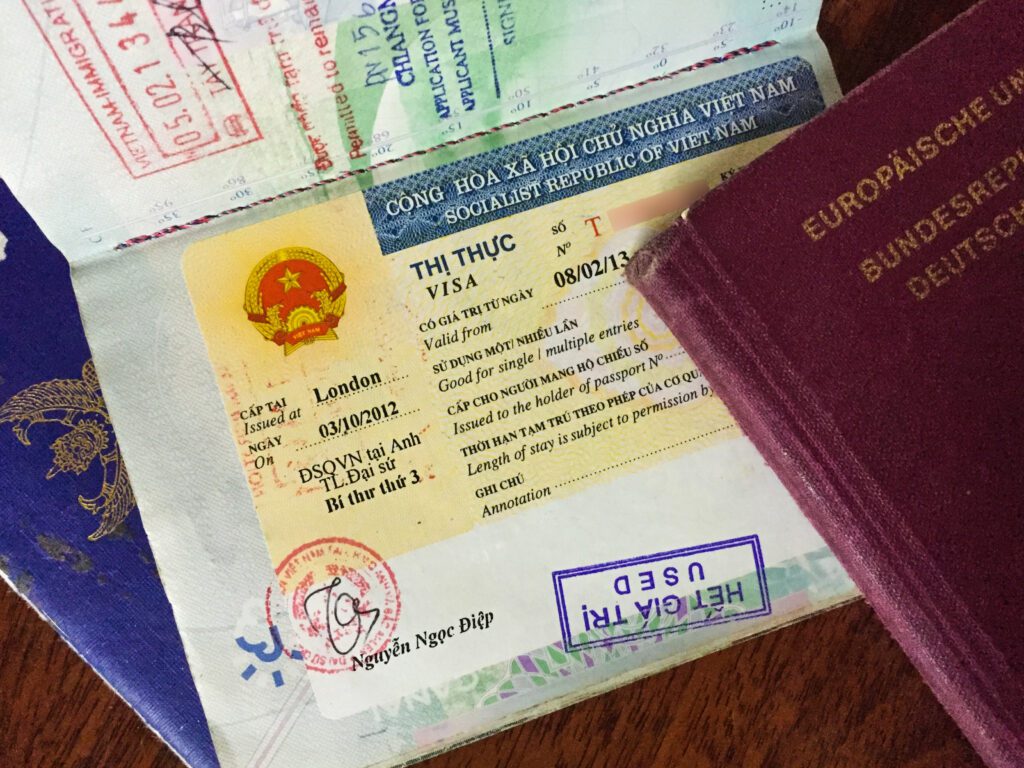
The 30-second version
- 24 nationalities get 45 days visa-free, including Germany, France, Italy, Spain, the UK, all four Nordic countries, the Netherlands, Belgium, Switzerland, Poland, Czechia and Russia. Valid until March or August 2028, depending on the country.
- Everyone else uses the e-visa: up to 90 days, single entry (US$25) or multiple entry (US$50), online only at evisa.gov.vn.
- New in 2026: a free pre-arrival declaration with a QR code, completed online within three days of landing, now in use at the five main international airports.
- Passports need six months’ validity from the arrival date. The day of arrival counts as day one.
- Phu Quoc has its own 30-day visa-free rule for every nationality — but only for clients who fly straight in and stay on the island.
1. Who gets 45 days without a visa
Vietnam’s 45-day exemption comes in two batches, with two different expiry dates and one small difference in the fine print.
| Batch | Nationalities | Condition | Valid until |
|---|---|---|---|
| A — Resolution 44/NQ-CP | Germany, France, Italy, Spain, United Kingdom, Denmark, Sweden, Norway, Finland, Russia, Japan, South Korea | Any purpose of visit | 14 March 2028 |
| B — Resolution 229/NQ-CP | Belgium, Bulgaria, Croatia, Czech Republic, Hungary, Luxembourg, Netherlands, Poland, Romania, Slovakia, Slovenia, Switzerland | Tourism visits | 14 August 2028 |
The fine print worth knowing:
- 45 days is counted from the day of entry, and the arrival day is day one. A “45-night” holiday is 46 days. Build long itineraries to 44 nights or fewer — or simply use the 90-day e-visa for long-stay clients. Our guide to how many days you really need in Vietnam has seven itineraries that all fit comfortably.
- Passport validity: at least six months beyond the arrival date. This is the single most common reason for denied boarding in Europe. Check the expiry date when you take the booking, not the week before departure.
- No waiting period between visits. The old rule requiring 30 days between two visa-free entries was abolished in August 2023. A client can fly Hanoi – Siem Reap – Ho Chi Minh City and enter Vietnam visa-free twice, which makes the loops in our Vietnam vs Cambodia guide refreshingly simple.
- Batch B says “tourism”. For a holiday, a beach week or a family visit that changes nothing. A Swiss or Dutch client attending a conference should hold an e-visa or business visa to be safe — see our notes on MICE programmes in Saigon.
- Visa-free stays are not routinely extendable in-country. If there is any chance a client wants longer than 45 days, apply for the e-visa before departure.
Who is not on the list? Among European passports: Austria, Portugal, Greece, Ireland, Iceland, Estonia, Latvia, Lithuania, Malta, Cyprus and Liechtenstein — plus Ukraine, Türkiye, the United States, Canada, Australia and New Zealand. All of them use the e-visa, which brings us neatly to section two.
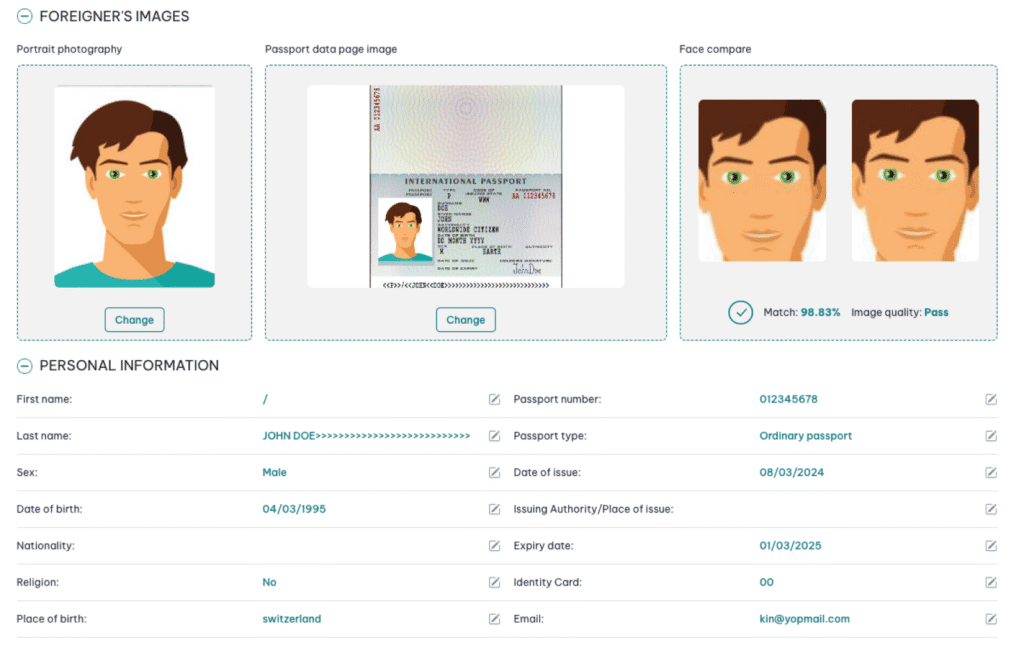
2. Not on the list? Meet the 90-day e-visa
The e-visa is one of the best things Vietnam has done for our industry. Since August 2023 it has been open to every nationality on earth, and the terms are simple:
- Up to 90 days, single entry (US$25) or multiple entry (US$50).
- Online only, at the Immigration Department’s portal evisa.gov.vn (thithucdientu.gov.vn is the same system). Official processing is three to five working days. Real life says allow a week, and two around Tet 2027 and the European summer peak.
- Valid at 83 entry points since December 2025 — every international airport, the land crossings from Cambodia, Laos and China, and the cruise ports.
- The applicant chooses an entry port, and the client must enter through the port named on the e-visa. If a flight changes from Hanoi to Ho Chi Minh City, apply again.
- Name, passport number and date of birth must match the passport exactly. A missing middle name or a transposed digit means a new application. There is no correction desk at the airport, however charming the officer.
- Print it. Immigration accepts a phone screen; airline check-in staff in Europe love paper.
The warning we repeat to every new partner: dozens of websites rank above the government portal and charge three to six times the fee for the same document, occasionally with the wrong dates on it. If the address does not end in gov.vn, it is not the official site. And the old “visa on arrival” approval-letter route is now largely redundant for holidaymakers — the e-visa replaced it.
3. New in 2026: the pre-arrival declaration (three minutes, free — do it)
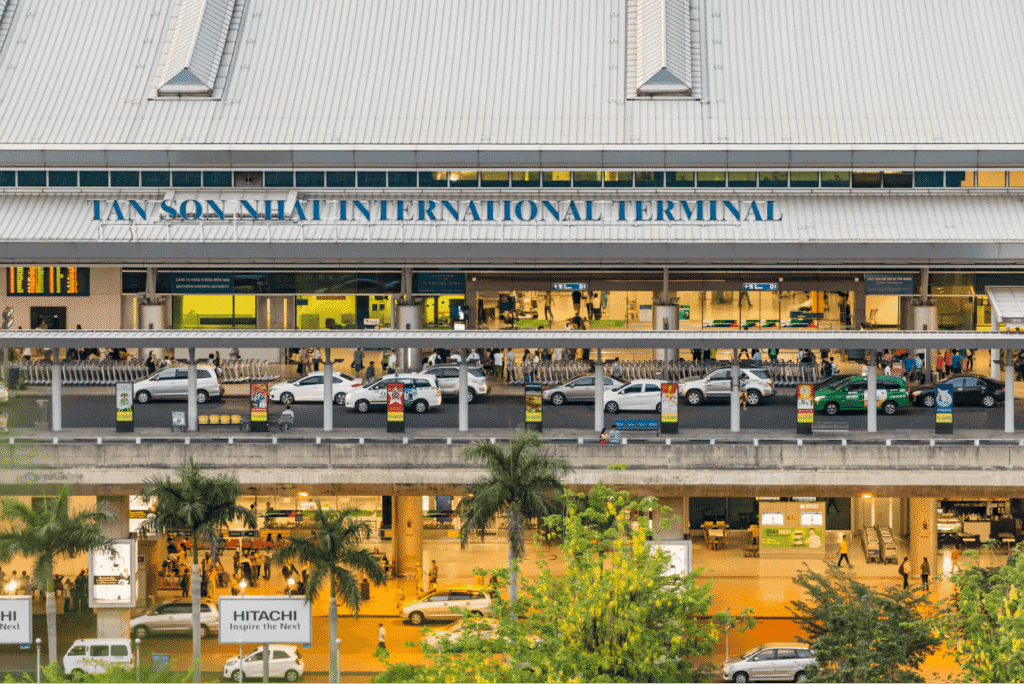
Vietnam’s Immigration Department introduced an online pre-arrival declaration at Tan Son Nhat (Ho Chi Minh City) on 15 April 2026 and rolled it out through June to Phu Quoc (1 June), Noi Bai in Hanoi and Da Nang (15 June) and Cam Ranh, the airport for Nha Trang.
How it works:
- Clients go to prearrival.immigration.gov.vn, enter passport details, flight number, arrival date and hotel address, and receive a QR code by email. They show it, with the passport, at immigration.
- Timing: within three days before arrival. The system will not accept earlier submissions, so a “do it now” reminder in your pre-departure email is worth its weight in gold.
- One declaration per traveller, children included.
- It is free. Any website charging for it is not the government.
- It is not a visa and does not replace one. Visa-free clients need the QR code and nothing else; e-visa clients need both.
Is it compulsory? Officially it is described as a pre-arrival information service, and some European foreign offices still list it as “encouraged”, while Phu Quoc and Tan Son Nhat treat it as required. Our advice is to treat it as mandatory everywhere. Clients who arrive without it fill it in on a phone in the immigration hall — behind everyone who did not. (Saigon’s airport landscape is about to change too: read what Long Thanh’s opening on 1 December means for your arrivals.)
A myth to bust while we are here. You may have read that Vietnam introduced a mandatory health declaration for all travellers on 1 July 2026. Decree 165/2026 does exist, but the Ministry of Health confirmed on 1 July that the declaration is only switched on when a specific infectious-disease situation requires it. Today there is nothing to fill in. We will update this page the day that changes.

4. The Phu Quoc rule (and the trap inside it)
Phu Quoc runs its own visa regime: any nationality may stay up to 30 days visa-free, provided the client arrives on an international flight or ship directly into Phu Quoc and stays on the island. The six-month passport rule still applies.
It is a lovely tool for a client hopping over from Bangkok, Kuala Lumpur or Seoul for a beach week, and for the charter flights that land on the island every winter. Read why the island is the world’s top trending destination for 2026 and what APEC 2027 is doing to its hotel stock.
The trap: the exemption ends the moment a client boards a domestic flight to the mainland. A “Phu Quoc plus three nights in Saigon” programme needs a normal visa-free entry or an e-visa. So does a client who connects through Ho Chi Minh City and has to clear immigration there to change terminals. When in doubt, use the e-visa. It costs less than a cocktail at Sunset Town.
5. Vietnam 45 days vs Thailand 30 days: the September box
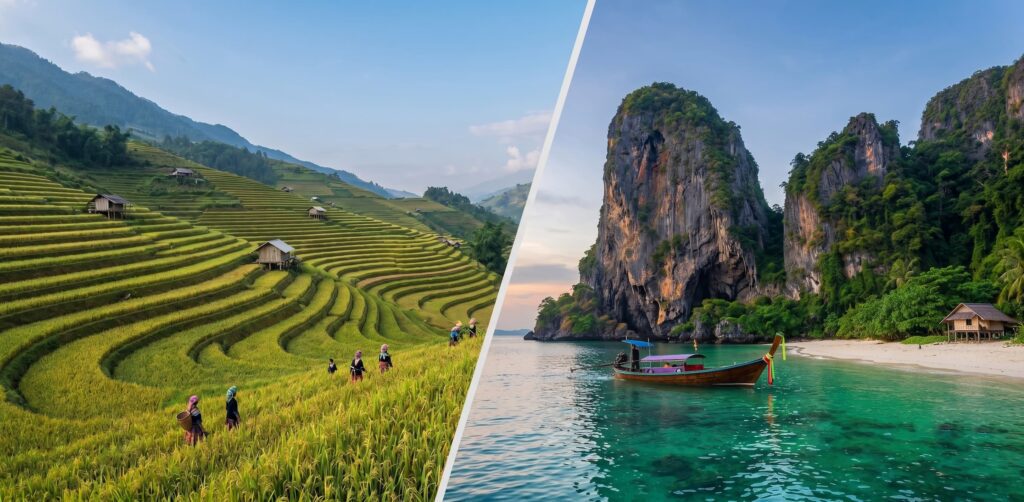
From 15 September 2026, Thailand grants 30 days visa-free to 60 nationalities — down from 60 days and 93 nationalities — following publication in the Royal Gazette on 31 August. For the twin-centre programmes in our Vietnam or Thailand comparison, the numbers now look like this:
| Client’s passport | Vietnam | Thailand from 15 September 2026 |
|---|---|---|
| Germany, France, Italy, Spain, UK, Nordics, Netherlands, Belgium, Switzerland, Poland, Czechia, Hungary and the other Batch A/B countries | 45 days visa-free | 30 days visa-free |
| Austria, Portugal, Greece, Ireland, Iceland, Baltics, Malta, Cyprus | 90-day e-visa, US$25 | 30 days visa-free |
| Russia | 45 days visa-free, any purpose | Not on the new 30-day list; bilateral arrangements apply — confirm the current terms with the Thai embassy before quoting |
In fairness: for Austrian or Portuguese clients, Thailand’s 30 free days beat a US$25 form on convenience. For everyone else, Vietnam now offers a fortnight more room — enough for the two-week classic plus a beach week without a single form. And 45 plus 30 makes a very comfortable six-week twin-centre.
6. Five mistakes that turn clients around at check-in
- The six-month passport rule. Still the number one, by a distance.
- The copycat e-visa site. Wrong dates, wrong port, triple the price.
- The port-of-entry mismatch after a flight change. New airport, new e-visa.
- Assuming the Phu Quoc exemption covers a Saigon stopover. It does not.
- The 45-night holiday. Arrival day is day one. Forty-four nights is the safe ceiling.
Bonus for cruise clients: ships calling at Ha Long, Da Nang or Ho Chi Minh City are covered — visa-free nationals simply walk off, and everyone else needs the e-visa (cruise ports are on the 83-point list) or the ship’s group arrangement. Our Lan Ha Bay versus Halong Bay guide covers the overnight cruise side.
7. What this means for the programmes you sell
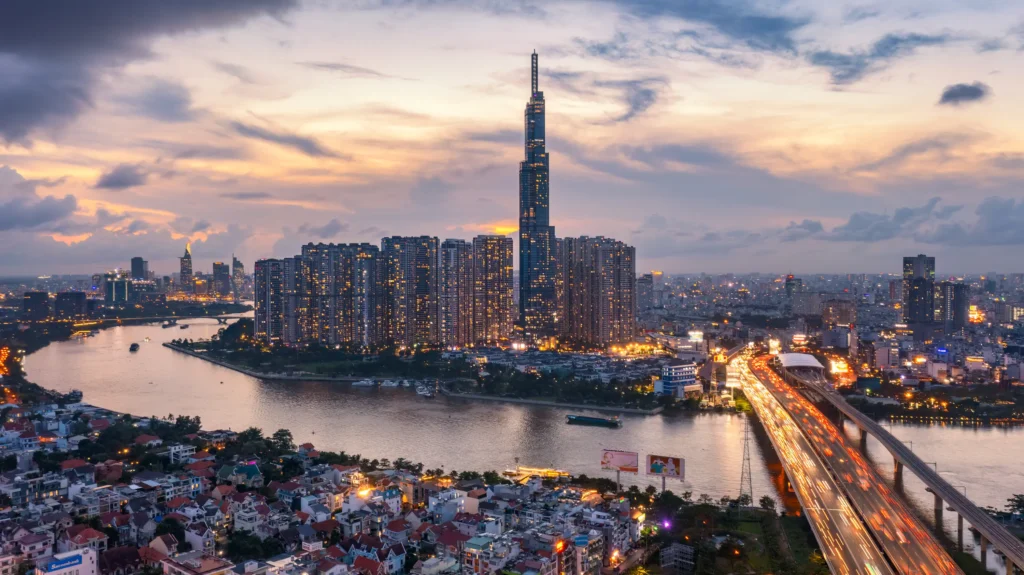
- Long stays sell themselves. Forty-five days covers a north-to-south classic plus a beach extension. Start with our seven client-winning itineraries for 2027.
- Twin-country loops are easy. Visa-free nationals can enter Vietnam twice around an Angkor detour without a single form.
- Winter escapes of three to five weeks fit inside the exemption — useful when you read our month-by-month guide to the best time to visit and realise February in the south is perfect.
- Groups and incentives from Batch B countries: use the e-visa for business events to stay on the right side of “tourism”.
- Russian-speaking clients enjoy 45 days for any purpose until 14 March 2028 — the longest free stay of any major beach destination for that market, as we explain in Selling Vietnam to Russian clients.
- Families: every child needs their own passport and, if applicable, their own e-visa and pre-arrival declaration. Our family travel breakdown has the rest.
Frequently asked questions
Do British, German or French clients need a visa for Vietnam in 2027?
No. Citizens of the UK, Germany and France may enter visa-free for up to 45 days, for any purpose, until 14 March 2028. Passports must be valid for six months from the arrival date.
How far in advance should the e-visa be applied for?
Official processing is three to five working days; we recommend applying two to four weeks before departure and setting the requested entry date to the flight date. Apply only at evisa.gov.vn.
Is the pre-arrival declaration mandatory?
It is required in practice at Tan Son Nhat, Noi Bai, Da Nang, Cam Ranh and Phu Quoc. It is free, takes three minutes, and must be completed within three days before arrival at prearrival.immigration.gov.vn.
Can a 45-day visa-free stay be extended in Vietnam?
Not routinely. Clients who may want longer should apply for the 90-day e-visa before travelling.
Does the Phu Quoc 30-day exemption cover a stopover in Ho Chi Minh City?
No. It applies only to clients arriving directly on the island and staying there. Any mainland travel requires a standard visa-free entry or an e-visa.
One line from us
Send us the passport nationalities on your next group and we will tell you in one line who needs what. That is what a Vietnam DMC is for — and it is a lot cheaper than a missed flight.